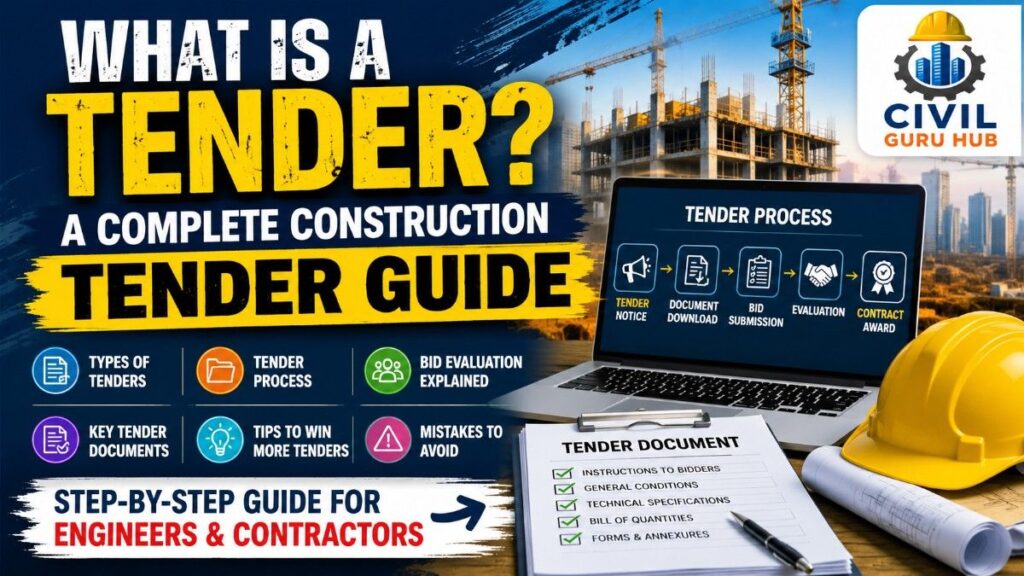
What Is a Tender? A Complete Construction Tender Guide
What Is a Tender? A Complete Construction Tender Guide Read More »
Project ManagementProject Management in Construction – Practical Planning, Scheduling, Cost Control, and Site Management
Project management is a crucial part of the construction industry, effectively managing a project from planning to final completion, with consideration given to time, cost, quality, resources, safety, and overall execution. Whether it’s highway construction, a bridge project, a building construction project, irrigation work, or a large infrastructure project, proper project planning and management are crucial for successful completion. CivilGuruHub’s Project Management section provides practical knowledge for civil engineering students, site engineers, planning engineers, project managers, contractors, and construction professionals, enabling them to understand project management concepts in real construction-site situations.
Construction project management isn’t just about completing a project on time. A successful project manager has to manage project scope, work planning, scheduling, manpower, machinery, materials, budget, quality, safety, documentation, communication, risk and client requirements simultaneously. If planning is poor, resources are not allocated properly, material availability is not taken into account or critical activities are not monitored timely, then the project may face delays, cost overruns, rework and quality problems. Therefore, practical project management knowledge is very important for successful execution of construction projects.
In this Project Management section of CivilGuruHub, you can understand important topics ranging from project planning and scheduling to time management, cost control, resource management, risk management, quality management and construction documentation in simple and practical language. The objective of this section is not just to provide theoretical definitions, but to help readers understand how project management concepts can be applied to actual construction projects.
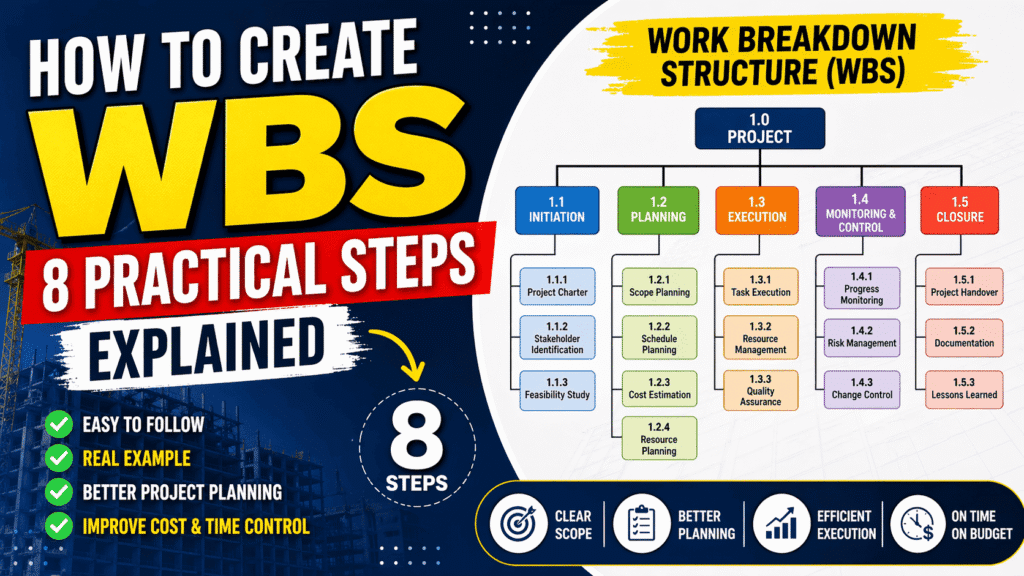
Construction project planning is the foundation of any project. Through proper planning, project activities are identified, their sequence is decided, required manpower and equipment are estimated, material requirements are planned, and a realistic timeline for project completion is prepared. In a highway project, earthwork, subgrade, GSB, WMM, bituminous layers, and drainage works have to be properly sequenced, while in a building project, excavation, foundation, column, beam, slab, masonry, and finishing activities have to be executed in a logical sequence. Effective planning plays a vital role in reducing project delays and unnecessary resource conflicts.
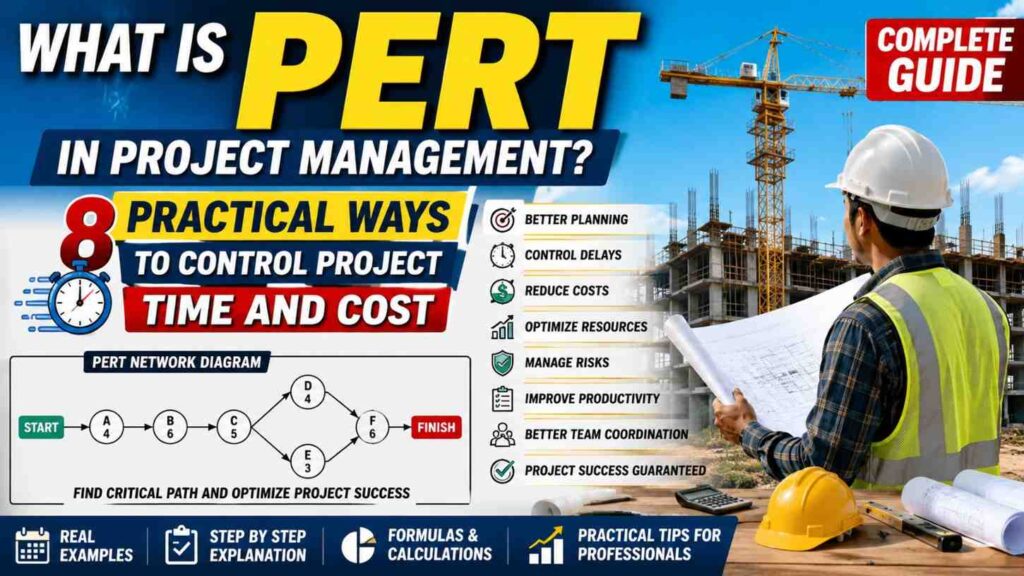
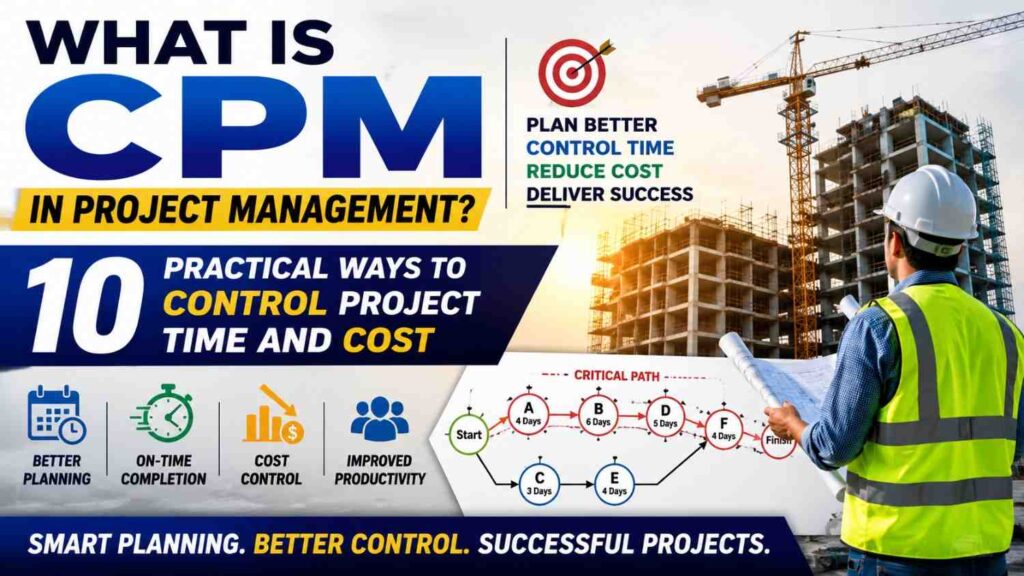
Project scheduling is also an important part of construction management. Scheduling determines the start and finish times of each activity, and establishes dependencies between different activities. The Critical Path Method, or CPM, is an important project scheduling technique that helps identify critical activities and project completion duration. On CivilGuruHub, topics like CPM are explained with practical construction examples, activity duration, network logic, forward pass, backward pass, and float calculations, so readers can understand scheduling not just as a theoretical concept but as a practical project-control tool.
Time management is equally important for construction projects, because a delay in one activity can affect subsequent dependent activities. The project manager must continuously compare planned progress and actual progress and take corrective action when delays are identified. Allocating additional manpower, machinery, material, and supervision to critical activities, reviewing the activity sequence, and preparing a recovery plan can be part of effective time management. The proper combination of project scheduling and progress monitoring helps keep the project close to the planned completion date.
Cost management is also a major responsibility of project management. The budget of a construction project is not limited to just the initial estimation; during project execution, factors such as material consumption, manpower cost, equipment cost, wastage, rework, variation, delay, and productivity affect the total project cost. Effective cost control requires proper planning, quantity monitoring, material management, waste reduction, and regular cost tracking. CivilGuruHub also covers practical topics such as construction cost reduction, material waste control, and project profitability.
The objective of resource management is to make efficient use of available manpower, machinery, materials, and financial resources. If required equipment is not available on a project, skilled manpower is insufficient, or materials do not arrive on site on time, planned activities may be delayed. An experienced project manager identifies resource requirements according to the activity schedule and coordinates procurement and deployment. This can help reduce idle time, equipment downtime, and unnecessary project delays.
Quality management is also a critical component of construction project success. Simply completing the project on time and within budget is not sufficient; executing work according to the required quality, specifications, and approved drawings is equally important. Quality management may include activities such as material testing, inspection, method statements, inspection requests, quality records, non-conformance identification, and corrective actions. The project manager must maintain proper coordination between the QA/QC team, site engineers, contractors, and consultants so that quality-related problems can be identified and controlled at an early stage.
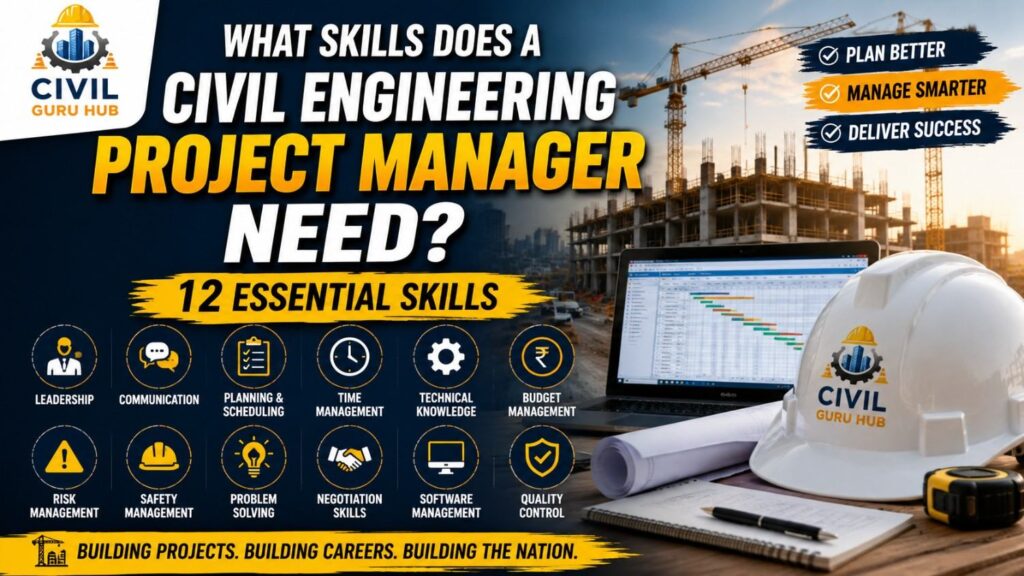
Documentation and communication are also an important part of project management in construction projects. Daily Progress Reports, Requests for Information, Minutes of Meetings, Inspection Requests, approvals, work permits, site instructions, and other project records play an important role in future reference, progress monitoring, and decision-making. A professional project manager must pay proper attention to written documentation along with verbal communication. Your Project Manager article also explains documents like DPR, RFI, MOM, Inspection Request, and Work Permit in the context of practical project communication.
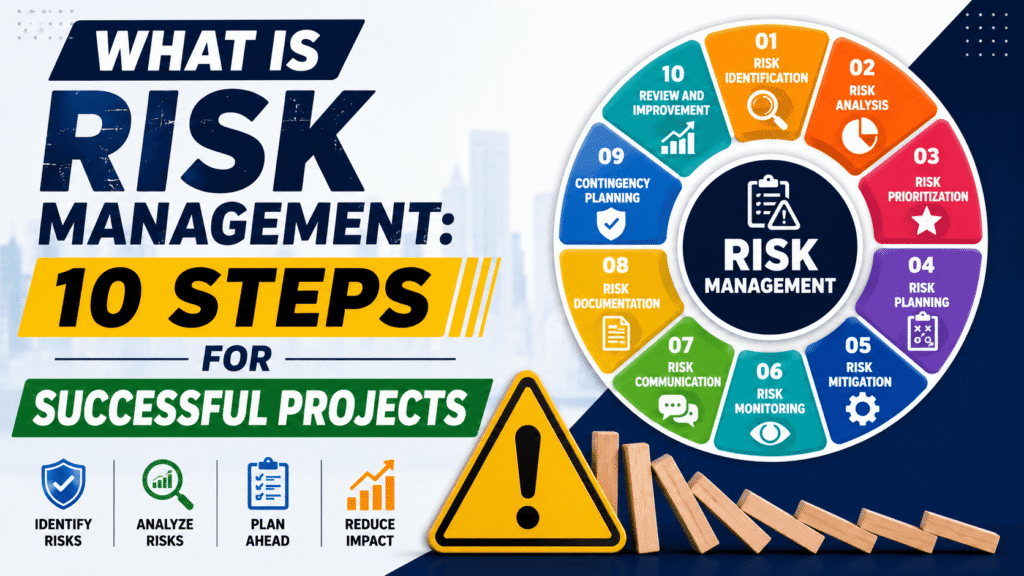
Risk management is a systematic approach to identifying and controlling unexpected problems in construction projects. Risks such as weather conditions, material shortages, labor shortages, equipment breakdowns, design changes, financial problems, approval delays, site constraints, and safety incidents can affect project schedules and costs. Effective risk management requires identifying potential risks, evaluating their impact, planning preventive measures, and preparing contingency actions. This approach allows the project manager to make better decisions to reduce the impact of unexpected situations.
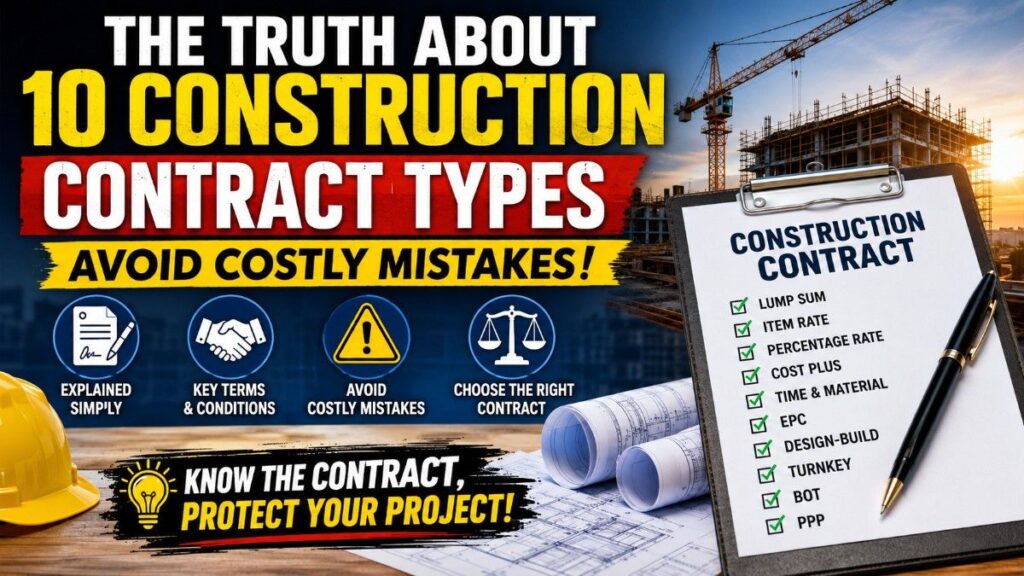
Construction contracts are also an important area of project management. Understanding contract type, scope of work, payment terms, variation, extension of time, delays, claims, responsibilities, and contractual obligations is crucial for project execution. Clarifying the roles and responsibilities of the contractor, client, consultant, and other stakeholders can help reduce disputes and communication problems. CivilGuruHub also offers topics such as construction tenders and construction contract types, which are useful for a broader understanding of project management.
The use of technology and project management software is also becoming increasingly important in modern construction projects. Primavera P6, Microsoft Project, Excel, and other project planning and monitoring tools can be used to prepare schedules, track resources, monitor progress, and develop project reports. But software is just a tool; engineering knowledge, field experience, communication, decision-making, and leadership skills are equally important for effective project management.
The Project Management section of CivilGuruHub was developed to help students and working professionals understand the different aspects of project management step-by-step. Here you can explore guides related to project planning, scheduling, CPM, time management, cost control, resource management, risk management, quality management, construction contracts, project documentation, project manager skills and practical site management. The objective is to include practical construction examples, tables, calculations, common mistakes and real-world situations in the articles, so that technical knowledge can be connected to actual project execution.
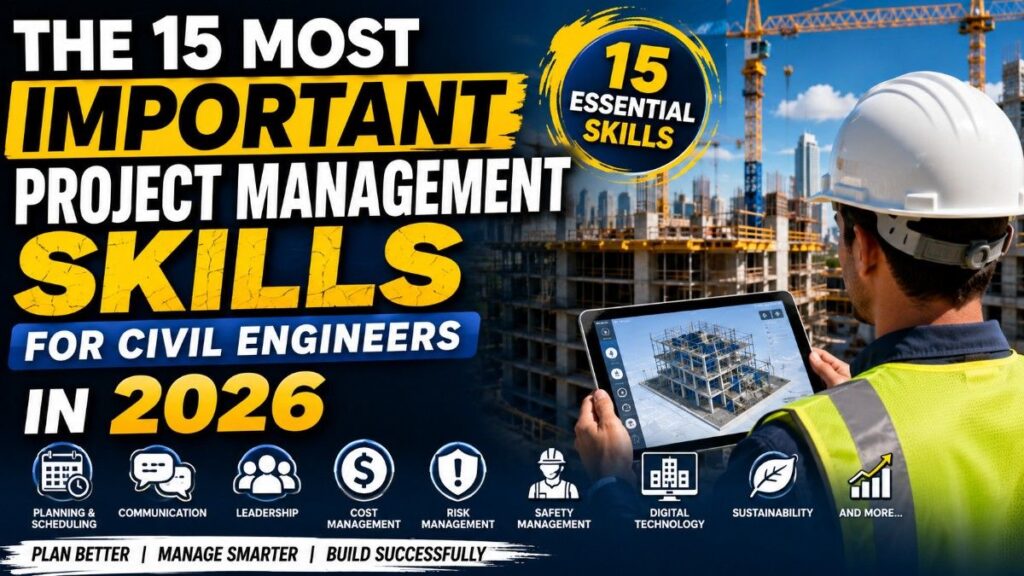
If you are a civil engineering student, you can learn Project Management step-by-step—starting with basic planning and construction activities and progressing to scheduling, CPM, resource management, cost control, quality management, and risk management. If you are a site engineer or planning engineer, you can focus on practical aspects such as progress monitoring, documentation, scheduling, resource allocation, and delay control. And if you are in a project manager role, areas like leadership, communication, contract management, cost control, risk management, and stakeholder coordination can help you better understand your professional responsibilities.
The ultimate objective of Project Management is not merely to complete a project, but to deliver it successfully—meeting the required quality standards, adhering to the planned timeline and approved budget, and complying with applicable specifications and safety requirements. For this reason, there is a persistent demand in the modern construction industry for strong project management skills alongside technical engineering knowledge.