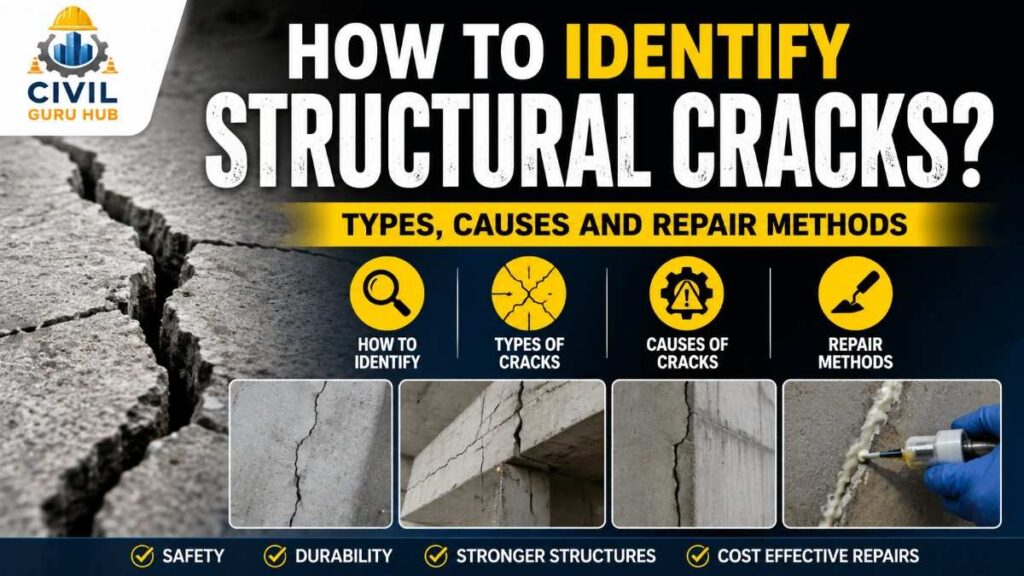
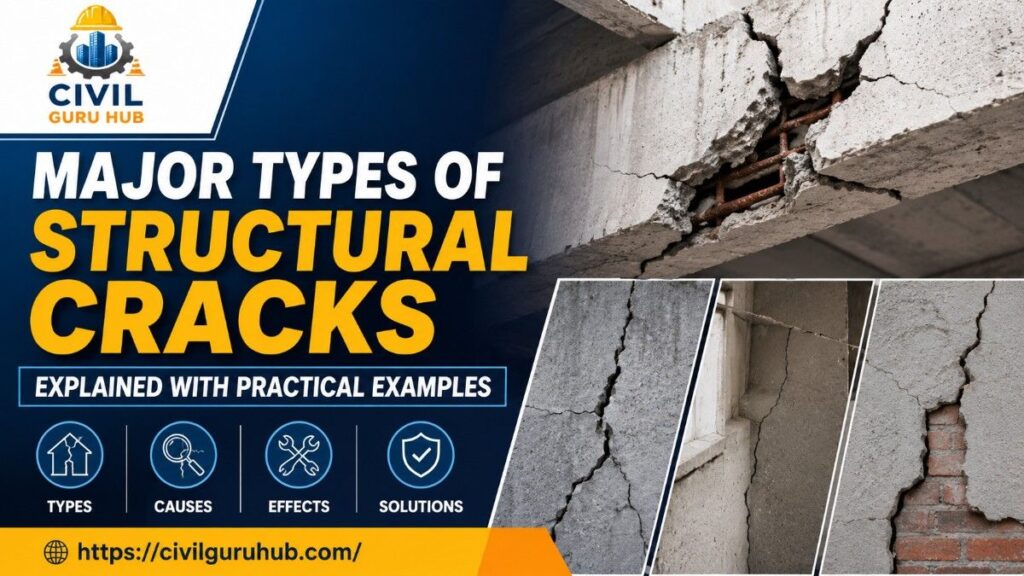
Major Types of Structural Cracks Explained with Practical Examples
Major Types of Structural Cracks Explained with Practical Examples Read More »
StructureStructural Engineering – RCC, Foundations, Culverts, Retaining Walls, and Practical Site Knowledge
In the Structural Engineering section of CivilGuruHub, you get the opportunity to understand key concepts related to structures and construction in simple, practical, and easy-to-understand language.
Structural engineering is a vital component of civil engineering. To ensure the safety and durability of any building, bridge, culvert, retaining wall, foundation, or other structure, it is crucial to understand factors such as loads, materials, structural behavior, foundation conditions, and construction quality.
The primary purpose of this section is not merely to provide textbook theory but to connect engineering concepts with practical construction and site conditions. Here, we explain useful technical guides, practical examples, inspection points, common defects, and relevant IS and IRC references for civil engineering students, site engineers, supervisors, and construction professionals.
What will you learn in Structural Engineering?
The ‘Structure’ category covers various structural components, foundations, culverts, retaining structures, cracks, and other construction-related topics.
RCC structures are a crucial part of building construction. This section helps you understand RCC members and the practical aspects of their construction.
Important topics include:
– RCC Slab
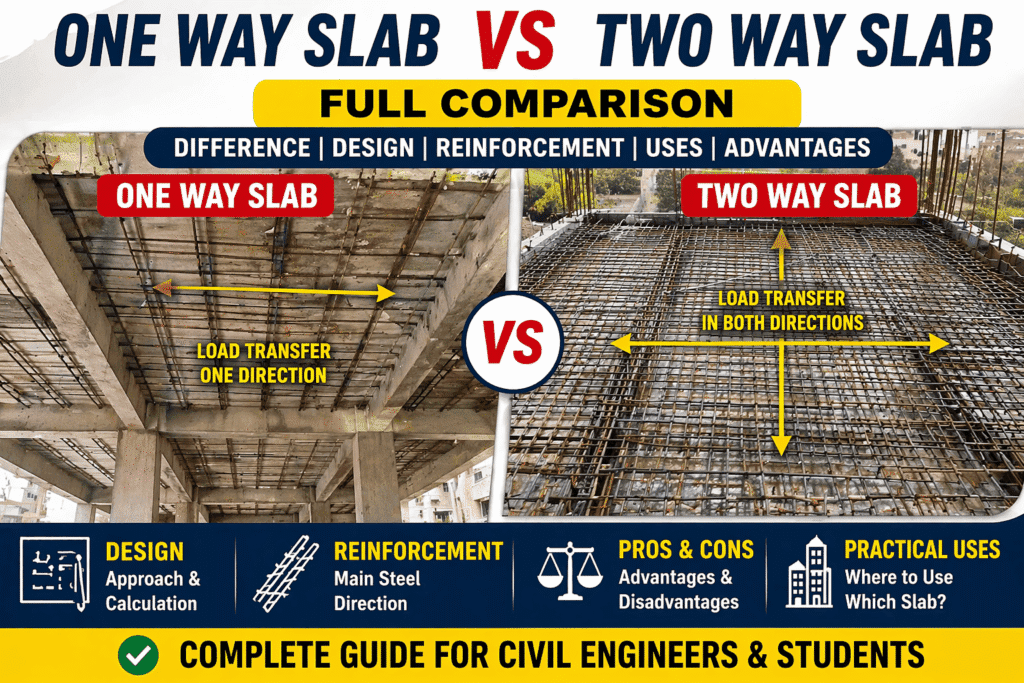
– One-Way Slab
– Two-Way Slab
– RCC Beam
– RCC Column
– RCC Footing
– Reinforcement
– Development Length
– Lap Length
– Concrete Cover
– Reinforcement Placement
– RCC Construction Practices
In RCC work, factors such as drawings, reinforcement detailing, formwork, concrete placement, compaction, and curing directly impact structural performance.
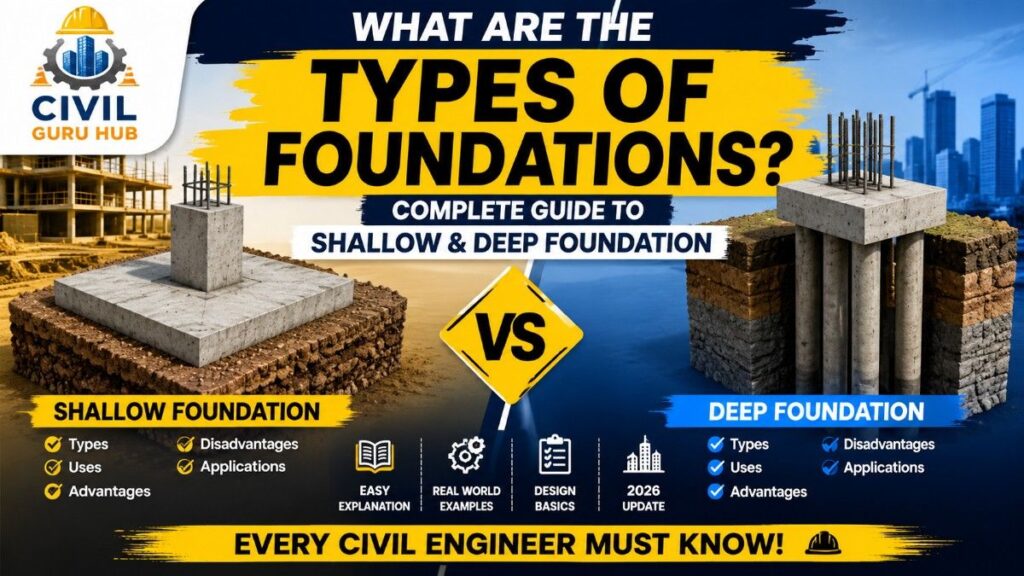
The foundation safely transfers the structure’s load to the soil. Therefore, the selection and construction of the foundation are critical for structural safety. In this section, you can understand topics related to foundations:
– What is a foundation?
– Shallow Foundation
– Deep Foundation
– Isolated Footing
– Combined Footing
– Strip Footing
– Raft Foundation
– Pile Foundation
– Bearing Capacity
– Settlement
– Foundation Failure
– Foundation Construction Practices
For foundation design and construction, one must always follow actual project drawings, soil investigation reports, and applicable design codes.
Culverts play a crucial role in safely allowing water to pass beneath roads and embankments.
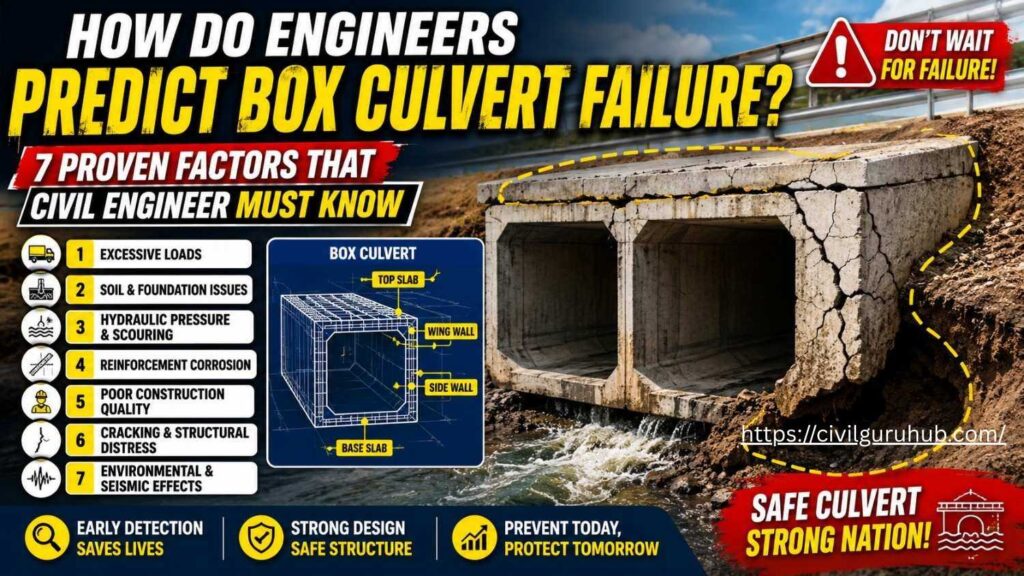
CivilGuruHub covers practical topics related to culverts, such as Box Culverts. Understanding the components, applications, structural behavior, construction, and failure-related issues of box culverts is useful for site engineers.
Important topics:
– Box Culvert
– Single Cell Box Culvert
– Multi Cell Box Culvert
– Culvert Components
– Culvert Construction
– Culvert Failure
– Differential Settlement
– Cracking
– Scouring
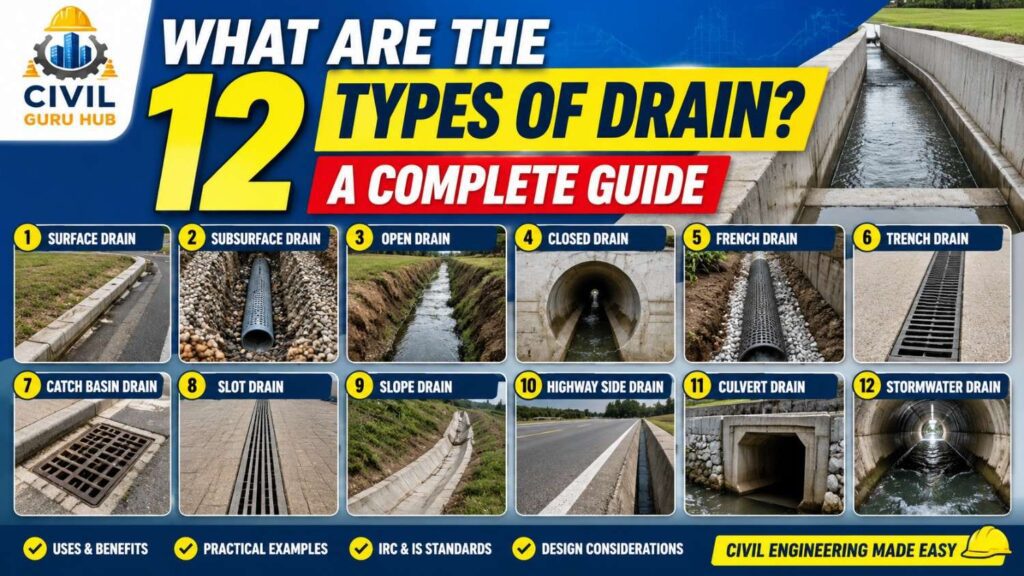
– Drainage Problems
– Culvert Inspection
Box culverts are used for water passage beneath roads, and their design depends on hydraulic, structural, and foundation conditions.
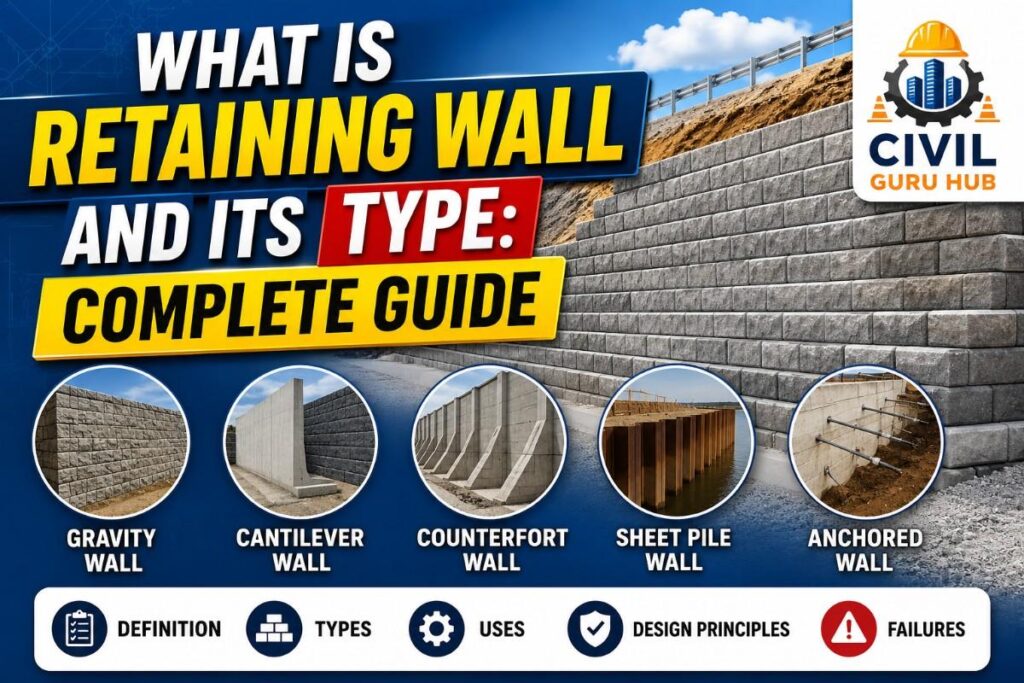
Retaining walls and slope protection structures are used to maintain the stability of soil, embankments, and slopes.
In this category, you can learn about the following topics:
– Retaining Wall
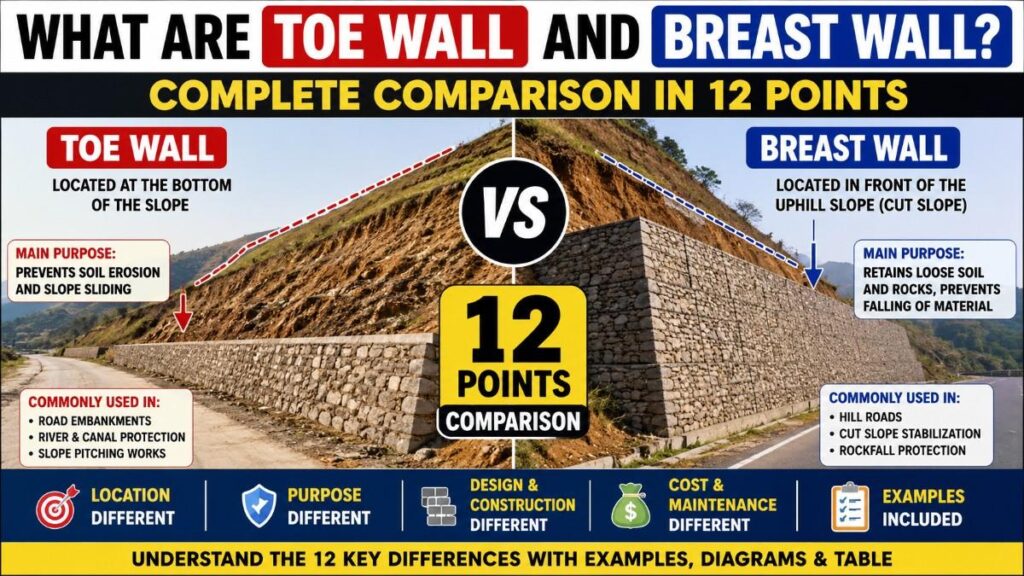
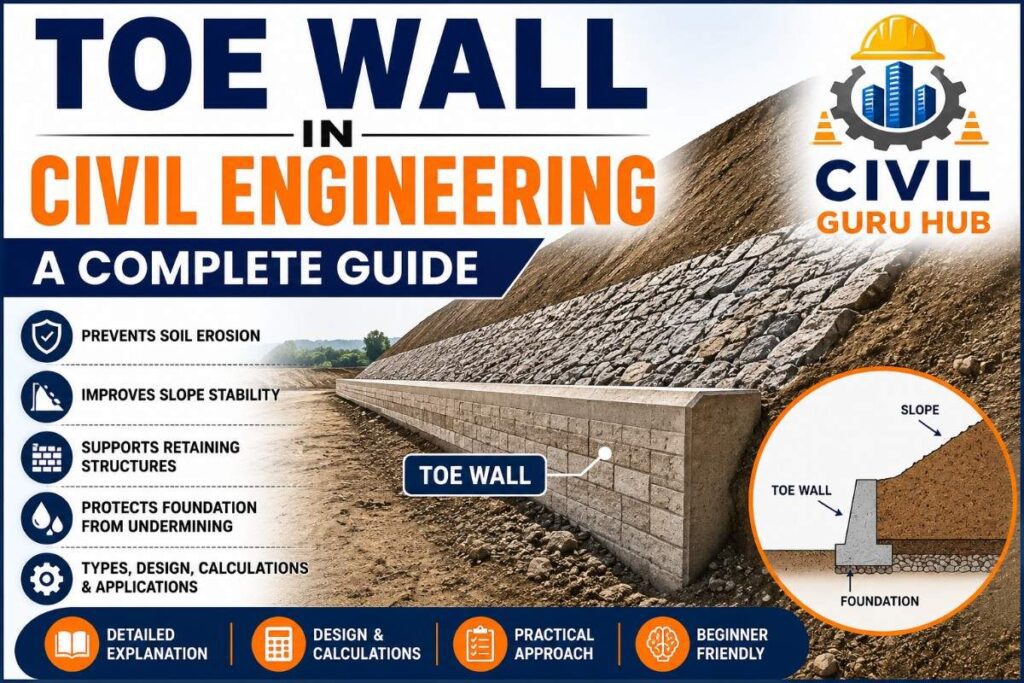
– Toe Wall
– Breast Wall
– Slope Protection
– Embankment Protection
– Soil Retention
– Erosion Control
– Drainage Behind Retaining Walls
– Retaining Wall Failure
– Slope Stability
Toe walls and breast walls may look similar, but their location, purpose, and engineering behavior can differ. Therefore, it is important to correctly identify these structures on-site.
Identifying structural cracks and construction defects at an early stage is crucial. Not every crack indicates structural failure; however, the crack’s location, width, pattern, depth, and development behavior should be carefully inspected. This section contains topics like:
– Structural Cracks
– Beam Cracks
– Column Cracks
– Slab Cracks
– Foundation Cracks
– Shear Cracks
– Flexural Cracks
– Settlement Cracks
– Concrete Cracks
Honeycombing
– spalling
– Reinforcement Corrosion
– Structural Inspection
– Repair and Maintenance
You will get help in understanding.
In bridge construction, different structural components are combined to form a complete system. Practical understanding of components like wearing coat, deck, drainage, bearings, joints and substructure is important for engineers.
Bridge-related structural topics can also be covered in this section, such as:
– Wearing Coat
– Bridge Deck
– Bridge Components
-Bearings
– Expansion Joints
– Approach Slab
– Bridge Drainage
– Bridge Inspection
Structural safety cannot depend only on design. Construction quality is also equally important.
The engineer on site should check the following points:
– Reinforcement diameter
– Reinforcement spacing
– Bar placement
-Development length
Lap length
Concrete cover
– Formwork alignment
Formwork stability
Concrete grade
-Slump
Concrete compaction
– Curing
– Construction joints
Honeycombing
– Cracks
– Levels and dimensions
In the actual project it is necessary to follow the approved drawings, specifications, method statements and applicable codes.
Structural Engineering for Civil Engineering Students
If you are a civil engineering student, it will be more useful to learn structural engineering step-by-step.
You can follow this sequence:
Basic Structural Concepts
↓
Loads and Structural Behavior
↓
Concrete and Reinforcement
↓
RCC Members
↓
Foundations
↓
Culverts and Bridge Structures
↓
Retaining and Slope Protection
↓
Structural Defects
↓
Inspection and Maintenance
↓
Practical Site Applications
With this approach you can connect classroom theory with actual construction practices.
Practical Structural Knowledge for Site Engineers
For a site engineer, merely reading the drawing is not sufficient. We must also understand construction sequence, quality control, reinforcement placement, concrete work and structural defects.
Important checks during structural work can include:
– According to the dimensions of the drawing
– Reinforcement spacing
– Reinforcement quantity
Concrete cover
– Formwork level and alignment
Concrete quality
– Proper vibration
– Curing
– Construction joints
Surface defects
– Cracks
– Drainage arrangements
– Backfilling
-Settlement
– Structural condition
These checks should be performed according to project specifications and approved drawings.
Structural Engineering in IS and IRC Standards
Different Indian Standards, IRC publications and project specifications are used in structural engineering and infrastructure projects.
Practical Structural Engineering Resources
The objective of CivilGuruHub is not to limit structural engineering to simple definitions.
We focus on understanding the concepts from practical engineering point of view.
According to the topic in the articles, this information can be found:
– Basic concept
-Components
-Working principle
– Construction procedure
– Practical examples
-Calculations
– Common mistakes
– Inspection points
– Structural defects
-Repair considerations
-IS/IRC references
-Frequently Asked Questions
The purpose of this approach is to help students and professionals connect theory with practical site conditions.
Important Topics of Structural Engineering
You can explore the following important topics in Structure category:
RCC Structures
Foundations
Footings
Slabs
beams
columns
Reinforcement
Box Culverts
Bridge Components
Retaining Walls
Toe Walls
Breast Walls
Slope Protection
Structural Cracks
Concrete Defects
Structural Inspection
Repair and Maintenance
Frequently Asked Questions
What is Structural Engineering?
Structural Engineering is a branch of civil engineering which deals with the analysis, design, construction and performance of structures. Its main objective is to ensure the safety and stability of the structure against applicable loads and environmental conditions.
Which topics are covered in Structure category?
This category covers RCC structures, foundations, slabs, culverts, retaining walls, toe walls, breast walls, structural cracks, bridge components, and practical construction topics.
Is this section useful for civil engineering students?
Yes. The articles are explained using a simple and practical approach, so students can use these resources to understand and revise basic concepts.
Is this information useful for site engineers as well?
Yes. Topics related to construction practices, inspection points, structural defects, reinforcement, and quality can be helpful for the practical learning of site engineers.