
Table of Contents
Introduction
In the realm of civil engineering and infrastructure development, experts consider drains a crucial component. Whether dealing with highways, residential colonies, industrial areas, or agricultural land, some form of drainage system is essential everywhere to ensure the proper disposal of water. If engineers do not design and maintain drainage systems correctly, serious issues such as waterlogging, pavement failure, soil erosion, foundation damage, and environmental pollution can arise.
The primary objective of a drain is to collect unwanted surface water and groundwater and convey it safely to a suitable outlet. When engineers design drains for projects, they take factors such as rainfall intensity, catchment area, soil characteristics, slope, discharge capacity, and maintenance requirements into consideration.
In India, various standards and guidelines govern the design and construction of drainage systems. For highway drainage, experts consider the “IRC:SP:42 Guidelines on Road Drainage” a highly significant document. Similarly, relevant IS codes and hydraulic principles guide the design of concrete drains.
In this detailed guide, we will explore 12 types of drains, covering their uses, advantages, applications, and practical examples. This article will prove highly useful for civil engineering students, site engineers, contractors, highway engineers, and construction professionals.
Important standards
| Standard | Purpose |
|---|---|
| IRC:SP:42 | Road Drainage Guidelines |
| IRC:37 | Pavement Drainage Considerations |
| IS 1742 | Building Drainage Guidelines |
| IS 12056 | Gravity Drainage Systems |
| CPHEEO Manual | Urban Drainage Design |
1. Surface Drain
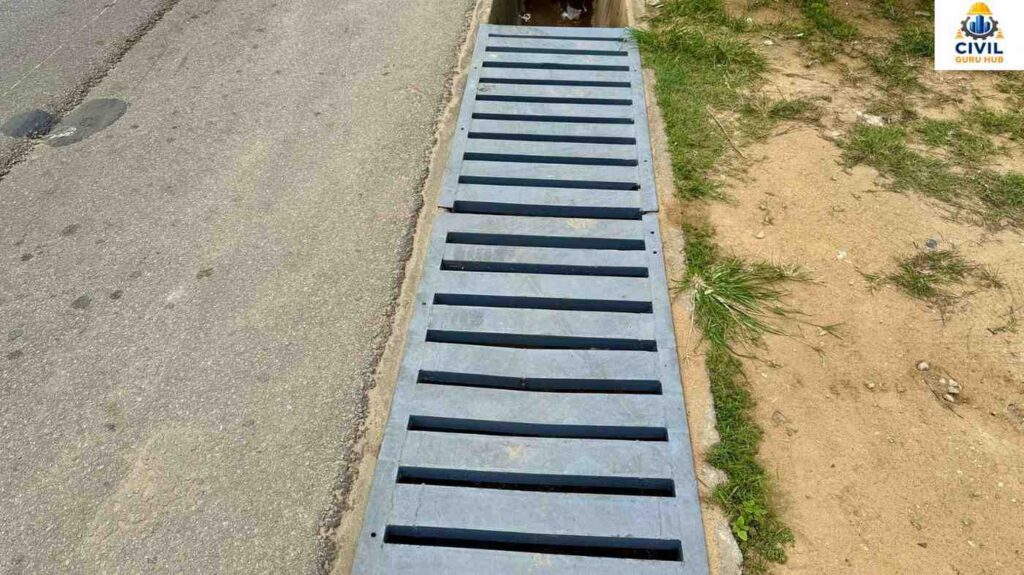
Surface drainage is considered one of the most commonly used drainage systems in highway and pavement engineering. Its primary purpose is to quickly collect rainwater accumulating on road surfaces, pavements, parking areas, footpaths, or any open paved area and discharge it to a safe location. In the absence of a proper surface drainage system during rainfall, water stagnates on the road, gradually leading to pavement deterioration and safety hazards.
Surface drains are generally designed to incorporate a specific cross-slope or camber on the road surface, allowing water to flow naturally toward the edges and be safely removed via the installed drainage system. An efficient drainage arrangement prevents water stagnation and protects the pavement structure from long-term moisture-related damage.
Longitudinal drainage systems constructed parallel to the shoulders in highway projects are the most common example of this. In urban areas, roadside concrete channels, covered drains, and kerb-side drainage systems also fall under the category of surface drainage. A proper drainage network also reduces the risk of flooding on city roads.
From a construction perspective, surface drains are built using RCC sections, brick masonry, stone masonry, or precast concrete units. Material selection depends on project costs, water flow requirements, and maintenance conditions. These systems are relatively easy to inspect and clean, making maintenance activities straightforward.
Practical Example
On the Nagpur-Amravati Highway, roadside drainage systems collect rainwater and discharge it into nearby natural channels and outlets. This is a practical and commonly observed example of surface drainage application.
Advantages
Surface drainage controls waterlogging, extends pavement life, helps maintain skid resistance, and reduces pavement damage caused by excessive moisture. Additionally, a proper drainage system significantly lowers long-term maintenance costs.
2. Subsurface Drain
A subsurface drain is commonly referred to as an underground water removal system; its primary purpose is to safely drain away excess groundwater accumulating beneath the road structure. Even if water is not visible on the surface, excess moisture within the soil can create serious problems for highway and pavement structures. Consequently, underground water management is considered crucial in civil engineering.
In many situations, the groundwater level beneath the road begins to rise gradually. As the soil continuously absorbs moisture, the subgrade weakens, and pavement layers lose their load-bearing capacity. This can result in issues such as settlement, uneven surfaces, rutting, cracking, and premature structural failure. To mitigate these problems, a proper underground water collection and discharge system is installed.
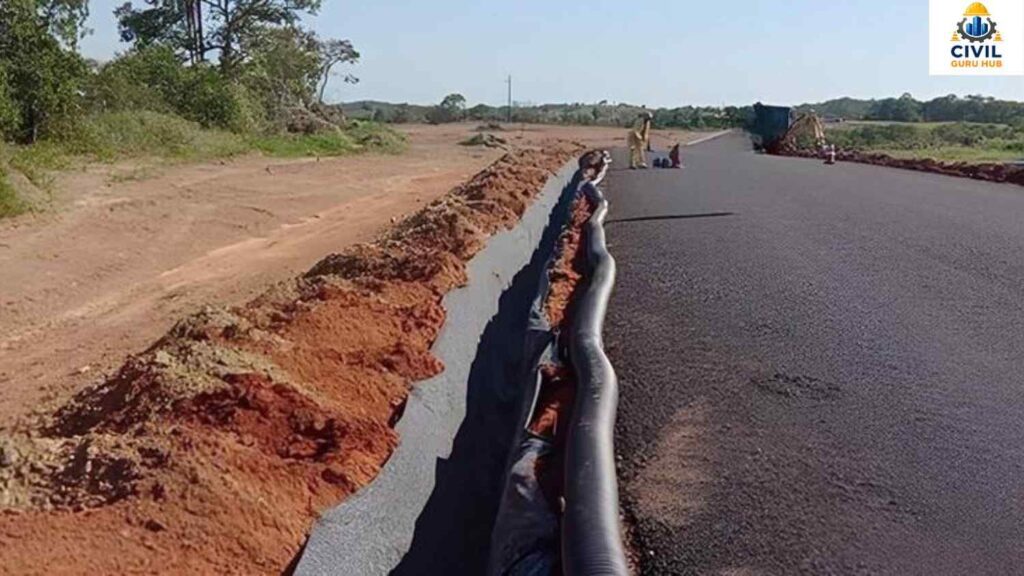
This system typically employs perforated pipes that collect water from the surrounding soil through small openings. These pipes are wrapped in geotextile fabric to prevent fine soil particles from entering. Graded filter material is placed around the pipe to facilitate water flow and minimize the risk of clogging. This setup allows collected water to flow easily to the designated disposal point.
Beyond highway construction, this arrangement is widely used in retaining walls, basements, airport pavements, and embankments, as moisture control directly impacts structural performance.
Practical Example
On modern expressways, perforated HDPE pipes are installed beneath median strips and pavement edges; this ensures continuous groundwater collection and safe removal, keeping the pavement dry.
Advantages
- Groundwater Control: Manages excess moisture and reduces water accumulation.
- Improved Pavement Strength: Enhances structural performance by mitigating weakening effects.
- Better Soil Stability: Prevents soil saturation, thereby reducing settlement and deformation.
- Extended Service Life: Significantly improves the overall lifespan of the road by reducing moisture-related failures.
3. Open Drain
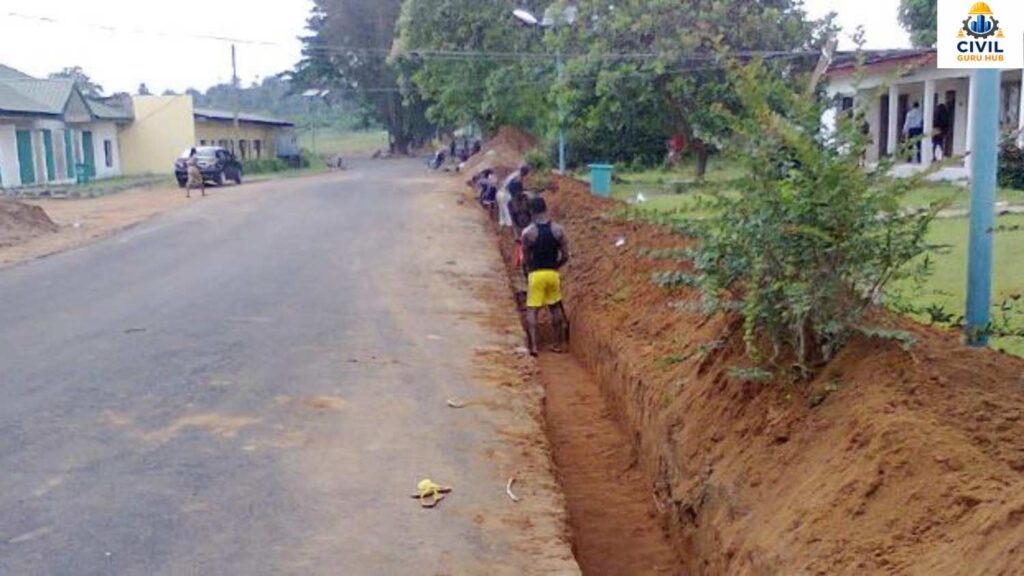
The open drainage system is considered the oldest and most widely used water disposal arrangement in civil engineering. A key feature of this system is that its upper portion remains completely open, allowing surface water to easily collect and flow away. Due to its simple construction and low installation cost, this system is still used in many places today.
Its use is quite common in rural areas, agricultural fields, along village roads, and on low-traffic routes. Such arrangements are considered more practical in rural regions compared to urban areas because land availability is relatively better, and construction requirements are comparatively simpler.
The construction process is also quite straightforward. The cross-section is designed based on field conditions and the required water flow. Trapezoidal, rectangular, and triangular sections are commonly adopted in practical applications. Dimensions are finalized by taking into account the required discharge capacity, slope, and available space.
In terms of inspection and monitoring, this system is very convenient. Since the structure is open, it is easy to visually identify issues such as blockages, silting, or problems related to water flow. Consequently, maintenance activities become comparatively simple.
However, there are some limitations. Due to the open surface, leaves, soil particles, plastic waste, and debris can accumulate. If regular cleaning is not performed, water flow may be reduced, potentially leading to local waterlogging problems. For this reason, periodic maintenance is crucial.
Practical Example
Simple earthen channels constructed along the sides of village roads are considered the most common example of this system; they safely carry rainwater away from the road section.
Advantages
- Low Construction Cost: The initial investment is comparatively low.
- Easy Inspection: Problems can be easily detected visually.
- Good Water Carrying Capacity: It can handle large flows if sized correctly.
- Simple Maintenance: Cleaning and repair activities are comparatively easy.
4. Closed Drain
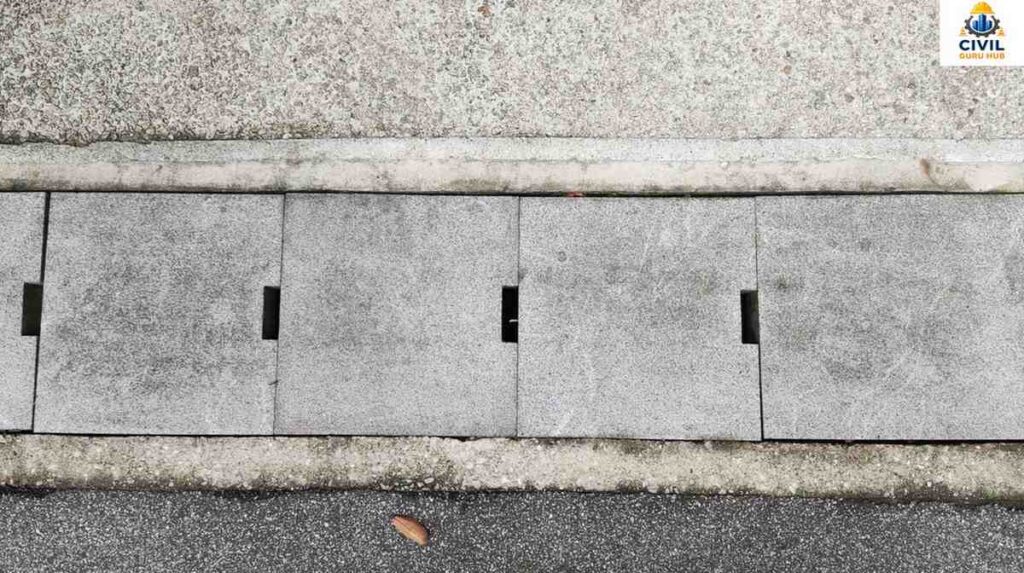
In closed systems, water is safely conveyed through enclosed pipes, covered conduits, or underground channels. This arrangement is particularly popular in urban infrastructure projects because land availability in cities is limited, and maintaining open surface water channels is often impractical. Consequently, this type of arrangement is preferred in modern urban planning.
Enclosed water conveyance systems are considered the most effective solution in areas with narrow roads, high pedestrian traffic, or where public safety is a critical factor. These systems typically utilize RCC pipes, HDPE pipes, covered conduits, or box culverts to safely transport water from one location to another.
A major advantage of this arrangement is that it creates a visually cleaner and more organized environment. Since there are no exposed surfaces—unlike open channels—garbage accumulation is comparatively lower, and the surrounding area looks aesthetically better. Appearance is a key consideration in urban infrastructure projects, which is why planners frequently opt for this approach.
Enclosed networks also play a vital role in stormwater management. Properly designed underground networks perform efficiently by quickly collecting and transporting excess runoff during heavy rainfall. For this reason, municipal authorities extensively adopt these systems in city infrastructure projects.
Practical Example
The underground stormwater networks in large metropolitan cities serve as an excellent example, where rainwater is efficiently transported via underground pipelines and covered structures.
Advantages
- Enhanced Public Safety: The absence of open channels significantly reduces the risk of accidents and accidental falls.
- Reduced Land Requirement: Underground installation allows for the efficient utilization of valuable surface space.
- Improved Appearance: Covered systems make cities look cleaner, more organized, and visually appealing.
- Relatively Lower Maintenance Frequency: Reduced exposure to garbage allows for comparatively longer intervals between cleaning operations.
5. French Drain
The French Drain is considered a highly popular solution for subsurface water management, used to control groundwater and excess moisture. Many people assume the name implies a connection to France, but it was actually named after the American engineer Henry French, who popularized the concept.
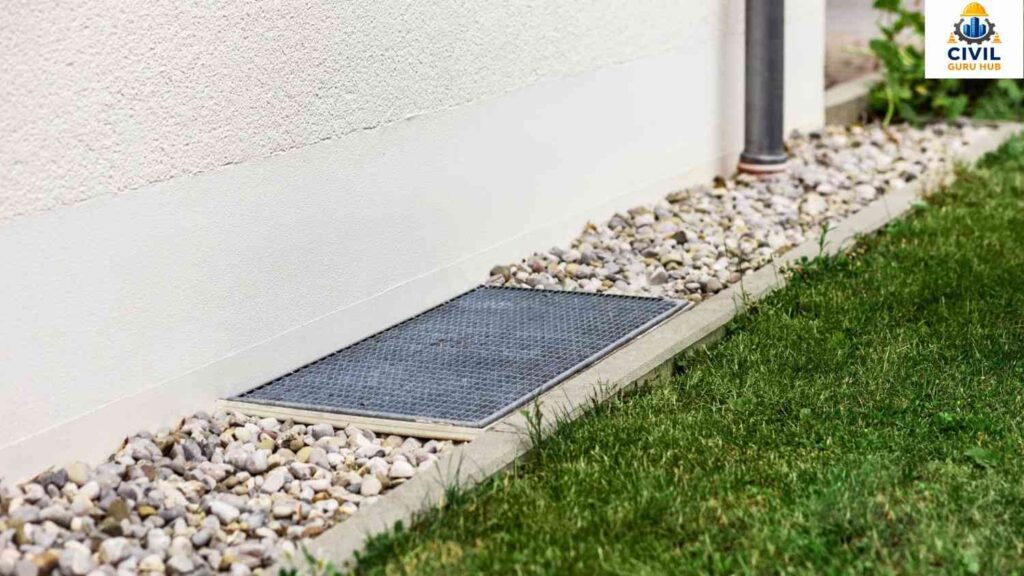
The working principle of this system is quite simple and practical. First, a narrow trench is excavated in the ground. This trench is filled with crushed stone or gravel, and a perforated pipe is installed in the center. When water accumulates in the surrounding soil, the moisture travels through the gaps in the gravel to the pipe and is then discharged in a controlled direction. This process helps keep the surrounding soil relatively dry and stable.
It is commonly used in residential construction projects, particularly for basement waterproofing. During the rainy season, many buildings experience issues with water accumulation and seepage near the foundation. In such situations, a properly installed French Drain protects the structure by reducing moisture pressure.
It also holds significant practical importance in highway engineering. Excessive groundwater beneath the pavement can weaken the subgrade, increasing the risk of settlement and pavement failure. Consequently, subsurface water control systems help improve road performance.
It is also used in agricultural areas to make waterlogged soil productive. Removing excess moisture provides better aeration for crop roots and enhances plant growth.
Construction Components
| Component | Function |
|---|---|
| Perforated Pipe | Collects infiltrated water |
| Gravel Layer | Provides filtration and flow path |
| Geotextile Fabric | Prevents soil mixing and clogging |
| Outlet Structure | Safely disposes collected water |
Practical Example
Suppose a residential building’s basement experiences repeated seepage during the monsoon season. Installing a French Drain around the foundation perimeter can reduce water accumulation and keep the basement area relatively dry. Proper installation and outlet arrangement are crucial for the system’s long-term performance.
Advantages
- Efficiently Controls Excess Groundwater
This system collects excess water from the surrounding soil and reduces unwanted moisture, thereby minimizing problems associated with water accumulation. - Reduces Seepage Problems
It helps lower water pressure around basements, foundations, and retaining structures, reducing issues related to seepage and dampness. - Improves Soil Stability
Removing excess moisture helps maintain soil strength, minimizing problems such as soil settlement and instability in soft ground. - Enhances Pavement Performance
Controlling groundwater beneath roads and pavements keeps the subgrade relatively stable, thereby extending the lifespan of the pavement. - Useful for Waterlogged Areas
It improves land usability and productivity in agricultural fields and low-lying areas by removing excess moisture. - Simple Construction Process
The installation process is relatively straightforward and can be executed using standard construction materials. - Low Maintenance Requirement
A properly installed system generally offers a long service life and requires relatively little frequent maintenance. - Cost-Effective Long-Term Solution
Beyond the initial installation cost, it helps reduce repair expenses and structural damage caused by moisture.
6. Trench Drain
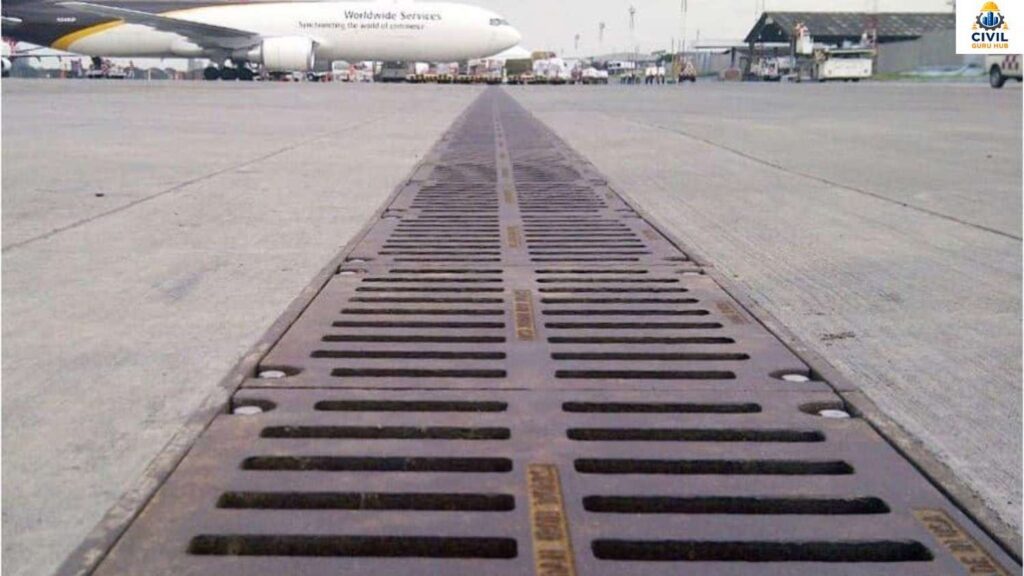
A trench drain often referred to as a channel system—is a linear water collection system designed to rapidly remove rainwater accumulating on the surface. This type of system proves highly effective in areas where significant runoff is generated within a short period.
It is commonly used in large paved areas such as parking lots, airports, industrial facilities, warehouses, and commercial complexes, where water accumulation could otherwise cause operational issues. The system is typically constructed using concrete channels topped with protective steel or cast-iron grating.
During rainfall, surface water follows the natural slope and enters the channel through the openings in the grating. This process significantly reduces surface water accumulation and enhances safety for movement, making such arrangements popular in high-traffic areas.
During the design phase, engineers carefully analyze factors such as hydraulic capacity, channel slope, and expected runoff volume. If capacity is not calculated correctly, overflow issues may arise during heavy rainfall, potentially affecting surrounding infrastructure.
The importance of these systems is even greater in industrial facilities, where surface runoff can mix with chemicals, oils, or other industrial contaminants. A proper collection and disposal system helps mitigate environmental damage.
Practical Example
The long, covered channels often seen in shopping malls and commercial parking areas are the most common real-life examples of this system.
Advantages
- Provides high water-carrying capacity
- Maintenance and cleaning are relatively simple
- Improves public safety by reducing water accumulation
- Keeps large paved surfaces operational and functional
To get more about structure, Click the below link and read the articles
What Are the Types of Wearing Coat in Bridges? 10 Easy Explanations
How Do Engineers Predict Box Culvert Failure? 7 proven Factors That Civil Engineer Must Know
What Is a Box culvert? 15 Important Facts for Civil Engineers
7. Catch Basin Drain
Catch basin systems play a crucial role in effective rainwater management in urban areas. If water falling on roads, parking areas, and paved surfaces is not collected properly, it can lead to waterlogging, localized flooding, and traffic disruptions. Catch basin systems are installed to address this issue.
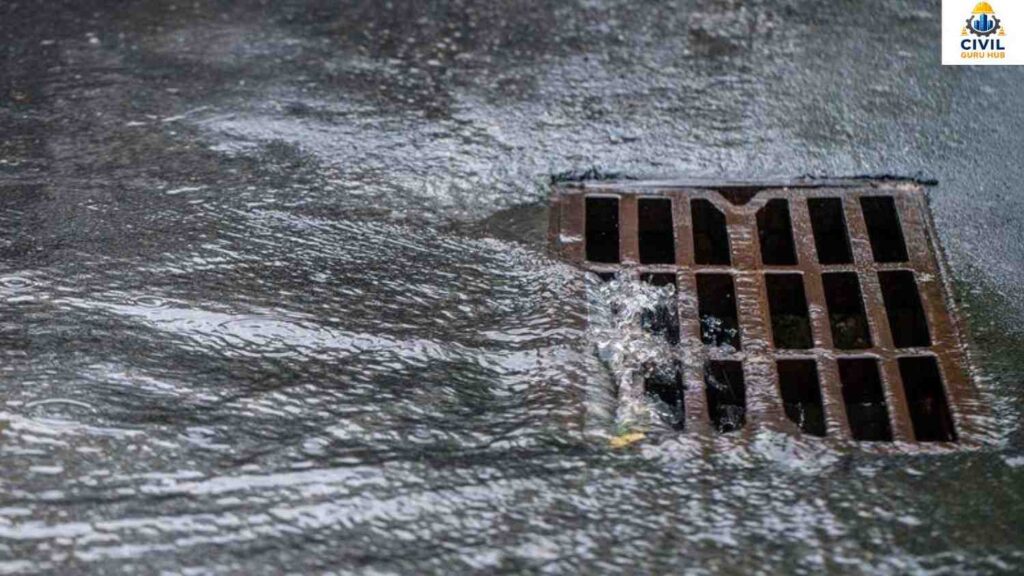
Their primary function is to collect surface runoff while simultaneously separating out unwanted materials. They are generally constructed as underground chambers topped with a metal grate. Surface water flows through the grate and enters the chamber.
The system is designed so that heavier particles such as soil, sand, leaves, and small debris settle at the bottom of the chamber. This process allows relatively cleaner water to flow out through the outlet pipe into the broader drainage network. Without this arrangement, solid particles could enter the pipelines directly and cause blockages.
This system is considered highly valuable in modern stormwater infrastructure because it reduces maintenance needs and enhances drainage efficiency. Municipal agencies perform regular cleaning to remove accumulated sediment and ensure the system continues to function smoothly.
Major Components
| Component | Purpose |
|---|---|
| Grating | Allows water entry from surface |
| Basin Chamber | Collects sediment and debris |
| Outlet Pipe | Transfers water to drainage network |
| Sump Area | Stores settled particles and waste |
Practical Example
You have likely seen openings covered with iron grates along city roads. A catch basin chamber is typically installed beneath these grates to collect rainwater and channel it into the underground network.
Engineering Importance
A well-designed catch basin system improves overall drainage efficiency, minimizes pipe blockages, and significantly reduces the risk of flooding. For these reasons, its use is considered essential in urban infrastructure projects.
8. Slot Drain
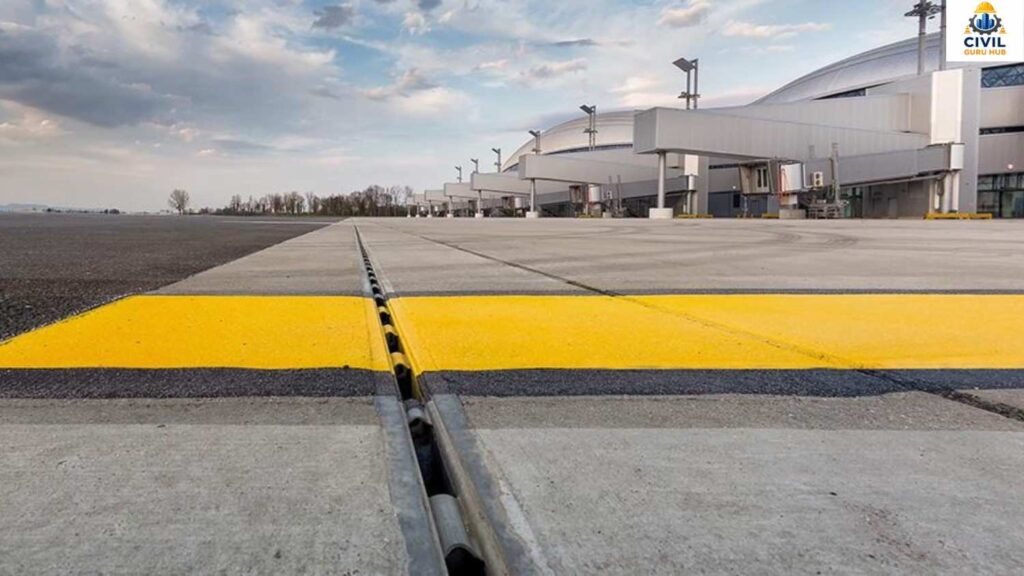
Slot Drain is considered a premium option among modern drainage solutions because its design is both simple and visually appealing. While traditional systems typically feature visible grating, this system presents only a narrow opening on the surface, through which water flows into the collection channel. Consequently, its use in urban infrastructure projects is steadily increasing.
Today, architects and urban planners prioritize both a clean aesthetic and functional infrastructure. With this in mind, such systems are being widely adopted at locations like railway stations, airports, shopping complexes, and pedestrian walkways. The minimal visibility of the openings gives public spaces a more organized and modern look.
Public safety is another key advantage of this system. The absence of large gratings makes walking surfaces comparatively safer, facilitating smoother movement for wheelchairs, luggage wheels, strollers, and pedestrians.
In terms of hydraulic performance, with proper sizing and design, it can efficiently collect surface water even during heavy rainfall. By reducing water accumulation, it minimizes slip hazards and issues related to stagnant water.
Stainless steel or polymer concrete are generally preferred materials during construction. These materials offer excellent corrosion resistance and high durability, resulting in relatively lower long-term maintenance costs.
Technical Overview
| Feature | Description |
|---|---|
| Opening Type | Narrow Surface Slot |
| Common Materials | Stainless Steel, Polymer Concrete |
| Main Application | Airports, Stations, Public Spaces |
| Safety Level | High for Pedestrians & Wheelchairs |
| Maintenance | Comparatively Low |
| Visual Appearance | Clean and Minimalistic |
Practical Example
The narrow, linear water collection openings often seen at modern airport terminal entrances and commercial plazas serve as practical examples of this system. These systems provide efficient water management while maintaining a clean aesthetic.
Advantages
- Provides a modern and visually clean appearance
- Improves safety in public spaces
- Requires relatively less maintenance
- Gives the urban landscape a premium look
- Offers a long service life due to highly durable materials
9. Slope Drain
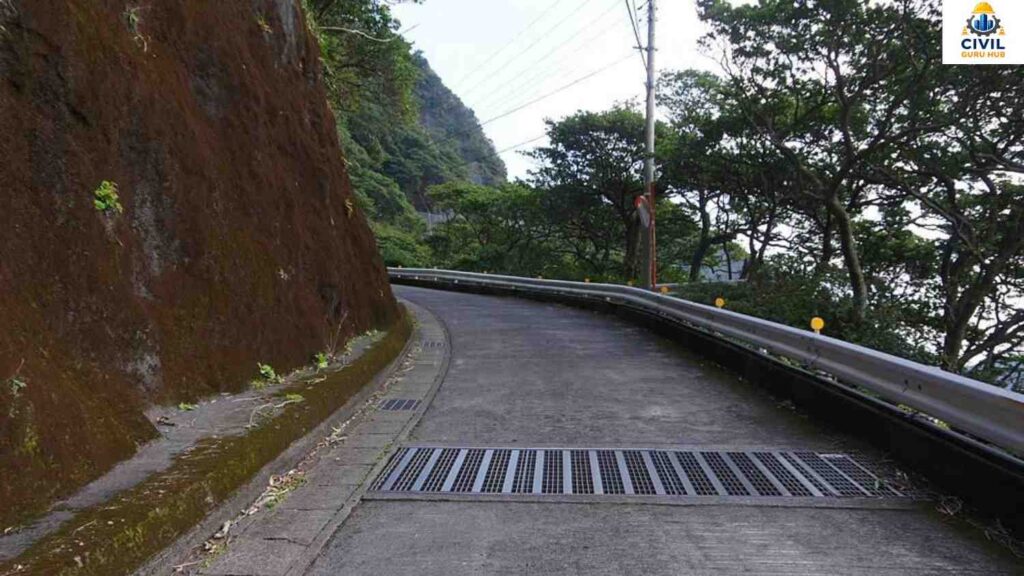
A slope drain is a specialized drainage arrangement provided on embankments, hill roads, and steep terrain to safely convey rainwater to a lower level. When water flows uncontrolled down a steep slope, soil particles gradually wash away, potentially leading to serious issues such as erosion, slope instability, and even landslides. This system is employed to mitigate these risks.
Its primary purpose is to provide a fixed, controlled path for water so that runoff does not directly damage the slope surface. Typically, the inlet is located at the upper section to collect runoff, while the outlet is positioned at a safe discharge point at the lower end. The design may vary based on project requirements and site conditions.
Slope drains are highly significant in highway engineering, particularly for embankment slopes, cut sections, and mountainous regions. During heavy rainfall, uncontrolled water movement can weaken road shoulders and embankments, thereby increasing maintenance costs. A proper water disposal system significantly alleviates this problem.
Practical Example
If you travel along mountain roads or highways in hill stations, you may have noticed concrete channels, lined chutes, or pipes running along the slopes to safely channel rainwater downwards. These are practical examples that play a crucial role in slope protection.
Advantages
- Reduces Soil Erosion: Controlled water movement prevents the slope surface from washing away.
- Improves Embankment Stability: Managing excess moisture helps maintain the structural strength of the slope.
- Minimizes Landslide Risk: Managing uncontrolled runoff on steep terrain reduces the likelihood of slope failure.
- Increases Service Life: Road infrastructure and slope protection systems remain effective for a longer duration.
Construction Materials
| Material | Application |
|---|---|
| RCC | Permanent Structures |
| HDPE Pipe | Flexible Drainage |
| Concrete Channel | Surface Flow Control |
| Stone Pitching | Erosion Protection |
10. Highway Side Drain
This component of the highway drainage system plays a crucial role in maintaining the performance and durability of road infrastructure. Its primary purpose is to collect rainwater runoff from the road surface, shoulders, and surrounding areas and discharge it safely. If surface water is not removed quickly, the road structure is subjected to excessive moisture, which can lead to long-term damage.
When water accumulates at the road edges following rainfall, pavement layers gradually weaken. Excess moisture can give rise to issues such as potholes, rutting, edge failures, and surface deterioration. For this reason, proper water management is prioritized right from the design stage in highway engineering.
According to the Indian Roads Congress guideline document IRC:SP:42, it is essential to carefully design the hydraulic capacity and longitudinal slope to ensure efficient runoff flow and prevent water stagnation.
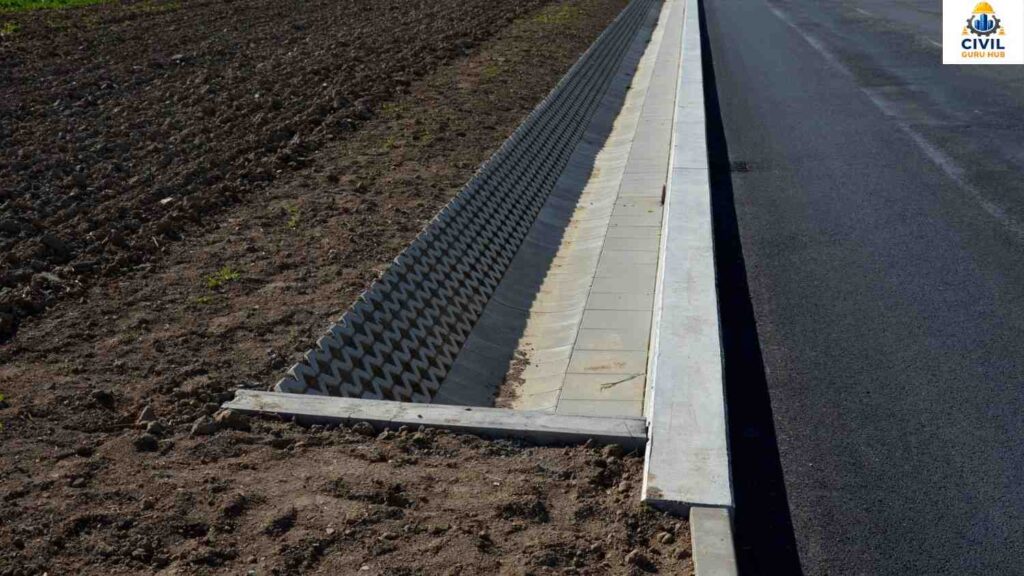
Different cross-sections are adopted based on the location. Earthen sections are generally an economical choice for rural roads, whereas concrete-lined systems are more common on urban highways due to their relatively easier maintenance. Masonry structures are used on hill roads to ensure better erosion control.
Typical Highway Side Drain Section
| Type | Common Use |
|---|---|
| Earthen | Rural Roads |
| Concrete | Urban Roads |
| Stone Masonry | Hill Roads |
| Lined | High Rainfall Areas |
Practical Example
In a practical field scenario, the long channels continuously provided alongside the shoulders of national highways serve as a common example of this application. A properly designed drainage system extends the road’s lifespan, reduces maintenance costs, and creates safer driving conditions.
Advantages
- Protects Pavement from Water Damage: Proper drainage arrangement protects the road surface and pavement layers from excessive moisture exposure. Removing water quickly significantly reduces the possibility of pavement deterioration.
- Reduces Formation of Potholes: Standing water can weaken asphalt and subgrade layers. Efficient runoff removal helps minimize potholes, cracks and surface failures.
- Improves Road Safety: Skidding, hydroplaning and accident risks are reduced by reducing water accumulation on road edges and carriageways. Drivers have got safer riding conditions.
- Increases Pavement Life: The service life of the road structure is improved by reducing moisture-related distress. This maintains long-term performance better.
- Reduces Maintenance Cost: Due to proper water management the requirement of frequent repair works is reduced. This reduces the cost, maintenance expenditure and rehabilitation.
- Prevents Shoulder Erosion: Uncontrolled runoff on shoulders can create erosion. Proper side drainage system helps maintain shoulder stability.
- Controls Water Logging Problems: Helps in avoiding water stagnation during heavy rainfall, especially in low-lying areas and high rainfall zones.
- Improves Overall Highway Performance: Efficient drainage system makes road infrastructure durable, functional and long-lasting, which improves overall highway performance.
11. Culvert Drain
Water management plays a crucial role in road and railway construction. Whenever a natural stream, seasonal drain, or runoff path intersects a road alignment, a culvert is installed to maintain the continuity of water flow. Its primary purpose is to allow water to move along its natural path while ensuring the safety of the road structure.
If a proper culvert is not provided, water may flow over the road surface during rainfall. This can lead to issues such as pavement deterioration, erosion, embankment failure, and traffic disruption. Consequently, significant importance is placed on culvert design in highway and rural road projects.
Common Types of Culverts
| Culvert Type | Shape |
|---|---|
| Pipe Culvert | Circular |
| Box Culvert | Rectangular |
| Slab Culvert | Flat Slab |
| Arch Culvert | Arch Shape |
Pipe Culvert
The pipe culvert is considered the most commonly used option. It is generally constructed using RCC or steel pipes and is suitable for handling small to medium water flows. The circular RCC structures often seen beneath village roads and highways fall into this category.
Box Culvert
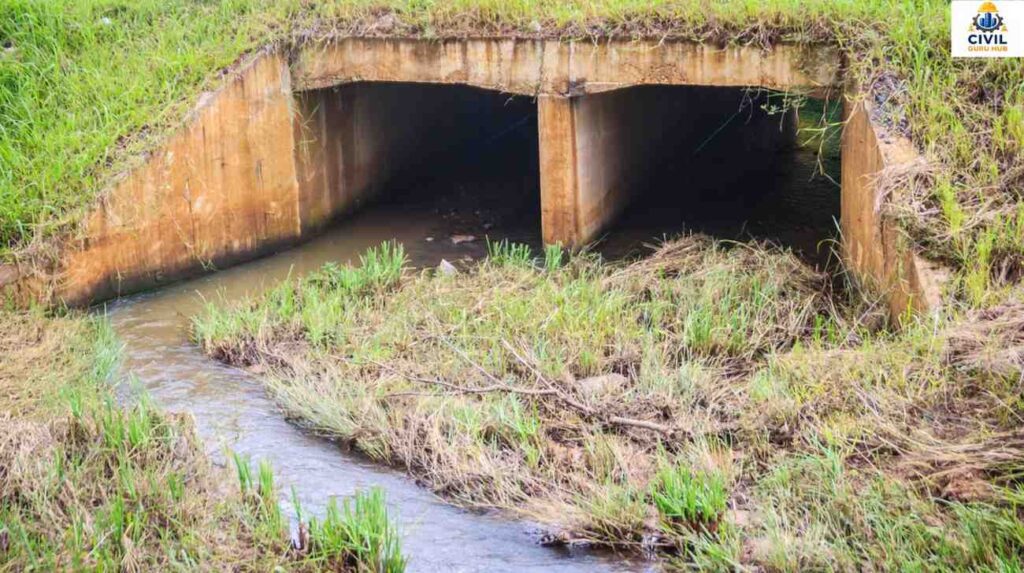
A box culvert is rectangular in shape and can handle comparatively larger discharge volumes. It is commonly used in urban areas and locations where high runoff is generated.
Slab Culvert
A slab culvert is a relatively simple structure in which a slab rests upon supports. It offers an economical solution for small crossings and short spans.
Arch Culvert
In addition to being aesthetically pleasing, an arch culvert offers structural efficiency. It effectively transfers loads and is utilized under specific site conditions.
Practical Example
RCC pipe crossings visible beneath rural roads, state highways, and expressways are the most common examples of this system.
Advantages
- Maintains natural water movement
- Protects road pavements and embankments
- Reduces the risk of flooding and overtopping
- Extends the service life of the road
- Minimizes the likelihood of traffic disruptions
12. Stormwater Drain
Stormwater drains are considered the backbone of modern urban infrastructure. These drains are specifically designed to collect and dispose of rainwater runoff.
Rapid urbanization reduces natural infiltration areas, leading to the generation of large volumes of runoff during heavy rainfall. Without an efficient stormwater drainage system, the risk of urban flooding increases.
A stormwater drainage network comprises catch basins, underground pipes, manholes, and outlet structures. Together, this system conveys rainwater to a safe discharge point.
In modern smart cities, stormwater drainage systems are designed with sustainable urban drainage concepts in mind.
Components of Stormwater Drain
| Component | Function |
|---|---|
| Catch Basin | Water Collection |
| Pipe Network | Water Conveyance |
| Manhole | Inspection Access |
| Outlet Structure | Final Disposal |
Practical Example
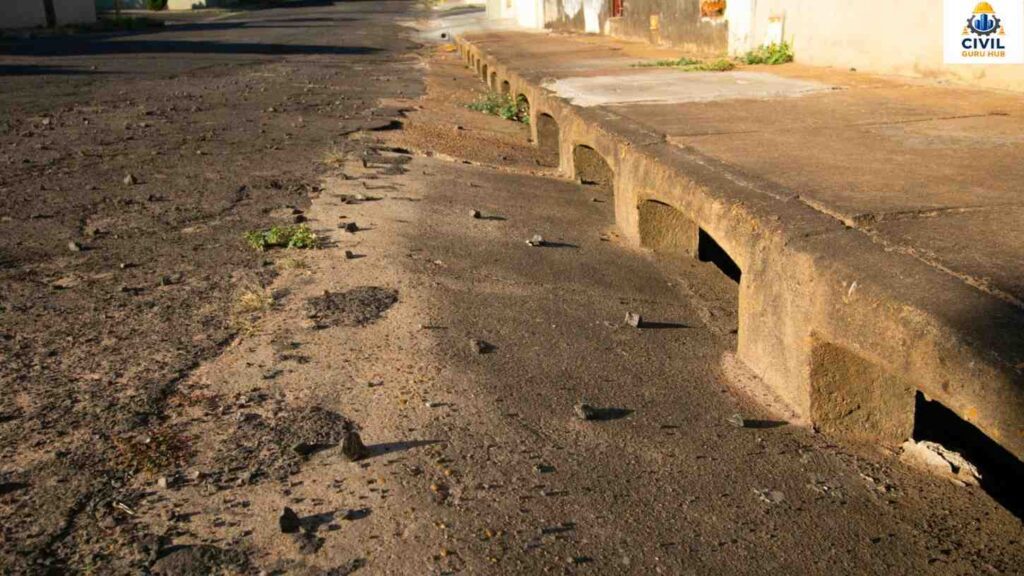
The underground drainage systems in metropolitan cities serve as excellent examples of stormwater drainage networks.
Advantages
Controls urban flooding. Improves public safety. Protects road infrastructure. Supports environmental sustainability.
Types Comparison Table
| Drain Type | Main Purpose | Common Location |
|---|---|---|
| Surface | Surface Water Removal | Roads |
| Subsurface | Groundwater Control | Highways |
| Open | Surface Flow | Villages |
| Closed | Underground Flow | Cities |
| French | Soil Drainage | Buildings |
| Trench | Surface Collection | Parking Areas |
| Catch Basin | Debris Collection | Urban Roads |
| Slot | Aesthetic Drainage | Airports |
| Slope | Erosion Control | Hill Roads |
| Highway Side | Road Protection | Highways |
| Culvert | Water Crossing | Roads |
| Stormwater | Urban Flood Control | Cities |
To get more about structure, Click the below link and read the articles
What Are Toe Wall and Breast Wall? Complete Comparison in 12 Points
One Way Slab vs Two Way Slab: complete guide
Toe Wall in Civil engineering : A complete guide
Factors to Consider During Drain Design
Designing a drainage system involves more than just transporting water from one location to another. Inadequate planning can lead to future issues such as waterlogging, pavement damage, erosion, and maintenance challenges. Therefore, engineers must carefully evaluate several critical factors during the design phase.
Assessing Rainfall Intensity
Understanding the expected rainfall in the area is the first step. If a region experiences heavy rainfall over a short duration, the water collection and disposal capacities must be planned accordingly. Rainfall data is used to estimate peak runoff, thereby minimizing the risk of flooding.
Catchment Area Analysis
The volume of runoff generated is directly proportional to the size of the contributing area. Surfaces such as roads, parking lots, roofs, and paved areas typically generate higher surface runoff. Consequently, accurately calculating the contributing area is a vital component of the design process.
Understanding Soil Characteristics
Different soil types absorb water at varying rates. Sandy soil allows for relatively rapid infiltration, whereas clayey soil poses a higher risk of water accumulation. Soil properties directly influence the system’s capacity and layout.
Impact of Groundwater Levels
A high groundwater level—close to the surface—can impair water disposal efficiency. Conditions involving high groundwater also necessitate considerations regarding structural stability and long-term performance.
Accessibility for Maintenance
Future cleaning and inspection requirements cannot be overlooked during the design stage. If maintenance is difficult, blockages and performance issues can arise rapidly.
Balancing Hydraulic Capacity and Cost
An undersized system risks causing future flooding, while an oversized arrangement leads to unnecessary construction costs. Therefore, combining proper hydraulic analysis with practical considerations and standard guidelines ensures an efficient and cost-effective solution.
Conclusion
The long-term performance of any infrastructure project depends not only on robust construction but equally on proper water management. Whether for residential buildings, highways, industrial zones, or modern urban developments, effective drainage systems play a crucial role in protecting structures from water-related damage.
Different systems are designed for various applications, as each location has unique requirements and water flow conditions. Surface water removal systems ensure the safety of roads and pavements, while stormwater management helps control flooding and water accumulation during heavy rainfall. Similarly, underground systems mitigate moisture-related structural issues and enhance foundation stability.
From a civil engineering perspective, understanding these systems is vital, as inadequate water management can lead to pavement failure, erosion, and structural settlement, while also significantly increasing maintenance costs. Proper planning and design extend the service life of infrastructure and reduce future repair expenses.
In modern engineering, drainage has also become a key component of sustainable development, supporting the creation of infrastructure that is safer, more durable, and environmentally responsible.
Best Civil Engineering Tools for Drainage Projects
The following products are commonly used for measurements, surveying, calculations, inspections, and site work. These tools can be helpful for both students and working professionals.
| Product | Use Case | Recommended For |
|---|---|---|
| Civil Engineering Handbook | Concepts & Learning | Students & Engineers |
| Laser Distance Meter | Site Measurements | Field Engineers |
| Geotextile Fabric | Subsurface Work | Contractors |
| Drain Inspection Camera | Inspection Work | Site Engineers |
| Auto Level Machine | Surveying | Highway Projects |
| Scientific Calculator | Design Calculations | Students & Professionals |
About Author
My name is Susanta Kumar Mohapatra, and I strive to share practical knowledge, construction concepts, and field-based insights related to Civil Engineering in simple, accessible language.
Through Civil Guru Hub, I explain Civil Engineering topics in a simple and practical manner, enabling students, site engineers, and working professionals to easily grasp complex concepts.
My goal goes beyond merely teaching theory; I aim to share real-world engineering knowledge, site practices, calculations, specifications, and practical applications so that readers can learn effectively and meet industry requirements.
If you wish to learn about Civil Engineering, Highway Engineering, Bridge Engineering, Construction Practices, and Infrastructure, Civil Guru Hub can serve as a valuable learning platform for you.
Disclaimer
This article is intended solely for educational and informational purposes. The information provided here is based on civil engineering concepts, field practices, industry standards, and general engineering knowledge. Before undertaking any construction project, site execution, design calculation, or practical implementation, please consult the relevant codes, specifications, and standards, and seek advice from qualified professionals.
The tools, equipment, products, or recommendations mentioned on this website are provided for informational purposes only. Some links may be affiliate links; making a purchase through them may earn us a commission at no extra cost to you. This helps us maintain the quality of our content and educational resources.
We strive to keep the information accurate and up-to-date; however, this website shall not be held liable for any errors, losses, or decisions made based on this information.
Thank you — Team Civil Guru Hub
Frequently Asked Questions (FAQs)
1. What is the main purpose of a drain?
The main purpose of a drain is to collect excess water and convey it to a safe location.
2. Which is the most common type of drain on highways?
Highway side drains and subsurface drains are the most common drainage systems.
3. Where are French drains used?
French drains are used for building foundations, basements, and agricultural lands.
4. What is the difference between a stormwater drain and a sewer drain?
A stormwater drain carries rainwater, whereas a sewer drain carries wastewater.
5. Which IRC standard is important for drainage?
IRC:SP:42 is considered the most important guideline for road drainage design.