
Introduction
Box culverts serve as an extremely critical structural component in road infrastructure, highway drainage systems, railway crossings, irrigation channels, and urban stormwater management. Whenever water flow needs to be safely conveyed beneath a roadway, engineers specify the design of an RCC (Reinforced Concrete) Box Culvert. However, under practical field conditions, box culverts frequently encounter issues ranging from premature distress, excessive settlement, and cracking to reinforcement corrosion—or even complete structural failure. Consequently, it becomes imperative for engineers to understand how to predict box culvert failure in advance.
In today’s modern civil engineering landscape, design alone is no longer sufficient. Structural performance monitoring, durability assessment, soil-structure interaction analysis, hydraulic behavior evaluation, and load-carrying capacity verification have become equally important. The failure of a culvert has a direct and profound impact on road safety, traffic flow, flood risks, maintenance costs, and public safety. In numerous instances, a culvert collapse can lead to the complete blockage of highways and significant damage to adjacent embankments.
Within the engineering realm, the prediction of box culvert failure is a multidisciplinary endeavor that draws upon contributions from Structural Engineering, Geotechnical Engineering, Transportation Engineering, Hydrology, and Materials Science. By utilizing various field tests, design calculations, inspection reports, numerical analyses, and provisions from IS/IRC codes, engineers determine whether a culvert remains structurally sound or is entering a zone of potential failure risk.
In this article, we will explore in detail how engineers predict box culvert failure and identify the seven proven engineering factors that hold the greatest significance in this process. Each of these factors is explained in depth, supported by practical examples, references to IS Codes and IRC guidelines, field observations, and engineering calculations.
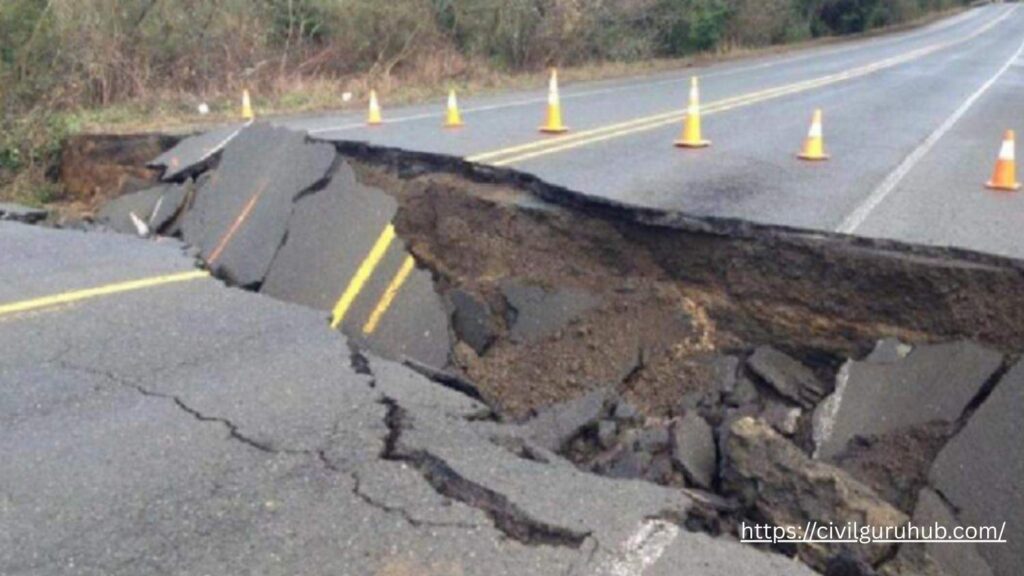
What is a box culvert failure?
Box culvert failure does not imply merely a complete collapse. In engineering terms, failure signifies the inability of a structural system to maintain its intended performance. Often, a culvert may appear visually stable, yet internally, issues such as reinforcement corrosion, differential settlement, hydraulic erosion, or shear distress may be developing.
Failure is generally categorized into two major types:
Structural Failure
In this condition, the RCC (Reinforced Concrete) member loses its load-carrying capacity. Excessive bending moments, shear stress, reinforcement yielding, slab cracking, or wall buckling serve as indicators of structural failure.
Functional Failure
Here, the structure does not collapse but fails to perform its proper drainage function. Examples of this include water blockage, silting, inadequate hydraulic capacity, and scouring.
Important IS Codes and IRC Codes Used for Box Culvert Failure Analysis
Civil engineers follow several Indian Standards and codes of practice for box culvert analysis and failure prediction.
| Code | Description |
|---|---|
| IS 456:2000 | Plain and Reinforced Concrete Design |
| IRC 6 | Standard Specifications and Code of Practice for Road Bridges |
| IRC 21 | Cement Concrete Road Bridges Standards |
| IRC SP 13 | Guidelines for Hydraulic Design of Culverts |
| IS 800 | Structural Steel Design |
| IS 1893 | Earthquake Resistant Design |
| IRC 78 | Foundation and Substructure Code |
| IS 3370 | Water Retaining Structures |
Factor 1: Excessive Load and Overloading Analysis
The primary and most critical factor that engineers analyze is load-carrying behavior. The design of any box culvert is tailored to specific loading conditions. However, under actual field conditions, the imposed load often significantly exceeds the assumptions made during the design phase.
In highway projects, loading scenarios typically involve IRC Class AA Loading, 70R Loading, or tracked vehicle loading. If actual traffic intensity increases or if overloaded trucks pass through continuously, stress concentrations begin to develop within the slab and wall members.
Engineers first evaluate dead loads, live loads, impact loads, and earth pressure. Stress distribution is then calculated using tools such as Finite Element Method analysis and software like STAAD Pro.
If the design bending moment proves to be lower than the actual induced moment, yielding of the reinforcement may occur. Under these conditions, crack widths increase, and the stiffness of the concrete gradually diminishes.
In practical projects, engineers conduct axle load surveys. On many highways, overloaded mining trucks or heavy construction equipment emerge as major causes of distress in box culverts.
Consider a typical example:
If a culvert was originally designed for IRC Class A loading, but following subsequent highway widening, heavy multi-axle trucks begin to operate continuously, the structure may enter a zone of fatigue failure.
To predict load behavior, engineers monitor the following parameters:
- Bending Moment
- Shear Force
- Deflection
- Slab Cracking
- Reinforcement Stress
- Fatigue Cycles
If excessive deflection exceeds the permissible limit, engineers issue immediate recommendations for structural strengthening.
Factor 2: Soil Settlement and Foundation Failure
A significant cause of box culvert failure in highway and drainage projects is soil settlement and foundation instability. In many instances, the structural design of an RCC box culvert is perfectly sound; however, the underlying supporting soil fails to provide the requisite strength. Consequently, the entire structure begins to settle unevenly, gradually leading to the development of cracks, deformation, and joint damage.
The risk of settlement is particularly high in areas characterized by soft clay, black cotton soil, loose sandy strata, or poorly compacted embankments. When the foundation soil does not behave uniformly, different sections of the culvert settle by varying amounts. This phenomenon is termed “differential settlement.” This condition is particularly hazardous as it creates an uneven distribution of stress within the structure. It is for this very reason that serious cases of RCC culvert damage have been observed in numerous highway projects.
Engineers conduct geotechnical investigations prior to construction to ascertain the actual load-bearing capacity of the soil. Settlement predictions are derived through a combination of field and laboratory testing. If the Soil Bearing Capacity (SBC) is found to fall below the permissible limit, the foundation pressure enters an unsafe zone. Over the long term, this issue accelerates structural distress within the culvert.
Important Soil Tests Used in Settlement Analysis
| Test Name | Purpose |
|---|---|
| Standard Penetration Test (SPT) | Determines soil density and strength |
| Plate Load Test | Measures bearing capacity and settlement behavior |
| Consolidation Test | Evaluates long-term settlement characteristics |
| Soil Bearing Capacity Test | Checks allowable foundation pressure |
| Settlement Analysis | Predicts total and differential settlement |
During practical site observations, engineers identify longitudinal cracks, corner separation, and slab distortion as indicators of settlement. If embankment compaction is inadequate, gradual settlement begins to occur following traffic loading and water seepage. This issue can become particularly severe during the monsoon season.
In an irrigation canal crossing project, it was observed that the embankment underwent continuous settlement due to inadequate compaction. Shortly thereafter, severe transverse cracks developed in the culvert’s top slab, and the joints began to open up. Subsequent investigations revealed that improper soil compaction and a weak foundation zone were the primary causes. This example clearly demonstrates how geotechnical negligence can lead to a major box culvert failure.
Fluctuations in the water table also directly influence settlement behavior. When the soil becomes saturated, its shear strength diminishes, and foundation instability increases. Consequently, drainage management and groundwater monitoring are of paramount importance. If these factors are overlooked, severe RCC culvert damages, which also compromise roadway safety may develop in the long term.
Weak Soil / Poor Compaction
↓
Differential Settlement
↓
Uneven Stress Distribution
↓
Cracks and Joint Opening
↓
Slab & Wall Deformation
↓
Structural Distortion
↓
Box Culvert Failure
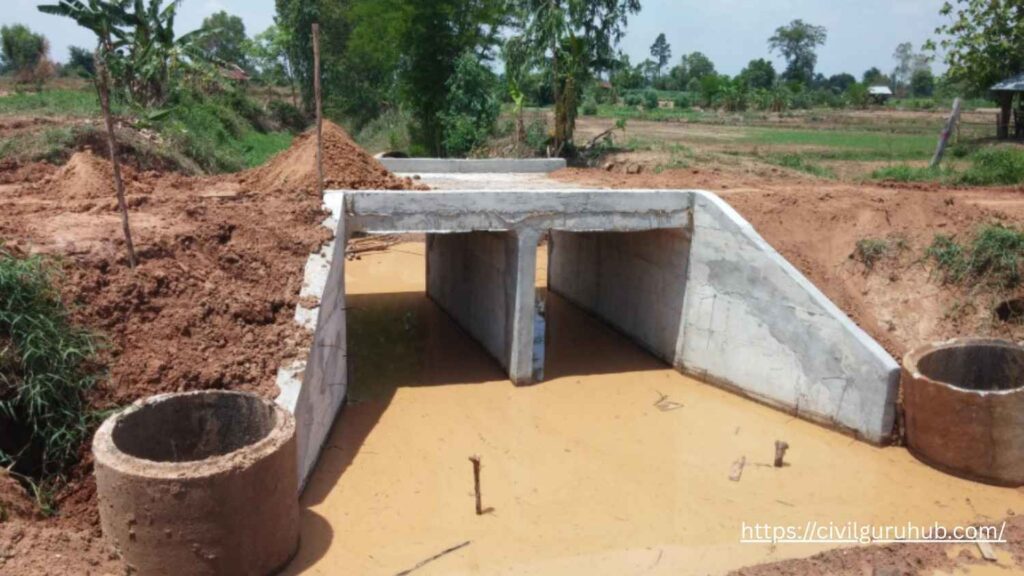
Factor 3: Hydraulic Pressure and Scouring Effect in Box Culvert Failure
Both hydraulic pressure and the scouring effect are considered among the most dangerous causes of box culvert failure. Often, the structural design of a culvert is perfectly safe, and the concrete strength is adequate; however, the hydraulic action of the water flow can weaken the foundation and initiate failure. For this reason, hydraulic analysis is considered a mandatory component of culvert design.
During periods of heavy rainfall and flood conditions, water enters the inlet and outlet regions of the culvert at high velocity. When this velocity becomes excessive, the flowing water begins to gradually erode the surrounding soil. This process is known as scouring. Continuous scouring progressively removes the foundation soil, eventually leading to a reduction in structural support. Over the long term, this condition can result in severe RCC culvert damage.
Engineers generally base hydraulic design on discharge capacity. In India, engineers commonly follow the IRC SP 13 guidelines to evaluate water discharge, flow velocity, afflux levels, and scour depth. Engineers use Manning’s Equation to calculate discharge:
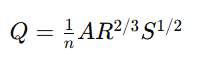
Here, Q represents the discharge, A is the flow area, R is the hydraulic radius, S is the slope, and n is the Manning coefficient. If the design discharge is estimated to be lower than the actual flood discharge, water pressure increases rapidly, and the risk of culvert overtopping rises. This situation directly leads to hydraulic distress and accelerates the failure of the box culvert.
Scouring is particularly dangerous on the outlet side, as the velocity concentration of the exiting water is at its peak there. Therefore, engineers incorporate cutoff walls, apron slabs, riprap protection, and energy dissipation structures to ensure effective erosion control. If adequate outlet protection is not provided, the foundation becomes exposed.
Common Hydraulic Distress Indicators
| Hydraulic Distress | Effect on Culvert |
|---|---|
| Foundation Undermining | Loss of structural support |
| Wing Wall Movement | Lateral instability |
| Soil Erosion | Settlement initiation |
| Water Leakage | Internal weakening |
| Sediment Deposition | Flow obstruction |
| Outlet Scouring | Foundation exposure |
During a state highway project, improper outlet protection allowed monsoon floods to wash away the soil on the outlet side completely. As the erosion progressed, the foundation became exposed, and settlement cracks started developing in the culvert. Engineers later found that the hydraulic design did not adequately account for the actual flood intensity, which eventually caused a critical box culvert failure.
In modern infrastructure projects, engineers utilize drone surveys, flood simulation software, and hydraulic modeling tools to predict potential box culvert failure risks in advance, thereby enabling the timely implementation of preventive measures.
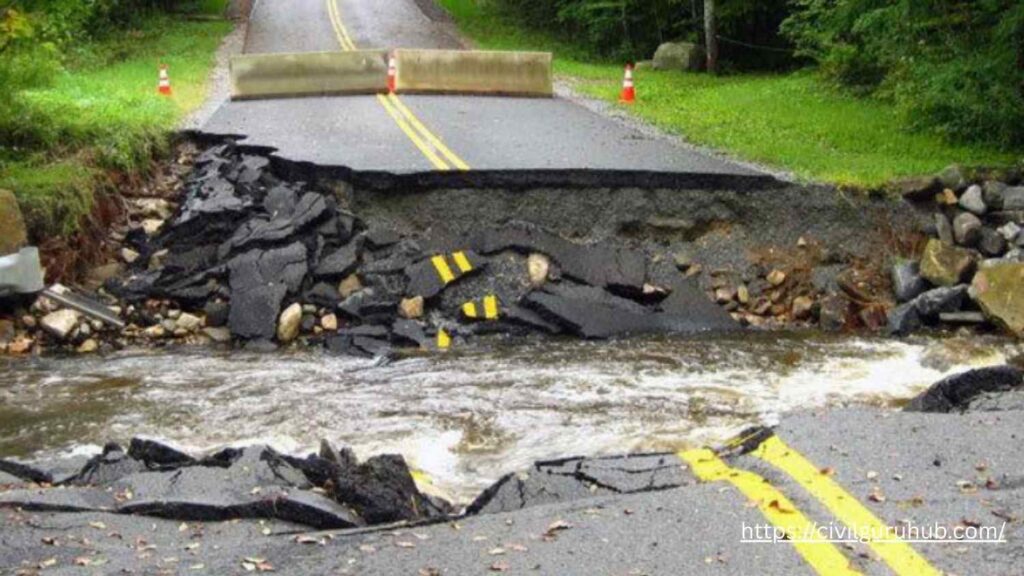
Hydraulic Failure and Flood Damage
Factor 4: Reinforcement Corrosion and Durability Problems in RCC Box Culverts
Engineers consider durability the most critical aspect of the long-term performance of RCC structures because the condition of the reinforcement directly controls structural durability. In many cases, reinforcement corrosion causes box culvert failure. Corrosion develops gradually over time and continuously weakens the structural strength of the culvert. Initially, the culvert may appear structurally stable from the outside, but internally, corrosion keeps deteriorating the reinforcement.
Concrete is not an entirely impermeable material. It contains microscopic pores and capillaries through which moisture, chlorides, sulfates, and carbon dioxide gradually penetrate. Once these harmful chemicals reach the reinforcement, the existing protective passive layer on the steel begins to degrade. It is at this juncture that corrosion initiates, potentially leading to severe structural failure conditions in the future.
The most significant impact of corroded reinforcement is on the structural capacity. The cross-sectional area of the steel begins to diminish, thereby reducing its load-carrying capacity. The bond strength between the reinforcement and the concrete weakens, eventually leading to the spalling of the concrete cover. Frequently, longitudinal cracks become visible on the slab surface, serving as an early warning sign of corrosion. If timely repairs are not undertaken, this deterioration can escalate into a severe box culvert failure.
Engineers conduct various field tests to assess corrosion. The Half-Cell Potential Test identifies the probability of reinforcement corrosion; the Cover Meter Survey verifies the depth of the concrete cover over the reinforcement; and the Carbonation Test evaluates the durability of the concrete. With the aid of these tests, the risk of future box culvert failure can be identified at an early stage.
In a project situated in a marine environment, the reinforcement suffered severe corrosion due to the chloride-rich atmosphere. This corrosion led to the development of punching distress in the top slab, ultimately rendering the structure unsafe. This example clearly demonstrates that overlooking aggressive exposure conditions can become a major contributing factor to future box culvert failures.
IS 456 durability provisions define the minimum concrete grade for aggressive environmental conditions. When engineers use low-grade concrete in severe exposure zones, the concrete becomes more permeable, which accelerates reinforcement corrosion. Therefore, engineers and durability experts recommend providing adequate cover thickness, maintaining a low water-cement ratio, and using high-quality concrete to prevent the long-term deterioration of box culverts.
Crack pattern analysis is also a crucial aspect of field investigations. Longitudinal cracks typically serve as an indication of reinforcement corrosion. If these signs are identified at an early stage and rehabilitation measures are undertaken, major box culvert failures can be averted. Only proper maintenance and durability-focused construction practices can significantly extend the service life of RCC culverts.
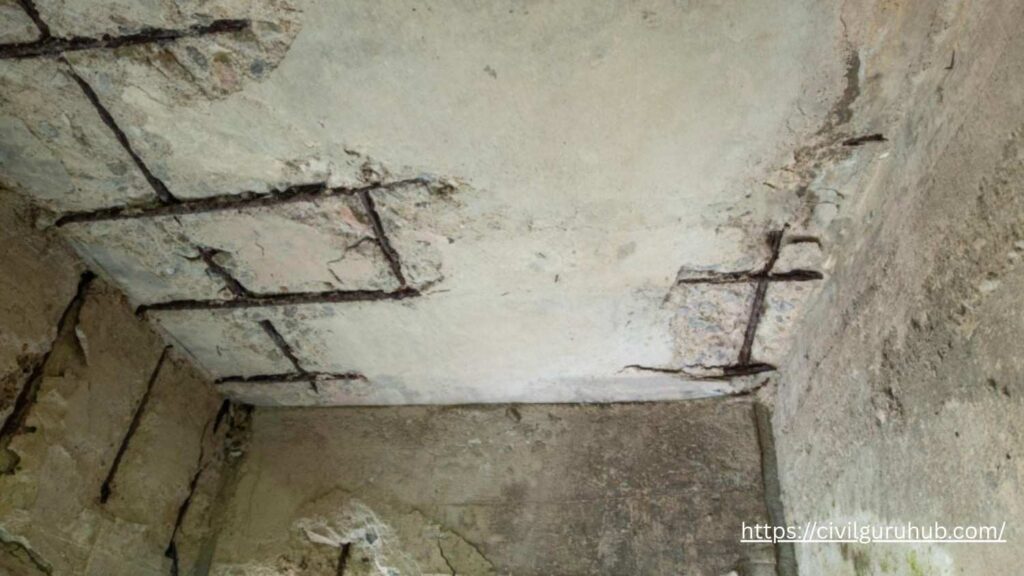
Reinforcement Corrosion in Box Culvert
To know more about Structures, click on given links.
What Is a Box culvert? 15 Important Facts for Civil Engineers
What Are Toe Wall and Breast Wall? Complete Comparison in 12 Points
One Way Slab vs Two Way Slab: complete guide
Factor 5: Poor Construction Quality and Material Deficiency
Often, engineers execute design calculations with perfect accuracy; yet, the structure still fails in the field. The primary reason for this is poor construction quality. The reality is that a significant number of box culvert failures stem not from design errors, but from issues related to site execution. If quality control is lax during the construction phase, even a robust design may fail to sustain long-term performance.
At construction sites, workers often fail to apply adequate vibration during concreting. As a result, air voids remain trapped inside the concrete, creating a defect known as “honeycombing.” This defect directly reduces structural durability and gradually increases the risk of box culvert failure. When water starts seeping through these voids, it rapidly accelerates reinforcement corrosion. The corroded steel then cracks the surrounding concrete and ultimately reduces the load-carrying capacity of the structure.
Improper reinforcement spacing constitutes another major issue. Failure to maintain the spacing and concrete cover specified in the design drawings disrupts the intended stress distribution within the structure. In many projects, laborers take shortcuts by shifting the reinforcement bars, thereby weakening the slab and wall sections. This inherent weakness leads to differential cracking and structural distress in the future, which can eventually escalate into a catastrophic box culvert failure.
Concrete strength is also a critical factor. If the actual concrete strength achieved at the site falls short of the design specifications, the culvert will be unable to safely withstand the anticipated loads. For this reason, cube testing and Non-Destructive Testing (NDT) methods are of paramount importance. Engineers typically utilize the Rebound Hammer Test and the Ultrasonic Pulse Velocity Test to assess the condition of existing concrete. These tests enable the identification of weak zones, thereby allowing for the prevention of potential box culvert failures at an early stage.
In a real-world highway project, severe honeycombing was observed in the bottom section of a culvert slab. Initially, the issue appeared to be minor; however, over the course of a few years, water ingress increased steadily, triggering aggressive corrosion of the reinforcement steel. Consequently, rapid cracking developed within the slab, and noticeable structural deflection became apparent. A subsequent investigation conclusively established that improper compaction during construction was the primary cause of the failure. This real-world example clearly demonstrates that even minor workmanship errors can lead to major failures in box culverts.
Construction joints also become vulnerable zones when workers fail to clean and seal them properly. Improper joint treatment allows seepage and leakage to develop, while continuous moisture exposure accelerates concrete deterioration. IS 456 clearly specifies proper curing, compaction, and workmanship requirements, yet contractors often neglect curing practices under practical field conditions. Many contractors do not maintain an adequate curing period, which causes shrinkage cracks to develop. Over time, these cracks reduce durability and increase the risk of long-term box culvert failure.
The use of poor-quality aggregates and an excessive water-cement ratio also serve to weaken the strength of the concrete. Excess water renders the concrete porous, thereby increasing its permeability. High permeability has a direct adverse impact on durability and accelerates the corrosion of the reinforcement steel. For this very reason, the selection of quality materials and strict supervision are considered essential components of any strategy aimed at preventing box culvert failures.
| Construction Defect | Impact on Box Culvert |
|---|---|
| Honeycombing | Increases seepage and corrosion |
| Improper Vibration | Creates voids and weak concrete zones |
| Low Concrete Strength | Reduces load carrying capacity |
| Poor Curing | Causes shrinkage cracks |
| Incorrect Reinforcement Spacing | Disturbs stress distribution |
| Excess Water-Cement Ratio | Reduces durability and strength |
| Poor Joint Treatment | Leads to leakage and seepage |
| Low Quality Aggregates | Weakens overall concrete performance |
Factor 6: Cracking Pattern and Structural Distress Monitoring in Box Culvert Failure
The most effective and practical method for identifying box culvert failure is crack pattern analysis. Experienced site engineers and structural experts can accurately assess the actual condition of a structure simply by observing the direction, width, depth, and location of the cracks. Every crack serves as a warning sign, indicating the stresses and weaknesses developing within the structure. For this reason, crack monitoring is accorded significant importance in modern highway and drainage projects.
When vertical cracks develop in a structure, they are generally associated with unequal settlement. If one section of the foundation settles excessively while another remains stable, differential movement occurs, thereby increasing the risk of box culvert failure. Similarly, diagonal cracks typically indicate shear stress and overloading. These cracks tend to develop particularly near corners and wall-slab junctions, and are considered early warning signals of structural instability.
Longitudinal cracks usually result from reinforcement corrosion and water ingress. When the steel reinforcement begins to rust, the resulting expansion pressure causes the concrete to crack. If timely repairs are not undertaken, the likelihood of box culvert failure gradually increases significantly. Map cracking generally indicates shrinkage or improper curing. While small, random cracks on the surface may not appear dangerous initially, they can compromise the long-term durability of the structure.
Common Crack Patterns in Box Culvert
| Crack Type | Possible Cause | Impact on Structure |
|---|---|---|
| Vertical Crack | Differential Settlement | Stability Reduction |
| Diagonal Crack | Shear Failure | Sudden Structural Distress |
| Longitudinal Crack | Reinforcement Corrosion | Durability Loss |
| Map Cracking | Shrinkage | Surface Deterioration |
| Wide Flexural Crack | Excessive Bending Stress | Load Carrying Capacity Reduction |
Crack width measurement constitutes a crucial component in the assessment of box culvert failures. Engineers monitor crack widths using crack gauges and digital microscopes. Moreover, IS 456 defines permissible limits for crack widths to ensure the durability and serviceability of the structure. Therefore, if the crack width is observed to be continuously increasing, it indicates that the structure is in an active phase of distress. Consequently, this situation can serve as a strong indicator of potential future failure of the box culvert.
In modern infrastructure projects, Structural Health Monitoring Systems are also frequently installed. Within this system, sensors continuously monitor parameters such as strain, displacement, vibration, and crack propagation. Real-time monitoring provides engineers with early warnings, enabling them to take preventive actions before a major box culvert failure occurs.
Nowadays, Finite Element Analysis is also extensively utilized in advanced projects. Through this analysis, zones of stress concentration, where the probability of future cracking and box culvert failure is highest are identified. This facilitates the scientific formulation of retrofitting plans and maintenance strategies. Proper crack monitoring, timely repairs, and continuous inspections are considered the most reliable solutions for the long-term prevention of box culvert failures.
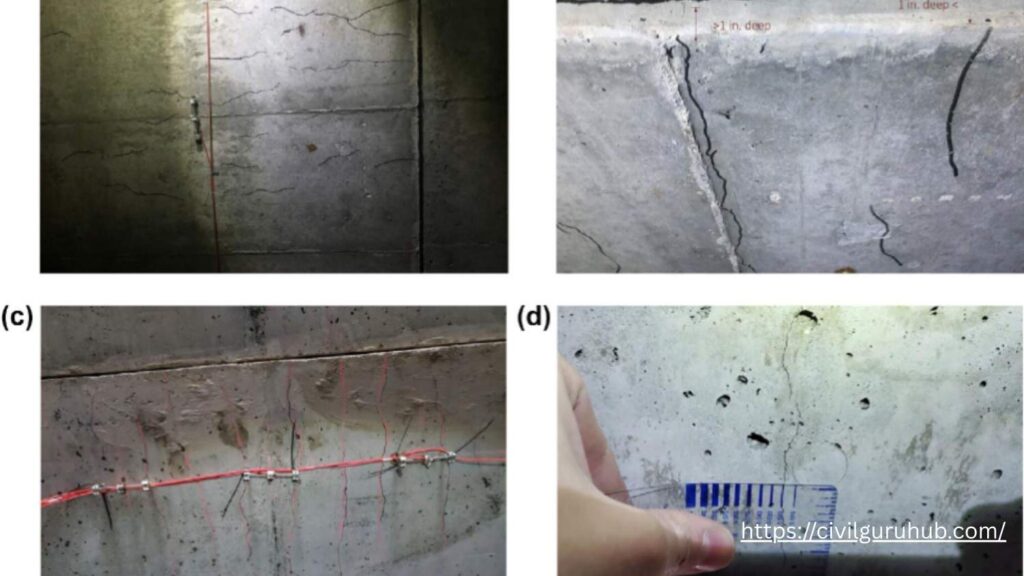
Factor 7: Environmental and Seismic Effects in Box Culvert Failure
Environmental and seismic conditions have a profound impact on box culvert structures. Often, while a culvert’s design may be structurally sound, a failure to properly account for surrounding environmental conditions can lead to the development of serious long-term damage. For this reason, in modern highway and drainage engineering, environmental durability is accorded just as much importance as load-carrying capacity. In contemporary infrastructure projects, environmental deterioration and seismic effects frequently stand as the primary causes of premature box culvert failure.
In earthquake-prone regions, seismic forces drastically alter the behavior of box culverts. Typically, culverts are designed to withstand static loads; however, during an earthquake, dynamic forces emerge that simultaneously impact both the structure and the surrounding soil. Consequently, Indian standards—such as the IS 1893 guidelines published under the aegis of the Bureau of Indian Standards—incorporate specific provisions for seismic design. Failure to strictly adhere to proper seismic detailing can result in severe box culvert failure scenarios.
During an earthquake, the joints are typically the first components to show signs of weakening. Continuous vibrations lead to joint separation, which, in turn, exacerbates water seepage. This seepage gradually accelerates the corrosion of the reinforcement steel. In numerous instances, box culvert failure is directly triggered by distress occurring at the joints. Similarly, in loose, saturated soils, the phenomenon of liquefaction may occur, wherein the soil temporarily loses its load-bearing capacity. When the foundation support is compromised, differential settlement and tilting ensue, which can ultimately precipitate the complete failure of the box culvert.
Temperature variation constitutes another critical environmental factor. The diurnal temperature fluctuations between day and night, as well as seasonal shifts, induce cycles of expansion and contraction within the concrete. If the provision for expansion joints is inadequate, or if the reinforcement detailing is flawed, thermal stresses begin to accumulate. Over time, these stresses cause hairline cracks to propagate and evolve into major fissures. In the long run, this cracking serves as a conduit for water ingress and reinforcement corrosion, thereby continuously escalating the risk of box culvert failure.
In industrial zones, the presence of sulphate-rich soils and chemically contaminated groundwater also significantly compromises the durability of concrete. As a result, sulphate attack gradually degrades the cement paste, leading to a progressive reduction in the concrete’s internal structural strength. Consequently, surface scaling, spalling, and exposure of the reinforcement become common occurrences under such conditions. Furthermore, if timely maintenance is not performed, this chemical deterioration can eventually escalate into severe box culvert failure.
In cold climate regions, the freeze-thaw cycle presents a distinct challenge. When water trapped within the pores of the concrete freezes, its volume expands. Repeated cycles of freezing and thawing lead to the continuous development of internal microcracks. Gradually, the concrete begins to weaken, and surface disintegration sets in. This process is slow; however, over the course of several years, it can precipitate major failure conditions within the box culvert.
Environmental degradation is generally not an abrupt event; rather, it is a slow and progressive process that silently erodes structural reliability. For this reason, proper drainage, waterproofing, seismic detailing, the use of a durable concrete mix, and regular inspections are absolutely essential to prevent costly box culvert failure scenarios in the future.
| Environmental Factor | Impact on Culvert | Possible Failure Result |
|---|---|---|
| Earthquake Loading | Dynamic structural stress | Joint separation and cracking |
| Soil Liquefaction | Loss of soil support | Foundation settlement |
| Temperature Variation | Expansion and contraction | Thermal cracking |
| Sulphate Attack | Chemical concrete deterioration | Strength reduction |
| Freeze-Thaw Cycle | Internal concrete damage | Surface disintegration |
| Water Seepage | Reinforcement corrosion | Structural weakening |
Common Signs That Indicate Future Box Culvert Failure
Box culvert failure rarely occurs without warning. In most cases, the structure begins to exhibit various warning signs well in advance. If engineers and site supervisors identify these indicators in a timely manner, serious issues—such as major repair costs, traffic disruptions, and structural collapse—can be averted. Regular inspection constitutes a vital component of highway engineering and drainage infrastructure maintenance, as early detection plays a direct role in preventing box culvert failure.
The most common warning sign is water leakage. When joints are not properly sealed, water seepage ensues; this gradually weakens the concrete and heightens the risk of reinforcement corrosion. Similarly, wide cracks serve as a major indicator of potential future box culvert failure. Such cracks may signal structural distress, uneven load distribution, or substandard construction quality.
Settlement is another phenomenon considered to be a dangerous warning sign. If the culvert’s foundation weakens or the soil’s bearing capacity diminishes, the structure begins to settle unevenly—a process that can ultimately lead to box culvert failure. Rust stains indicate corrosion of the reinforcement steel, while soil erosion points to a risk of scouring. Slab deflection typically signals either overloading or insufficient structural strength. Ignoring these warning signs significantly increases the long-term risk of box culvert failure.
| Warning Sign | Engineering Meaning |
|---|---|
| Water Leakage | Joint Failure |
| Wide Cracks | Structural Distress |
| Settlement | Foundation Problem |
| Rust Stains | Reinforcement Corrosion |
| Soil Erosion | Scouring Risk |
| Slab Deflection | Overloading |
Modern Technologies Used for Box Culvert Failure Prediction
- In today’s modern infrastructure projects, engineers no longer rely solely on traditional inspection methods. With the aid of advanced technologies, it has now become possible to identify potential box culvert failures at an early stage. This allows for the timely mitigation of major structural damage, water leakage, settlement, and traffic disruptions.
- Drone inspection technology proves highly valuable for safely monitoring difficult-to-reach and inaccessible areas. Utilizing high-resolution cameras and thermal imaging, inspectors can detect cracks, erosion, and water seepage—indicators that may signal a potential future box culvert failure.
- Ground Penetrating Radar (GPR) is employed for reinforcement mapping, void detection, and the identification of hidden defects. This technology is particularly effective in detecting internal deterioration within older culverts.
- Artificial Intelligence-based predictive maintenance systems analyze sensor data to forecast potential risks of box culvert failure. Similarly, Finite Element Modeling provides accurate simulations of stress distribution and structural load behavior.
- IoT sensors enable real-time monitoring, allowing for the continuous tracking of vibration, settlement, moisture levels, and structural strain. This continuous monitoring significantly reduces the likelihood of sudden box culvert failures and facilitates more effective maintenance planning.
| Technology | Main Application | Benefit in Box Culvert Failure Prevention |
|---|---|---|
| Drone Inspection | Crack and erosion monitoring | Safe and fast inspection |
| Ground Penetrating Radar | Void and reinforcement detection | Hidden defects identification |
| AI Predictive Systems | Data analysis and prediction | Early warning of failures |
| Finite Element Modeling | Stress simulation | Accurate structural assessment |
| IoT Sensors | Real-time monitoring | Continuous performance tracking |
Conclusion
In today’s modern infrastructure projects, it is impossible to overlook the risk of box culvert failure, as even a minor defect can lead to major structural problems in the future. A robust initial design alone is not sufficient; regular inspection, maintenance, and performance monitoring are equally critical. When engineers identify warning signs such as cracking, settlement, seepage, reinforcement corrosion, joint separation, or drainage blockages in a timely manner, the risk of box culvert failure can be significantly mitigated.
Field conditions are constantly in flux. Heavy traffic loads, poor drainage, soil movement, flooding, and substandard construction quality can gradually become contributing factors to box culvert failure. Consequently, civil engineers must regularly conduct thorough load analyses, soil investigations, hydraulic studies, and durability assessments. Modern analytical software and advanced field inspection techniques also play a vital role in predicting potential box culvert failures.
By prioritizing preventive maintenance, the need for costly repairs and the occurrence of sudden box culvert failures can be effectively averted. Adherence to IS Codes and IRC guidelines, along with the use of high-quality materials and skilled construction practices, directly enhances the structural safety of the culvert. To ensure long-term sustainability, engineers must diligently monitor every potential indicator of box culvert failure, thereby ensuring that the structure remains durable, safe, and reliable.
Frequently Asked Questions (FAQs)
1. What is the most common reason for box culvert failure?
The most common reasons for box culvert failure are excessive loading and weak foundation conditions. Often, culverts are designed to accommodate limited traffic loads; however, heavy commercial vehicles may begin operating continuously in the future, leading to increased structural stress. Poor soil compaction, water scouring, drainage blockage, and reinforcement corrosion also gradually become major causes of box culvert failure.
2. How do engineers predict future box culvert failures?
Engineers predict future box culvert failures through regular inspections, crack monitoring, hydraulic analysis, settlement observations, and load calculations. Modern civil engineering projects also utilize Finite Element Analysis (FEA), Ground Penetrating Radar (GPR), drone surveys, and Structural Health Monitoring systems. Indicators such as increasing crack widths, slab deflection, and seepage serve as warning signs of impending box culvert failure.
3. Which types of cracks indicate a potential box culvert failure?
Diagonal cracks, shear cracks, and wide flexural cracks are considered direct indications of potential box culvert failure. If cracks continue to propagate, water seepage becomes visible, or rust stains begin to develop, the risk of reinforcement corrosion and structural weakening increases significantly. Ignoring such cracks can eventually lead to severe box culvert failure.
4. Which IS and IRC codes are important for preventing box culvert failure?
In India, the primary codes followed to prevent box culvert failure are IS 456:2000, IRC 6, IRC 21, IRC SP 13, and IRC 78. These codes provide comprehensive guidelines regarding loading criteria, reinforcement detailing, hydraulic analysis, durability, and foundation safety. Strict adherence to these codes significantly reduces the long-term risk of box culvert failure.
5. Can a damaged box culvert structure be repaired?
Yes, box culvert failures of a moderate severity level can be repaired and the structure strengthened. Engineers employ techniques such as epoxy grouting, RCC jacketing, carbon fiber wrapping, the addition of reinforcement, and foundation stabilization to carry out these repairs. Timely rehabilitation prevents severe box culvert failure and extends the service life of the structure.
6. How does hydraulic scouring cause box culvert failure?
Hydraulic scouring can directly become a major cause of box culvert failure. High-velocity water flow causes soil erosion in the inlet and outlet regions, leading to a weakening of the foundation support. As the supporting soil continues to wash away, settlement, cracking, and structural instability develop. Severe scouring can eventually lead to complete box culvert failure and collapse.