
Table of Contents
Introduction
In a country like India, highway construction projects depend heavily on weather conditions. Construction is relatively easier during the summer, but site conditions change drastically with the onset of the monsoon or rainy season. Without proper planning and quality control, just a few days of rain can cause damage worth lakhs of rupees. Consequently, maintaining highway construction quality during the rainy season becomes a primary responsibility for every contractor, site engineer, quality engineer, and project manager.
Common issues encountered during the rainy season include waterlogging, softening of the subgrade, aggregate contamination, failure of bitumen bonding, reduced concrete strength, loss of compaction, and pavement settlement. Avoiding these problems requires more than just experience; the practical implementation of guidelines from the Indian Roads Congress (IRC), MoRTH specifications, and relevant Indian Standards (IS Codes) is equally crucial.
The objective of IRC SP:42 is to provide guidance in this regard, enabling construction activities to be planned in alignment with environmental conditions without compromising quality.
In this article, we will explain IRC recommendations in simple language, drawing upon practical site experience. We will cover quality assurance, testing, calculations, and engineering judgment at every stage, helping you maintain the project’s durability and performance even during the rainy season.
Why is highway construction during the rainy season considered the most challenging?
Every construction material has its own moisture sensitivity. When it starts raining, not only does the surface get wet, but moisture levels within the soil also begin to rise.
This has a direct impact on every layer of the highway, from the foundation to the wearing course.
For instance, if the moisture content of the subgrade significantly exceeds the Optimum Moisture Content (OMC), proper compaction cannot be achieved. This leads to settlement issues in the future.
Similarly, in Wet Mix Macadam (WMM), excess moisture prevents the roller from achieving the required density and weakens the interlocking of aggregates.
In bituminous work, if the surface is damp due to rain, the bitumen fails to bond properly with the aggregates. This subsequently leads to stripping and the formation of potholes.
In concrete work as well, rainfall can alter the water-cement ratio of fresh concrete, potentially reducing its compressive strength.
Therefore, maintaining highway construction quality during the rainy season is not just about waiting for the rain to stop, it involves executing every activity through scientific planning.
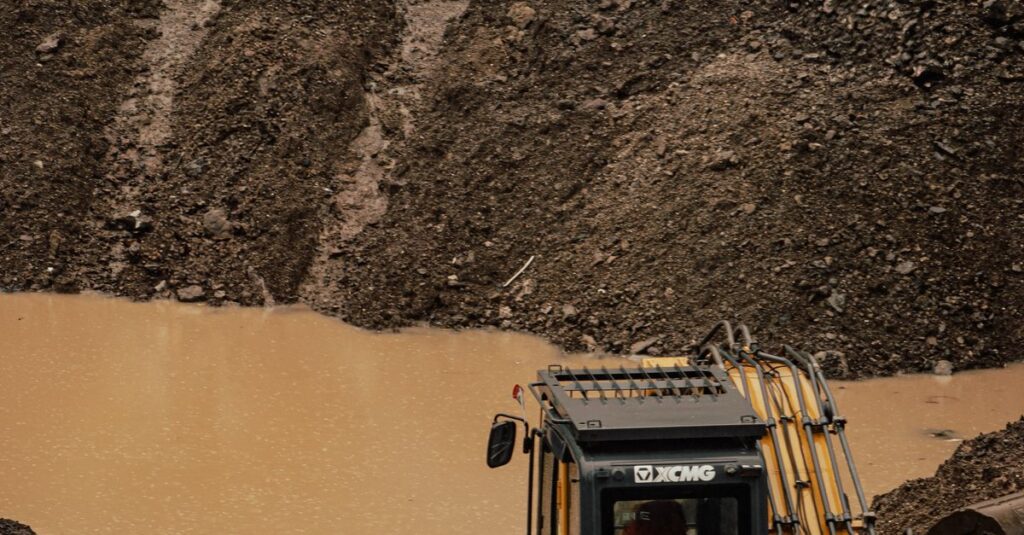
Planning for the Rainy Season as per IRC:SP:42
In accordance with the practical recommendations of IRC:SP:42, project planning should be revised before commencing construction during the rainy season.
The process begins with an analysis of rainfall history. By examining rainfall patterns over the past 10–20 years, the period of expected heavy rainfall is identified.
Subsequently, critical construction activities are categorized.
These include:
- Earthwork
- Granular Layers
- Drainage Work
- Concrete Structures
- Bituminous Work
Execution of earthwork and pavement layers during periods of continuous rainfall is avoided.
Contingency days are incorporated into the project schedule to minimize the impact of rainfall-related delays on the overall completion timeline.
Equipment backup is also a crucial component of rainy season planning.
If a roller breaks down just as rainfall begins, freshly spread material could go completely to waste.
For this reason, standby equipment is kept available for large highway projects.
Recommended Planning Table
| Activity | Rainy Season Recommendation |
|---|---|
| Earthwork | Avoid during heavy rain |
| Subgrade | Do not execute without proper drainage |
| GSB | Continuously monitor moisture levels |
| WMM | Do not lay immediately after rainfall |
| Bituminous Layer | Surface must be completely dry |
| Concrete | Keep waterproof coverings ready |
| Culvert Work | Complete on a priority basis |
Importance of Weather Monitoring
In today’s scenario, making decisions based merely on observing the sky is not considered a professional approach.
For large highway projects, weather forecasts are reviewed daily.
Major pavement activities are postponed if the probability of rainfall exceeds 60–70%.
Site engineers should obtain weather updates in both the morning and the afternoon.
Wind speed is also a crucial factor, as the combination of high winds and rainfall affects concrete finishing.
Temperatures are continuously monitored during bituminous work.
If rainfall is expected, production at the hot mix plant is reduced to prevent unnecessary wastage.
This planning directly supports maintaining highway construction quality during the rainy season.
Site Drainage Planning
Quality control during the rainy season begins with drainage management.
If water stagnates at the construction site, any quality test performed becomes meaningless.
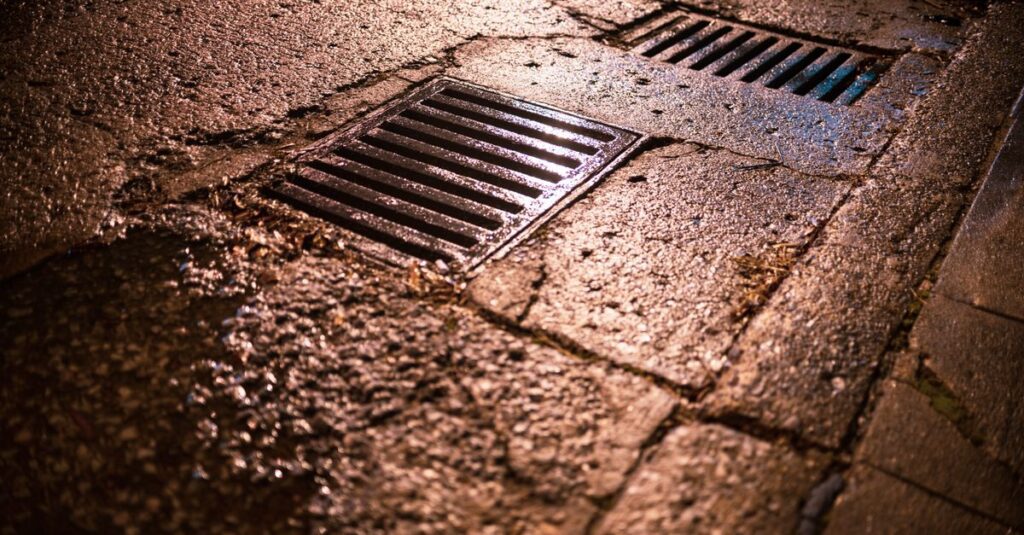
Creating temporary drainage channels at the site is considered a mandatory practice.
Drainage channels are generally sloped to ensure water flows naturally toward the discharge point.
Sump pits and dewatering pumps are installed in low-lying areas.
Drainage arrangements are also made around construction materials to prevent aggregate contamination.
Waterlogging affects not only earthwork operations but also the movement of machinery.
Operating heavy rollers or dumpers on wet soil leads to rutting.
This rutting subsequently compromises the quality of compaction.
To read more articles on Highway, check the following guides:
What Are the 12 Types of Drain? A Complete Guide
Cold Mix vs Hot Mix Asphalt: Which is Better?
potholes on road:causes, damages and complete methods of repairing
Inspection Before Starting Earthwork
Earthwork is the most critical and sensitive phase of highway construction during the rainy season. If earthwork begins without proper inspection, serious defects such as settlement, poor compaction, pavement cracking, and drainage failure may occur later.
Therefore, conducting a detailed site inspection before commencing earthwork is considered the first step in quality assurance for any highway construction project. The site engineer must first verify the condition of the natural ground to check for waterlogging.
If water has accumulated on the ground, the moisture content in that area will increase, making it difficult to achieve proper compaction. For this reason, it is essential to ensure that drainage arrangements are functional before highway construction begins.
During the inspection, existing side drains, cross drains, and natural water flow paths should also be verified. If drainage channels are found to be blocked, they must be cleared before construction starts. Next, the subgrade is inspected.
The engineer checks for soft patches, loose soil, and the presence of organic material. Soft patches can become a major cause of future settlement.
Similarly, the borrow area is also inspected. Borrow soil should not be excessively wet, as this makes it difficult to achieve the required dry density. In highway construction, the quality control of borrow material directly affects pavement performance.
The condition of the haul road is also a crucial part of the inspection. During the rainy season, haul roads can become slippery or damaged, preventing dumpers and construction vehicles from operating safely.
If the haul road is in poor condition, it must be maintained before work proceeds. Subsequently, the operational condition of compaction equipment—such as vibratory rollers, smooth-wheel rollers, water tankers, and graders—is verified. Equipment breakdown can be a major cause of project delays during the rainy season.
Laboratory facilities must also be ready to regularly perform field moisture content and density tests. The availability of moisture testing equipment, sand replacement apparatus, or nuclear density gauges is vital for quality control. Such systematic inspections improve the quality of highway construction, reduce defects, and ensure safe and durable pavement construction, even during the rainy season.
Engineering Concept of Moisture Control
During highway construction in the rainy season, the quality of soil compaction depends directly on moisture content. From an engineering perspective, every soil has a specific Optimum Moisture Content (OMC) at which maximum dry density is achieved with minimum compaction effort.
If the field moisture is below the OMC, soil particles cannot rearrange properly, and the required density is not attained. Conversely, if the moisture content significantly exceeds the OMC, the excess water creates lubrication between soil particles, rendering the roller’s compaction pressure ineffective. For this reason, moisture control is considered the most critical quality control activity in highway construction.
During the rainy season, sudden rainfall can cause soil moisture levels to rise rapidly. Therefore, it is recommended practice to conduct a field moisture test before placing each layer. The field moisture result is compared against the laboratory-determined OMC.
If the field moisture is slightly low, water is sprinkled in controlled quantities and mixed into the soil. If the moisture content is high, the soil is spread out to allow for aeration and natural drying. This engineering judgment forms the foundation of successful highway construction, and this process ensures proper compaction is achieved.
An active site laboratory is also essential for effective moisture control. Moisture content tests in the laboratory are performed in accordance with IS 2720 (Part 2), while the Optimum Moisture Content and Maximum Dry Density are determined using the Proctor Compaction Test (IS 2720, Part 8). Field compaction is evaluated based on the reports from these two tests.
Testing frequency is increased during the rainy season to ensure any variations in moisture can be identified immediately. Proper moisture control can significantly reduce defects such as pavement settlement, rutting, and cracking.
Consequently, moisture management is prioritized in every professional highway construction project and is regarded as an essential component of the quality assurance system. Proper moisture control significantly enhances the strength, durability, and service life of the highway.
Simple Moisture Content Calculation
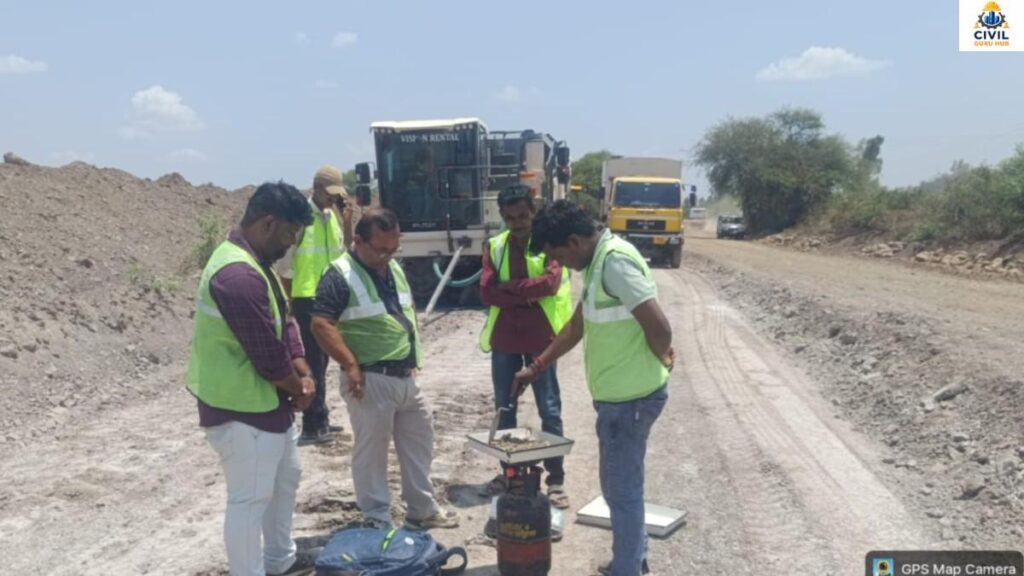
Calculating moisture content is a fundamental and crucial engineering activity for quality control during highway construction, especially during the rainy season. This test helps engineers determine whether the soil is in a suitable condition for compaction.
If the moisture content is close to the Optimum Moisture Content (OMC), the required dry density can be easily achieved. Consequently, a moisture test is performed before placing each embankment or subgrade layer. Beyond its simplicity, this test is highly valuable for making on-site decisions.
The standard formula for calculating moisture content is:
Moisture Content (%) = (Weight of Water ÷ Dry Weight of Soil) × 100
For example, let’s assume:
- Wet Soil Weight = 540 g
- Dry Soil Weight = 500 g
- Water Weight = 40 g
Calculation:
Moisture Content = (40 ÷ 500) × 100 = 8%
Now, suppose the Optimum Moisture Content (OMC) determined by the laboratory Proctor Test is 9%, while the field moisture measures 8%. In this scenario, a controlled amount of water can be added and thoroughly mixed into the soil before compaction begins.
However, if the field moisture level is 15–16%, rolling should not commence immediately. Instead, the soil is spread out to dry naturally, or the excess moisture is reduced using an appropriate engineering method.
Such calculations assist site engineers in making quick and accurate decisions. The result of a moisture test is not merely a percentage figure; it serves as an indicator of the overall quality of the highway construction.
If compaction is performed under incorrect moisture conditions, the required density will not be achieved, potentially leading to future defects such as pavement settlement, rutting, and cracking. Therefore, moisture content calculation is considered a mandatory part of the daily quality control process in every highway construction project.
Conducting moisture testing in accordance with IS 2720 (Part 2) and OMC verification as per IS 2720 (Part 8) represents best engineering practice, ensuring the long-term performance and durability of highway construction.
Why is documentation important during the rainy season?
In many projects, quality issues stem from documentation rather than the construction work itself.
Daily rainfall records should be maintained.
Site temperatures should be noted.
The moisture test register must be kept up to date.
Inspection reports should be prepared daily.
The material receipt register should also be verified continuously.
If pavement failure occurs in the future, these records serve as crucial evidence during investigations.
1. Earthwork Quality Control During Rainy Season (Highway Construction)
Earthwork is the primary and most critical activity in highway construction, as the load of the entire pavement structure is transferred onto this layer. The major challenges during earthwork in the rainy season include excessive moisture, waterlogging, and fluctuating soil strength. According to MoRTH Section 300 (Earthwork, Erosion Control, and Drainage), embankment filling must be done using only suitable, approved soil, and each layer must be spread to the specified thickness and compacted. If saturated soil is compacted without moisture correction during rain, the required dry density is not achieved; this subsequently manifests as settlement, edge failure, and pavement cracking.
Site engineers should inspect the embankment surface daily after rainfall. If rutting, a pumping effect, or soft patches develop, the affected portion must be immediately scarified and removed. Both IRC and MoRTH recommend against using unsuitable soil in embankments, even if it causes delays to the project schedule.
During the rainy season, it is crucial to stockpile fill material under tarpaulin covers whenever possible, minimize hauling distances, and maintain the surface slope immediately after compaction. The embankment crown should always have a slight camber to ensure rainwater drains towards the side slopes and prevents water stagnation.
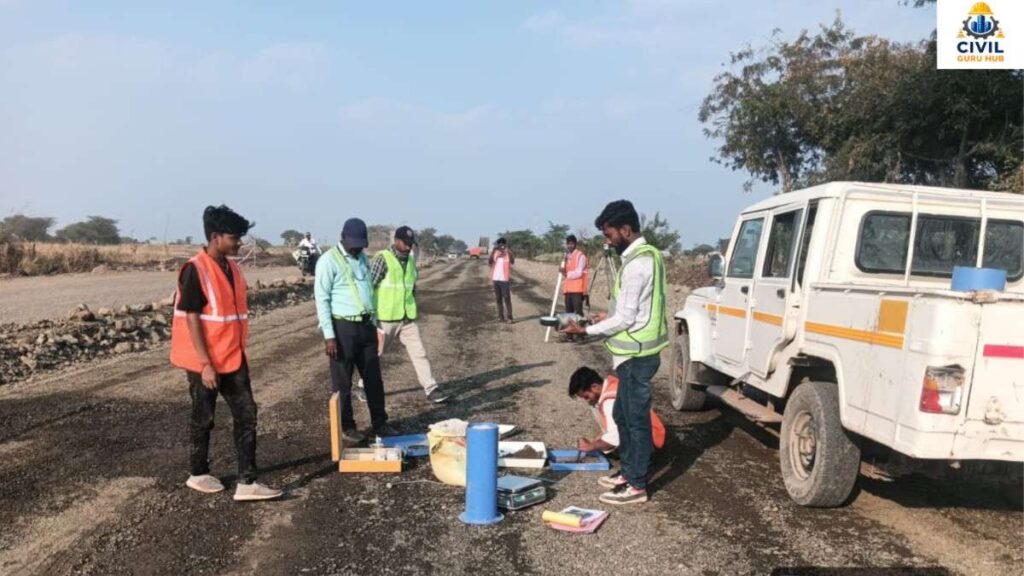
Following earthwork, the engineer must mandatorily conduct field density tests, moisture content tests, and visual inspections. These practices directly enhance the long-term durability of the highway.
Important Specifications for Earthwork
| Parameter | Requirement |
|---|---|
| Reference Specification | MoRTH Section 300 |
| Layer Thickness | Generally 200–250 mm (loose layer) |
| Compaction | 95%–97% of MDD (Location-dependent) |
| Moisture | OMC ±2% |
| Unsuitable Soil | Remove immediately |
| Waterlogging | Not permitted |
2. Borrow Area Inspection During Highway Construction
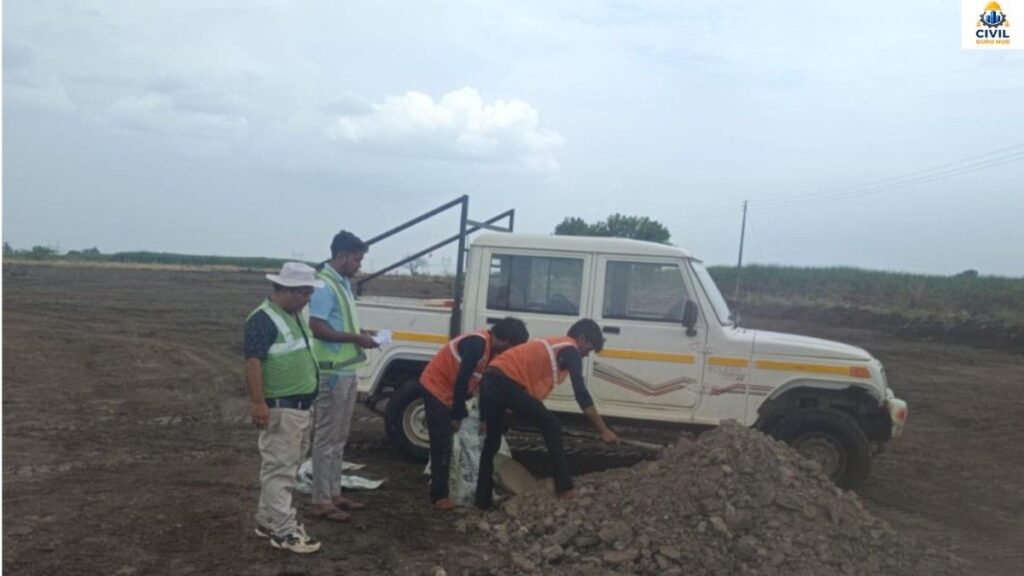
During the rainy season, the quality of the borrow area is just as important as that of the construction site itself. In many projects, contractors begin excavation based solely on soil quantity; however, borrow soil with excessive moisture directly impacts the quality of the embankment.
In accordance with MoRTH specifications and IRC recommendations, soil from the borrow area must first be classified in a laboratory.
It is mandatory to determine the soil’s Plasticity Index (PI), Liquid Limit (LL), Maximum Dry Density (MDD), Optimum Moisture Content (OMC), and CBR value.
Soil should not be used in the highway embankment if the borrow area contains standing water or if the top organic layer has not been removed.
During the rainy season, the tires of hauling vehicles can bring wet clay onto the site, potentially contaminating the approved soil. Consequently, wheel cleaning arrangements at the site entrance and the maintenance of haul roads are considered vital components of quality assurance.
Drainage in the borrow area must be continuously maintained. If water accumulates in the excavation pit, excavation should only resume after the water has been pumped out. Saturated soil is not considered suitable for immediate spreading.
An experienced highway construction engineer views the borrow source as an extension of the project’s quality, as it is nearly impossible to improve poor-quality fill material at a later stage.
To read more articles on Lab Test, check the following guides:
IS 2720 Part 16 CBR Test: Everything You Need to Know in 2026
how to perform Proctor Test: 10 Easy Steps (Complete Guide)
3. Subgrade Preparation During the Rainy Season
The subgrade is considered the actual foundation of highway construction. If the subgrade is weak, the entire structural design of the pavement can fail. For this reason, special emphasis is placed on subgrade quality in IRC:37 (Flexible Pavement Design) and MoRTH Section 305.
When inspecting the subgrade after the rainy season, the engineer must first identify soft spots. Often, the surface appears dry, but the underlying layer is saturated. As soon as a roller passes over it, a pumping effect or wave formation occurs; this is a clear indication that the subgrade is unacceptable.
It is crucial to maintain the subgrade’s moisture content close to the Optimum Moisture Content (OMC). In cases of excess moisture, the material is scarified to allow for natural drying or mechanical aeration. Lime stabilization is also adopted in some projects when the moisture content of clayey soil is very high.
Once the subgrade is completed, verifying the cross-fall and longitudinal slope is mandatory to ensure immediate drainage of rainwater. Stagnant water can weaken the subgrade within just a few hours.
Engineers must also continuously monitor field practices such as Field Density Tests and Plate Load Observations. Subgrade acceptance in highway construction should never be based solely on visual inspection.
Subgrade Acceptance Criteria
| Parameter | Requirement |
|---|---|
| Reference | MoRTH Section 305 |
| Compaction | Minimum 97% of MDD (Generally) |
| Surface Tolerance | As per project specification |
| Moisture | OMC ±2% |
| Soft Patches | Not Allowed |
| Drainage | Proper Cross Slope Required |
To read more articles on Lab Test, check the following guides:
What Are Atterberg Limits in Soil Testing? Easy Procedure in 9 Simple Steps
How to Conduct GSA Test? Proven IS 2720-4 Procedure
4. Moisture Control – The Most Important Quality Parameter
Moisture control is the most critical quality parameter in highway construction during the rainy season. Improper moisture management is the root cause of many pavement failures. While the Optimum Moisture Content (OMC) is determined in the laboratory, field conditions are constantly changing. Therefore, the site laboratory must conduct regular moisture verification for every lot.
If field moisture is lower than the OMC, voids remain after compaction, and the required density is not achieved. If moisture levels are excessively high, roller pressure fails to rearrange the soil particles effectively, leading to reduced shear strength. Such conditions can subsequently result in settlement and rutting.
Moisture tests should be performed without delay following rainfall. Engineers should not rely solely on visual inspection of the surface, as the actual moisture content lies within the depth of the soil layer.
In modern highway construction projects, both rapid moisture meters and oven-drying methods are employed. Compaction operations should proceed only after comparing laboratory results with field observations.
Moisture Calculation Example
Wet Soil Weight = 820 g
Dry Soil Weight = 760 g
Water Weight = 60 g
Moisture Content
= (60 ÷ 760) × 100
= 7.89%
If Laboratory OMC = 8%
Then the field moisture is considered acceptable, and compaction can proceed.
5. Granular Sub-Base (GSB) Quality Control During the Rainy Season
The Granular Sub-Base (GSB) is the first granular structural layer in highway construction, serving the dual purpose of load distribution and drainage. Consequently, MoRTH Section 401 clearly defines the material grading, laying procedure, and compaction requirements for GSB.
The most common mistake made when laying GSB during the rainy season is the use of excessively wet aggregates. When the voids within the aggregates become completely filled with water, the roller fails to achieve the necessary interlocking. This results in future settlement and an uneven pavement surface.
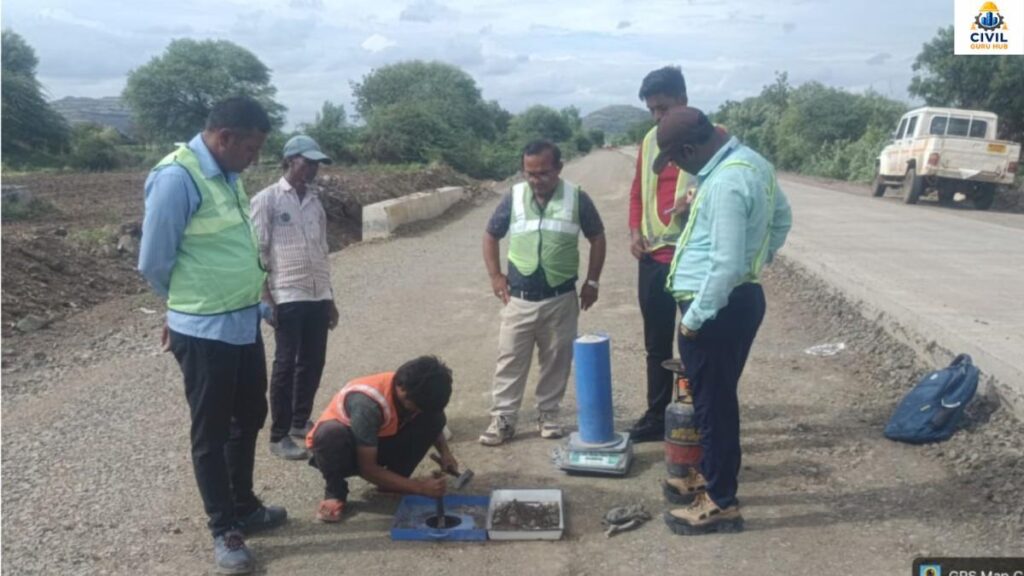
GSB material must adhere to the approved grading specifications. Oversized particles, clay lumps, organic matter, or excessive fines are strictly prohibited. Site engineers must conduct regular sieve analysis even after the aggregate source has been approved, as the grading of quarry material can change following rainfall.
During the rainy season, compaction must be completed immediately after spreading a layer. If the material is left exposed to the rain, moisture levels will rise, and segregation may occur.
In highway construction, GSB acceptance is not based solely on thickness; density, grading, moisture content, and level surveys are equally important.
GSB Quality Requirements
| Parameter | Requirement |
|---|---|
| Reference | MoRTH Section 401 |
| Material | Approved Grading |
| Organic Matter | Not Allowed |
| Excess Clay | Not Allowed |
| Compaction | 98% of the MDD |
| Surface | Uniform and Well Compacted |
6. Quality Control of Wet Mix Macadam (WMM) During the Rainy Season in Highway Construction
In highway construction, Wet Mix Macadam (WMM) is a structural layer placed over the Granular Sub-Base (GSB) that provides load distribution, stiffness, and stability to the pavement. Maintaining WMM quality during the rainy season is comparatively difficult because a perfect balance between aggregates and controlled moisture is crucial for this layer. According to MoRTH Section 406, WMM material must adhere to approved grading, and mixing must be performed in a pugmill plant where water is added uniformly. Adding water manually at the site or using excessively wet material is considered a violation of specifications.
After rainfall, the aggregate stockpile must be inspected first. If the stockpile contains excessive moisture, the plant must adjust water addition based on laboratory moisture correction calculations. Failure to make this correction causes the actual moisture content to rise significantly above the Optimum Moisture Content (OMC), preventing the roller from achieving the required density. Consequently, issues such as rutting, depressions, and pavement settlement may develop in the future.
During WMM laying, the material must be spread to a uniform thickness, and the rolling sequence (e.g., vibratory followed by pneumatic, or as per project requirements) must be followed. If it starts raining during compaction and free water appears on the surface, compaction operations must be stopped immediately. The engineer will inspect the rain-affected WMM after it dries; if necessary, the layer will be scarified and re-compacted.
In a professional highway construction project, WMM acceptance is not based solely on thickness. Parameters such as grading, moisture content, density, level, cross-fall, and surface evenness must all comply with specifications.
Important WMM Specifications in Highway Construction
| Parameter | Requirement |
|---|---|
| Reference | MoRTH Section 406 |
| Mixing | Mechanical Pugmill Mixing |
| Moisture | Near OMC |
| Compaction | As per Approved Density Requirement |
| Surface | Uniform, Tight, and Free from Segregation |
| Rain During Laying | Work Must Be Suspended |
To read more articles on Highway, check the following guides:
7. Prime Coat Quality Control During Rainy Season
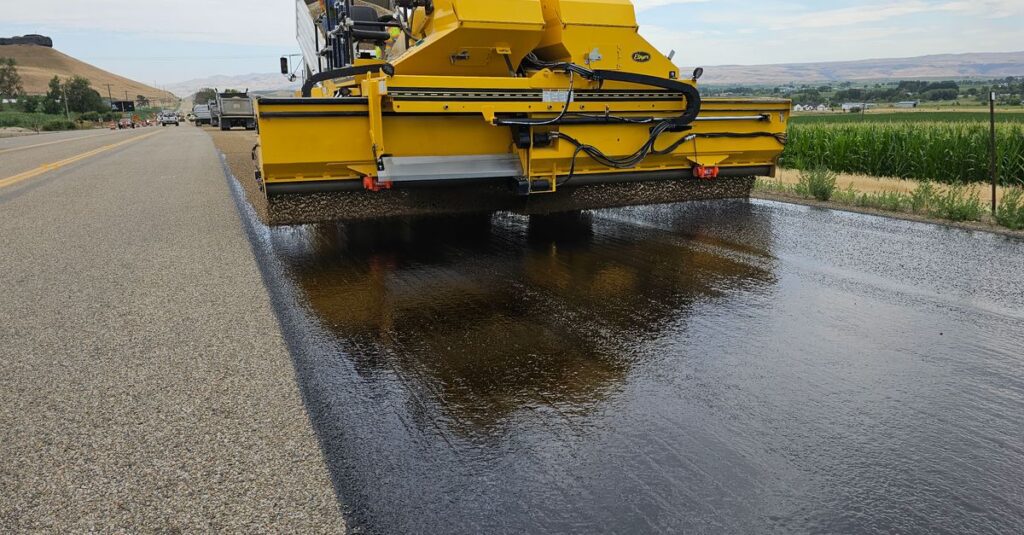
The objective of a prime coat is to establish a proper bond between the granular base and the bituminous layer. In highway construction, if the prime coat is not applied correctly, the upper bituminous layer may gradually delaminate. According to MoRTH Section 502, the prime coat must be applied only to a clean and dry granular surface. Achieving this condition poses a significant challenge during the rainy season.
Before applying the prime coat, the engineer must ensure that the WMM surface is completely dry. It is not sufficient for just the upper surface to appear dry; internal moisture levels must also be within acceptable limits. If bituminous emulsion is sprayed onto a damp surface, penetration becomes uneven, and bond strength is significantly reduced.
The spray rate must be maintained in accordance with the approved calibration. Issues such as clogged distributor nozzles, uneven pressure, or overlapping sprays can result in an irregular prime coat thickness. If rainfall occurs immediately after application during the rainy season, the recommended practice is to reject the affected area and apply a fresh prime coat.
Unnecessary traffic should not be permitted after the prime coat has been applied. Vehicle movement on a wet surface can lead to contamination and the accumulation of dust. Consequently, barricading and inspection are mandatory following prime coat application in highway construction projects.
Prime Coat Specification Summary
| Parameter | Requirement |
|---|---|
| Reference | MoRTH Section 502 |
| Surface | Dry and Dust-Free |
| Application | Calibrated Bitumen Distributor |
| Rainfall | Application should be stopped |
| Traffic | Restricted until approval |
8. Tack Coat Quality Control During Highway Construction
The function of a tack coat in Highway Construction is to create an adhesive bond between an existing bituminous surface and a new bituminous layer. If the tack coat does not perform properly, failures such as delamination, slippage cracks, and layer separation can develop rapidly. MoRTH Section 503 defines the application procedures and material requirements for tack coats.
During the rainy season, the surface must be cleaned with compressed air before applying the tack coat. Mud, dust, loose aggregates, or standing water must not be present. Applying emulsion to a damp surface disrupts the breaking process and prevents proper adhesion.
Maintaining the spray quantity according to project specifications is crucial. Excess tack coat can lead to bleeding, while an insufficient amount reduces bond strength. The engineer should visually inspect the spray pattern and verify nozzle distribution using the trial paper method.
If it rains after spraying and the emulsion has not broken properly, the affected surface should not be accepted. Although the tack coat is a thin layer in highway construction, it has a significant impact on the pavement’s service life.
9. Quality Control of Dense Bituminous Macadam (DBM) During the Rainy Season
Dense Bituminous Macadam (DBM) in Highway Construction serves as the primary structural bituminous layer of a flexible pavement, responsible for distributing wheel loads. According to MoRTH Section 507, DBM must be produced in accordance with the approved Job Mix Formula (JMF). Maintaining DBM quality during the rainy season is not solely the responsibility of plant operations; the timing of transportation, laying, and compaction is equally critical.
The temperature of the mix must be continuously monitored after it leaves the hot mix plant. If the mix cools down due to rainfall during transit, achieving the required compaction becomes difficult. Therefore, the use of insulated tippers and covered transport vehicles is preferred during the rainy season.
Stockpiling the mix in front of the paver should be avoided, fresh mix must be fed continuously to prevent segregation. Compaction using the initial breakdown roller should commence immediately while the mix is within the specified temperature range. Any delay leads to increased air voids and reduced density.
During the laying process, the engineer must continuously record details regarding longitudinal joints, transverse joints, mat temperature, and the rolling pattern. In highway construction, the quality of DBM forms the foundation for the pavement’s future performance.
10. Quality Control of Bituminous Concrete (BC) During the Rainy Season
Bituminous Concrete (BC) in Highway construction serves as the wearing course in highway construction, directly bearing traffic loads and exposure to weather conditions. Consequently, any compromise in the quality of this layer leads to the early development of potholes, raveling, and cracking. In accordance with MoRTH Section 509, BC must be produced using an approved mix design and a calibrated Hot Mix Plant.
Laying of BC during the rainy season should only be permitted when the pavement surface is completely dry and there is no active rainfall. The engineer must monitor both the surface temperature and the ambient temperature. Laying BC on a wet surface significantly increases the risk of bond failure and stripping.
The compaction sequence must be consistently maintained, and roller marks should be avoided. If there is a possibility of rainfall, a practical approach is to adjust plant production according to project requirements, as rejected hot mix cannot be reused.
Upon completion of the BC work, surface evenness is verified using a straight edge, while thickness, density, and air void content are evaluated through core cutting. This testing constitutes a crucial part of the final acceptance process in highway construction.
11. QA/QC Documentation During Highway Construction
A successful highway construction project is not achieved solely through good workmanship; proper documentation is equally important. Investigations into pavement failures often reveal that the root cause lies more in incomplete records than in the construction work itself. Therefore, Quality Assurance (QA) documentation is considered vital engineering evidence.
During the rainy season, data regarding daily rainfall, ambient temperature, humidity, moisture content, and laboratory test results must be maintained systematically. Records such as material approvals, source change reports, Inspection Requests (IR), Work Inspection Requests (WIR), and Non-Conformance Reports (NCR) must also be properly filed.
If work is halted on any given day due to rainfall, the reason must be clearly noted in the site diary. Similarly, if the contractor performs moisture correction or removes rejected material, photographic evidence and quantity records should be preserved.
Modern highway construction projects are increasingly adopting digital documentation, utilizing GPS-based photographs, cloud storage, and mobile inspection software to maintain records. However, whether a digital system or a manual register is used, the documentation must be complete and traceable.
Robust documentation plays a crucial role in resolving future disputes, facilitating quality audits, and processing payment certifications.
Essential QA/QC Documents
| Document | Purpose |
|---|---|
| Daily Site Diary | Record of site activities |
| Rainfall Register | Weather monitoring |
| Material Test Register | Quality verification |
| Request For Inspection (RFI) | Layer approval |
| NCR Register | Defect tracking |
| Cube/Test Register | Concrete quality |
| Density Register | Compaction monitoring |
| Calibration Register | Equipment accuracy |
12. Drainage Inspection – The Most Underrated Quality Check of the Rainy Season
In highway construction, drainage is often viewed merely as a water disposal system; however, from an engineering perspective, it directly dictates the service life of the pavement. Both IRC and MoRTH guidelines clearly state that standing water must not be permitted in the vicinity of the pavement structure.
During inspections, engineers must verify the condition of side drains, catch-water drains, longitudinal drains, cross-drainage structures, and culverts. Any accumulated silt in the drains must be cleared immediately. Blocked drains directly lead to embankment saturation and slope failure.
Issues such as water ponding at the subgrade edge, shoulder erosion, and toe saturation should not be overlooked. Often, the pavement surface appears intact, yet edge cracking begins due to failures in shoulder drainage.
In highway construction projects, temporary drainage arrangements during the rainy season are just as critical as permanent drainage systems. Temporary diversion channels and dewatering pumps must be kept ready until the permanent drainage is fully completed.
Drainage Inspection Checklist
| Inspection Item | Status Check |
|---|---|
| Side Drain Clean | Yes / No |
| Culvert Free Flow | Yes / No |
| Water Logging | Yes / No |
| Shoulder Erosion | Yes / No |
| Temporary Drain | Functional |
| Pump Availability | Verified |
Responsibilities of a Site Engineer During the Rainy Season
During the rainy season, the quality of highway construction depends significantly on the daily decisions made by the Site Engineer. The engineer’s role extends beyond merely taking measurements or issuing instructions to the contractor; they must coordinate weather conditions, material quality, manpower deployment, and the construction sequence.
Every morning, the engineer should review the weather forecast and approve the daily work plan accordingly. If heavy rainfall is expected, postponing earthwork or bituminous work is a practical engineering decision. The engineer must ensure that the laboratory issues the latest moisture report and that compaction proceeds based on that data.
Inspecting equipment is also the engineer’s responsibility. The roller vibration system, water tankers, paver screeds, and hot mix plant calibration must be continuously monitored. Covering any rejected area with the next layer is considered a violation of specifications.
A competent highway construction engineer never compromises on quality due to pressure from the project schedule. Their primary objective is ensuring compliance with specifications and achieving long-term pavement performance.
Common Mistakes During the Rainy Season That Damage Highway Construction
Many pavement failures during the rainy season occur not due to major technical issues, but because of minor errors made at the site. The most common mistake is continuing compaction on wet soil. Under these conditions, the required dry density is not achieved, leading to settlement issues later on.
Another common mistake is applying a Prime Coat or Tack Coat to a damp surface. This weakens the bonding between layers, potentially causing stripping or delamination within a few months. On many projects, aggregates are stockpiled directly on muddy ground, leading to contamination with fines and causing the material to fail grading specifications.
Failing to maintain complete inspection records is also a serious quality issue. If records of affected areas are not maintained after rainfall, investigating defects later becomes impossible. Reducing the frequency of laboratory testing and granting approvals based solely on visual inspection also violates standard engineering practices.
In professional highway construction projects, the root cause of every defect is analyzed, and corrective actions are implemented immediately. Adopting this preventive approach ensures the construction of high-quality pavement, even during the rainy season.
Common Mistakes vs. Correct Practices
| Common Mistake | Correct Engineering Practice |
|---|---|
| Compacting Wet Soil | Moisture Correction First |
| Applying Prime Coat on Damp Surface | Spraying After Surface is Completely Dry |
| Ignoring Blocked Drains | Immediate Cleaning |
| Low Testing Frequency | Increasing Sampling Frequency During Rainy Season |
| Storing Aggregates on Open Ground | Raised and Covered Stockpiles |
| Skipping Documentation | Maintaining Daily QA/QC Records |
Comprehensive Highway Construction Inspection Checklist for the Rainy Season
An inspection checklist is a mandatory management tool for maintaining quality during highway construction in the rainy season. Experienced engineers never approve work based solely on visual observation; distinct checklists are maintained for pre-checks, in-process inspections, and final inspections for every activity. This approach allows for the identification of hidden defects at an early stage, thereby avoiding costly rework.
The purpose of an inspection checklist extends beyond merely marking “Yes” or “No.” Details such as chainage, date, weather conditions, laboratory report numbers, and corrective actions taken should be recorded alongside every observation. If high moisture levels or density values below specifications are detected at any location, that specific area must be isolated and retested.
It is also essential to adjust the inspection schedule according to weather conditions during the rainy season. Inspections of embankments, subgrades, drainage systems, and stockyards should be prioritized immediately following heavy rainfall. This systematic inspection process ensures the long-term quality of highway construction.
Daily Highway Construction Inspection Checklist
| Inspection Item | Status |
|---|---|
| Weather Forecast Checked | ✔ |
| Rainfall Recorded | ✔ |
| Water Logging Present | Yes / No |
| Drainage Channel Clean | ✔ |
| Earthwork Moisture Acceptable | ✔ |
| Subgrade Soft Patch | Yes / No |
| GSB Condition | Approved |
| WMM Surface Uniform | ✔ |
| Prime Coat Surface Dry | ✔ |
| Tack Coat Uniform | ✔ |
| Bituminous Temperature Checked | ✔ |
| Density Test Completed | ✔ |
| Laboratory Report Verified | ✔ |
| Site Photographs Taken | ✔ |
| Daily Diary Updated | ✔ |
Pre-Monsoon, Monsoon, and Post-Monsoon Quality Strategy
A successful highway construction project cannot be completed by focusing on quality control solely during the rainy season. Quality management should be divided into three stages: Pre-Monsoon Planning, Monsoon Monitoring, and Post-Monsoon Verification. This approach aligns with international quality management systems and IRC quality practices.
The pre-monsoon stage should involve completing tasks such as drainage cleaning, stockyard preparation, laboratory calibration, equipment servicing, and emergency planning. The objective of this stage is to prepare the project for rainfall.
During the monsoon stage, key activities include daily inspections, moisture monitoring, field density testing, and weather-based work scheduling. Contractors should avoid unnecessary production and prepare only the amount of material that can be fully utilized or completed within the same day.
The post-monsoon stage requires a detailed audit of the completed work. Aspects such as settlement, erosion, cracking, shoulder damage, and drainage performance must be verified. If defects have developed at any location, a root cause analysis should be conducted, followed by the implementation of permanent corrective actions.
By adopting this lifecycle approach, highway construction quality can be maintained not just during the construction period, but throughout the pavement’s service life.
Three-Stage Quality Management
| Stage | Main Activities |
|---|---|
| Pre-Monsoon | Planning, Calibration, Drain Cleaning |
| During Monsoon | Inspection, Testing, Moisture Control |
| Post-Monsoon | Audit, Repair, Performance Evaluation |
Expert Best Practices for Highway Construction During the Rainy Season
In professional highway construction projects, quality is not achieved merely by adhering to specifications; it is maintained through engineering judgment and proactive planning. An experienced Project Manager always integrates weather forecasts into the daily work schedule. When the probability of rainfall is high, postponing earthwork and bituminous activities is the better decision for ensuring quality.
There must be regular communication between the laboratory and site teams. If the laboratory reports an increase in moisture content, field compaction procedures should be revised immediately. Basic practices that directly improve long-term quality include developing stockyards on raised platforms, storing aggregates under cover, and keeping cement in waterproof warehouses.
Temporary drainage should never be overlooked. In many projects, temporary diversions are not arranged before permanent drains are completed, resulting in waterlogging and damage to embankments. Discussing safety and quality instructions related to the rainy season during daily toolbox meetings is also considered a professional best practice.
Most importantly, a “Quality First” approach should be adopted in highway construction rather than a “Schedule First” approach. Delays can be recovered, but the cost of repairing poor-quality pavement and the associated loss of reputation are immense.
Conclusion
The rainy season is considered the most challenging period for highway construction, but this does not mean that quality cannot be maintained. A successful project is one where planning, inspection, laboratory testing, drainage management, documentation, and adherence to specifications function as an integrated system. The performance of every layer—from earthwork to bituminous concrete—depends on the quality of the underlying layer; therefore, compromising at any stage can exponentially increase future maintenance costs.
The practical implementation of IRC guidelines, MoRTH specifications, and IS standards is essential not merely for compliance, but for constructing durable and safe pavements. When the Site Engineer, Quality Engineer, laboratory team, and contractor work with a coordinated approach, highway construction quality can be successfully maintained even during the rainy season.
The key takeaway from this entire guide is that quality inspection is not a one-time event but a continuous process. Fresh inspections after every rainfall, verification after every layer, and scientific decision-making following every test are the true hallmarks of a long-lasting, high-performance highway.
About the Author
My name is Susanta Kumar Mohapatra. I am a civil engineering professional with over 11 years of practical experience in the construction and infrastructure sectors. I hold a B.Tech in Civil Engineering and an M.E. degree in Construction Management. Throughout my professional career, I have worked in key areas such as road construction, bridge projects, quality control, material testing, quantity estimation, project planning, and site management.
My passion for civil engineering inspired me to launch CivilGuruHub.com. The aim of this website is to provide practical and easy-to-understand knowledge to students, site engineers, quantity surveyors, contractors, and civil engineering professionals. Here, I share information related to construction technology, highway engineering, laboratory tests, project management, estimation, tendering, and the latest industry practices.
In addition to the website, I run “The Civil Site” YouTube channel, where I share practical videos, site-related knowledge, and technical explanations regarding civil engineering. My goal is to explain engineering concepts in a simple and practical manner so that every learner can grasp them easily.
I also publish regular quizzes and educational videos on the “Daily IQ Hub” YouTube channel, helping viewers enhance their general knowledge and improve their preparation for competitive exams.
I believe that practical knowledge and continuous learning are the hallmarks of a successful engineer. With this objective in mind, I strive to deliver high-quality, reliable, and industry-focused content through CivilGuruHub and my YouTube channels.
Thank you for your support and trust. I hope CivilGuruHub proves to be a valuable companion in your professional growth and learning journey.
Frequently Asked Questions (FAQs)
Q 1. Should highway construction be completely stopped during the rainy season?
Answer: No. Only weather-sensitive activities—such as bituminous paving, uncontrolled earthwork, and coating on damp surfaces—should be avoided. Drainage works, culverts, retaining structures, and approved indoor activities can continue, provided safety and specifications are maintained.
Q 2. What is the most critical quality parameter during the rainy season?
Answer: Moisture content is the most important parameter. If the moisture level deviates significantly from the Optimum Moisture Content (OMC), the required compaction cannot be achieved, increasing the risk of future settlement.
Q 3. Can Prime Coat or Tack Coat be applied to a wet surface?
Answer: No. According to MoRTH Sections 502 and 503, the surface must be clean and dry. A proper bond does not form on wet or damp surfaces, increasing the risk of stripping.
Q 4. Should the frequency of laboratory testing be reduced or increased during the rainy season?
Answer: Testing frequency should generally be increased. Since moisture levels and material conditions fluctuate constantly, additional field density, moisture, and grading tests are recommended for quality assurance.
Q 5. Why is drainage so important in highway construction?
Answer: Drainage protects the pavement structure from water damage. Stagnant water is a major cause of embankment saturation, edge failure, pumping, and pavement cracking.
Q 6. What should be done if a soft patch develops after rainfall?
Answer: The affected area must be identified and scarified; unsuitable material removed; moisture content corrected; and re-compaction performed according to specifications. Simply covering a soft patch is considered a violation of specifications.
Q 7. When is the laying of Bituminous Concrete permitted during the rainy season?
Answer: It is permitted when the pavement surface is completely dry, there is no active rainfall, the approved mix temperature is maintained, and the Engineer-in-Charge grants permission for laying.
Q 8. What role does documentation play in highway construction?
Answer: Documentation serves as engineering evidence for future quality audits, payment certification, defect investigations, and the resolution of contractual disputes. Therefore, daily records must be complete and traceable.