
Table of Contents
Introduction
In the field of bridge construction, the Wearing Coat is considered a critical protective layer because it directly influences the performance, durability, and riding quality of the bridge deck. Whenever we discuss smooth traffic movement, waterproofing, and long-term structural safety, the contribution of the Wearing Coat is counted among the most vital components. Many junior engineers and site supervisors fail to clearly understand the actual functions of the bridge deck slab and the Wearing Coat; this lack of clarity can lead to execution errors during the construction phase and result in maintenance issues later on.
Simply put, the Wearing Coat is a specially designed layer applied atop the bridge deck; it directly absorbs the traffic loads imposed by vehicles and protects the underlying deck slab from damage. In the absence of a proper Wearing Coat, issues such as rainwater seepage, crack formation, pothole development, and surface deterioration begin to escalate gradually—problems that can significantly reduce the lifespan of the bridge.
In bridge projects, the Wearing Coat is not merely a surface layer; rather, it is equally crucial for both structural protection and user safety. The selection of this layer is carefully determined based on factors such as the bridge’s location, prevailing climatic conditions, anticipated traffic volume, and the specific type of bridge structure. For highways, flyovers, Road Over Bridges (ROBs), and urban elevated structures, different Wearing Coat systems are adopted to suit the varying conditions specific to each project.
A properly designed Wearing Coat provides superior skid resistance, ensures a smoother riding experience, and shields the deck slab from moisture penetration. For this very reason, in the realm of modern bridge engineering, the selection and construction quality of the Wearing Coat are regarded as major determinants of a project’s success. In this article, we will explore in detail the major types, practical applications, thickness requirements, advantages, and field uses of the Wearing Coat.
What is a Wearing Coat?
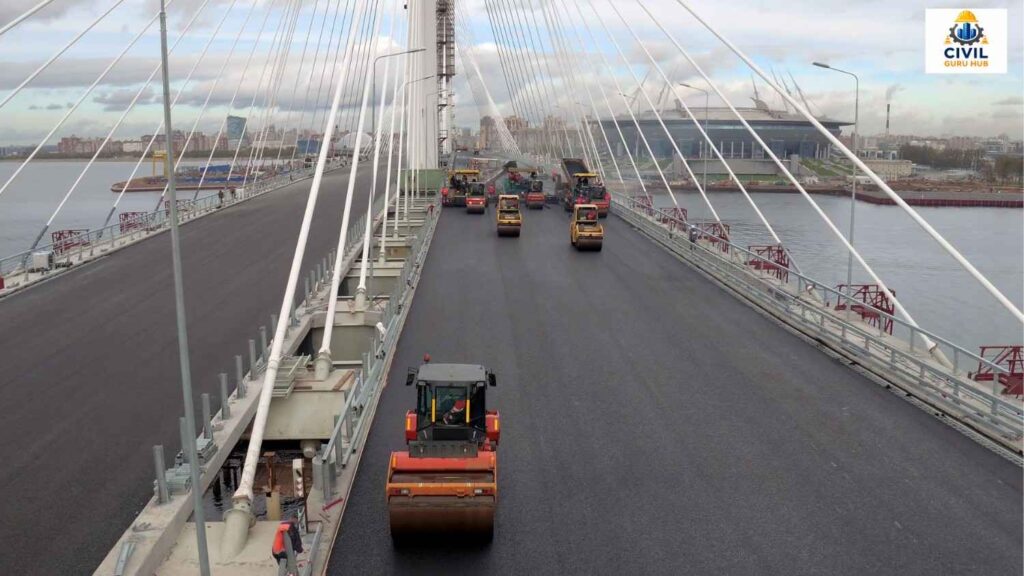
In bridge engineering, a “Wearing Coat” is a crucial component applied over the bridge deck to ensure that traffic loads do not act directly upon the structural slab. Simply put, the Wearing Coat acts as a protective layer positioned between the bridge structure and the moving vehicles. Whenever vehicles traverse the bridge, their direct impact is absorbed primarily by this layer, thereby keeping the actual bridge deck relatively safe.
Typically, a bridge deck slab is constructed from concrete. If vehicles were to travel directly over the concrete deck, surface wear, cracking, abrasion, and deterioration could commence relatively quickly. For this very reason, engineers incorporate a Wearing Coat during bridge construction to enhance the durability and service life of the structural elements.
However, the role of the Wearing Coat extends beyond merely providing protection. It creates a smooth and comfortable riding surface, facilitating the easy movement of vehicles and minimizing vibrations. Furthermore, the Wearing Coat aids in controlling rainwater infiltration, as water seepage can inflict long-term damage upon bridge structures. A properly designed Wearing Coat also improves skid resistance—a critical factor for vehicle safety, particularly during rainy conditions.
Improving drainage performance is also considered a primary function of the Wearing Coat. Through the implementation of the correct slope and surface profile, water is rapidly discharged, thereby minimizing water accumulation and preventing surface damage.
From a practical standpoint, if you encounter an uneven, rough, or slippery surface while traveling across an older flyover or bridge, the deterioration or failure of the Wearing Coat is, in many instances, the underlying cause. Consequently, the Wearing Coat is regarded as an element of paramount importance for both bridge maintenance and ensuring long-term structural performance.
IRC and MoRTH Specifications
In India, the design and construction of wearing coats are primarily carried out in accordance with the MoRTH Section 2700 and relevant IRC codes.
| Specification | Description |
|---|---|
| MoRTH Section 2700 | Wearing Coat and Appurtenances |
| IRC 6 | Standard Specifications for Road Bridges |
| IRC 112 | Concrete Road Bridges |
| IS 456 | Plain and Reinforced Concrete |
| IS 73 | Paving Bitumen Standards |
| IRC SP 53 | Bridge Rehabilitation Guidelines |
According to MoRTH Clause 2702, major types of wearing coat have been defined.
Types of Wearing Coat in Bridges
In bridge construction, primarily the following types of wearing coats are used:
| Type | Wearing Coat Name | Typical Thickness |
|---|---|---|
| Type 1 | Bituminous Concrete Wearing Coat | 50 mm |
| Type 2 | Bituminous Concrete + Mastic Asphalt | 40 mm + 25 mm |
| Type 3 | Stone Matrix Asphalt Wearing Coat | 50 mm |
| Type 4 | Mastic Asphalt Wearing Coat | 50 mm |
| Type 5 | Cement Concrete Wearing Coat | 75 mm |
1. Bituminous Concrete Wearing Coat
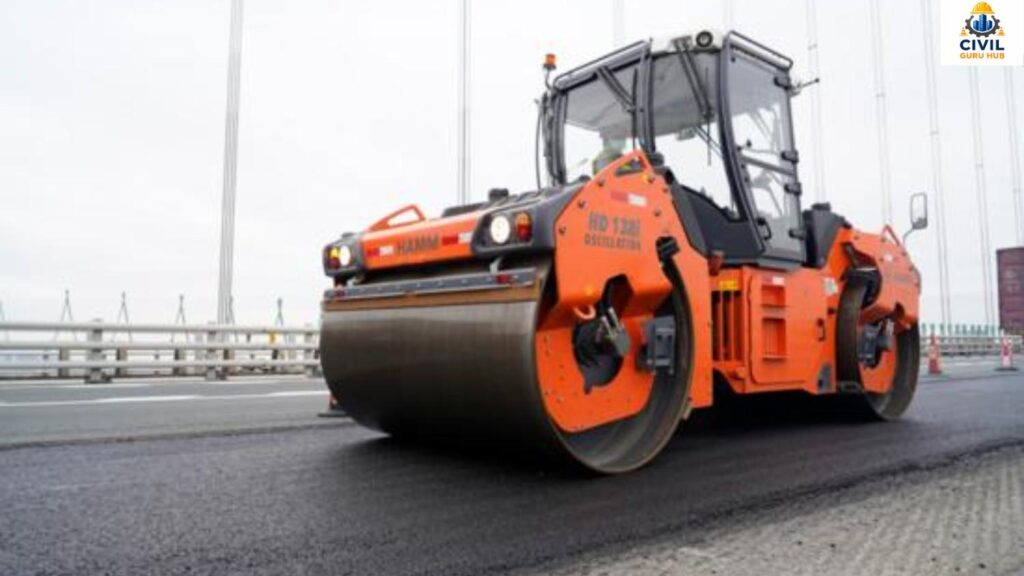
The Bituminous Concrete Wearing Coat is considered one of the most widely used surfacing systems in the bridge construction industry. In India, this type of wearing coat is extensively utilized on highways, flyovers, and major road bridges because it provides a smooth riding surface and can efficiently handle traffic loads. Since bridges are continuously subjected to dynamic loads and environmental exposure, the proper selection of a wearing coat is crucial for bridge performance.
This is a flexible type of wearing coat in which carefully selected aggregates, filler materials, and bitumen are mixed at a controlled temperature. The prepared mix is applied over the bridge deck to ensure that traffic loads do not act directly upon the structural slab. Generally, in accordance with MoRTH specifications, a standard thickness of around 50 mm is maintained; however, modifications are possible based on specific project requirements.
Construction Process
The construction process begins with proper surface preparation. First, the bridge deck slab is thoroughly cleaned to remove dust, debris, and loose particles. Subsequently, a tack coat is applied to create a strong bond between the existing surface and the new layer. Then, the bituminous material—prepared at a hot mix plant—is spread uniformly using a paver machine, and proper compaction is achieved through the use of rollers.
Advantages
The most significant advantage of the Bituminous Concrete Wearing Coat is the excellent riding comfort it offers. It provides a smoother surface during vehicle movement, thereby enhancing the overall driving experience. Furthermore, it aids in noise reduction, and its maintenance or repair is comparatively easier and faster to execute.
Disadvantages
However, certain limitations do exist. In regions with high temperatures, rutting may develop, and if water infiltration occurs, the risk of pothole formation can increase.
Practical Example
The Bituminous Concrete Wearing Coat has been successfully implemented on numerous flyovers and national highway bridges across the Delhi-NCR region, primarily because its maintenance is simpler and rehabilitation work can be carried out relatively quickly.
2. Bituminous Concrete with Mastic Asphalt Wearing Coat
Bridges located in heavy rainfall areas, coastal regions, or environments subject to continuously wet conditions often find that standard surfacing systems fail to provide adequate long-term protection. For this reason, engineers frequently prefer the system comprising Bituminous Concrete with a Mastic Asphalt Wearing Coat. This system is specifically designed for bridges where waterproofing, durability, and deck protection are of paramount importance.
In this type of system, two distinct layers work in tandem. The lower layer consists of Bituminous Concrete, which serves to distribute traffic loads, while the upper layer is composed of Mastic Asphalt, providing additional waterproof protection and surface sealing. The combination of these two layers is considered highly effective in shielding the bridge deck from moisture-induced damage.
Why Is It Used?
A bridge deck is continuously exposed to rainwater, vehicular loads, temperature fluctuations, and environmental elements. Standard bituminous surfacing systems can sometimes develop water seepage through minor cracks or joints. If moisture penetrates through to the deck slab, the risk of reinforcement corrosion and concrete deterioration increases significantly.
To mitigate this specific problem, this specialized Wearing Coat system is adopted. The Mastic Asphalt upper layer creates a dense, waterproof barrier that significantly reduces water penetration. Consequently, this system is widely preferred in critical projects where effective waterproofing is essential.
Construction Method
Adhering strictly to the construction process is crucial, as the bonding between the layers directly impacts the overall performance of the system.
First, the bridge deck undergoes thorough preparation and cleaning to remove any surface contaminants. Subsequently, a layer of Bituminous Concrete—approximately 40 mm thick is laid to provide structural support and facilitate load distribution.
On top of this, a layer of Mastic Asphalt approximately 25 mm thick is applied. This upper protective layer provides continuous waterproof sealing and renders the entire Wearing Coat system highly resistant to moisture.
Advantages
This type offers a multitude of advantages. Its waterproofing capability is exceptional, resulting in a significant enhancement of the bridge deck’s protection. Reduced moisture infiltration can also lead to comparatively lower maintenance requirements.
Additionally, this system is considered beneficial for extending the service life of a bridge, as it mitigates the risk of deck deterioration. Its performance has been observed to be superior to that of conventional systems under conditions of heavy rainfall.
Disadvantages
Like any engineering solution, this system has certain limitations. Construction costs are comparatively higher due to the use of multiple layers and specialized materials.
Furthermore, the application of Mastic Asphalt requires skilled labor and precise temperature control. If proper construction practices are not strictly adhered to, the system’s performance may be compromised.
Real Site Example
In India, this Wearing Coat system is widely utilized in coastal regions and areas prone to heavy rainfall. In high-moisture environments—such as the regions of Kerala and Mumbai, engineers frequently prefer this type of Wearing Coat system for bridge surfacing projects requiring waterproofing, as long-term deck protection is a critical factor in these areas.
To get more articles regarding Highway, click on given link
What Makes Green Roads Sustainable? 10 Secrets
How to Calculate Camber Tolerance in Road Construction Step by Step
What are Top 15 Highway Construction Challenges in 2026: A Complete Civil Engineering Guide
3. Stone Matrix Asphalt Wearing Coat
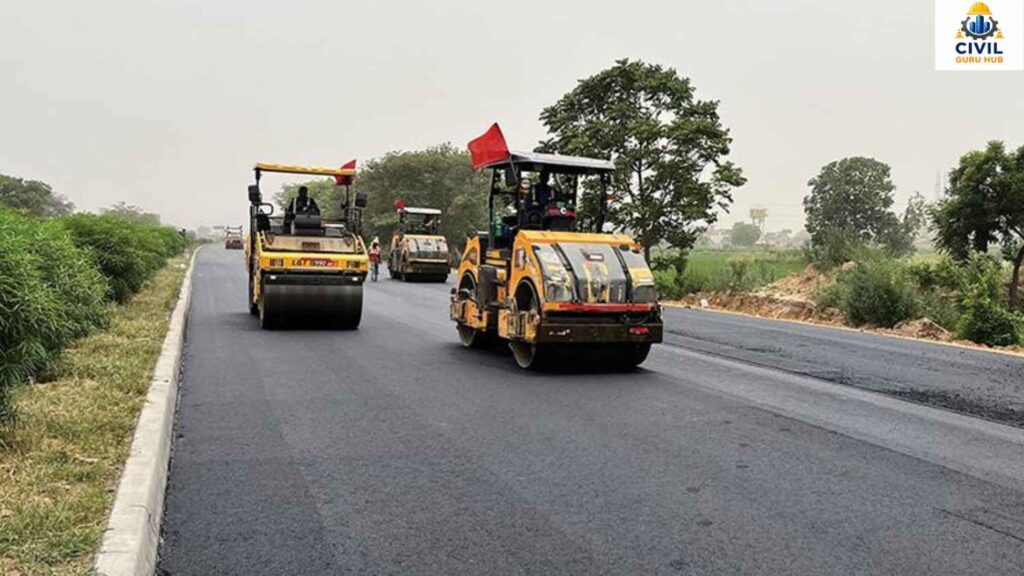
The Stone Matrix Asphalt (SMA) is considered a highly advanced and durable surfacing solution in modern highway engineering. In today’s environment, where traffic volumes on highways and urban roads are continuously increasing, conventional surfacing methods do not always prove effective in every situation. For this reason, engineers prefer the Stone Matrix Asphalt wearing coat for heavy traffic corridors and expressways.
The design of this type of wearing coat differs slightly from that of standard asphalt surfaces. It incorporates a robust stone aggregate skeleton structure that imparts superior stability and enhanced load distribution capabilities to the surface. As vehicles repeatedly traverse the road surface, wheel loads exert forces that tend to deform the pavement. However, the Stone Matrix Asphalt structure efficiently distributes these loads, thereby significantly reducing the risk of rutting and permanent deformation.
Features of Stone Matrix Asphalt Wearing Coat
The Stone Matrix Asphalt wearing coat is a technology specifically developed to withstand heavy traffic conditions. Its most critical feature is its resistance to deformation. The surface is capable of maintaining its original shape and performance even after prolonged exposure to continuous traffic loading. Its unique aggregate structure facilitates superior interlocking, which ensures long-term structural stability.
This type of surfacing also delivers comparatively better performance under high temperature conditions, a factor that becomes particularly crucial in regions with hot climates.
Thickness
Typically, the thickness of a Stone Matrix Asphalt wearing coat is specified at approximately 50 mm. This thickness is widely regarded as the standard practice necessary to ensure adequate structural strength and durability. The appropriate selection of thickness depends on various factors, including the road classification, traffic intensity, and specific design requirements.
Advantages
The Stone Matrix Asphalt wearing coat offers a multitude of benefits that position it as a premium choice for road surfacing.
- It provides a long service life.
- Enhances skid resistance.
- Delivers an excellent surface texture.
- Efficiently withstands heavy traffic loads.
- Ensures superior riding quality and durability.
Owing to these advantages, the frequency of maintenance required for the road surface can also be significantly reduced.
Challenges
As with any engineering solution, this technology presents certain challenges. The initial construction cost associated with a Stone Matrix Asphalt is comparatively higher than that of conventional methods. Furthermore, maintaining strict quality control during the construction process is absolutely essential to ensure its successful long-term performance. If material proportioning, temperature control, and compaction quality are not properly maintained, achieving the expected performance can be difficult.
Practical Example
In terms of practical applications, a Stone Matrix Asphalt Wearing Coat is commonly used on expressways, national highways, and heavy-traffic urban corridors. In locations where traffic density is high and long-term pavement performance is critical, this technology provides a reliable solution.
4. Mastic Asphalt Wearing Coat
In bridge engineering, there are certain situations where a standard surface layer alone is insufficient. When a structure requires protection against heavy traffic, continuous weather exposure, and water seepage, engineers generally opt for a Mastic Asphalt Wearing Coat. This constitutes a highly dense and waterproof surface layer that provides long-term protection to the bridge deck while simultaneously enhancing riding quality.
Mastic asphalt is particularly popular because it is significantly more impermeable compared to conventional bituminous layers. Its primary objective is to shield the bridge deck from moisture damage, provide a smooth riding surface, and extend the structural lifespan.
Material Composition
This layer is primarily prepared by combining bitumen, mineral fillers, and fine aggregates. The proportions of these materials are carefully designed to ensure that the final mix retains its dense, flexible, and waterproof properties. Due to its fine grading and high filler content, the material contains very few empty spaces or voids.
Special Features
The most critical characteristic of this type of surface layer is its extremely low void content. When voids are minimal, water penetration is significantly reduced. For this reason, the layer offers superior protection to the bridge deck against moisture ingress, corrosion, and water-related deterioration.
Owing to its dense composition, this surface can effectively withstand heavy traffic loads and delivers a long service life.
Construction Process
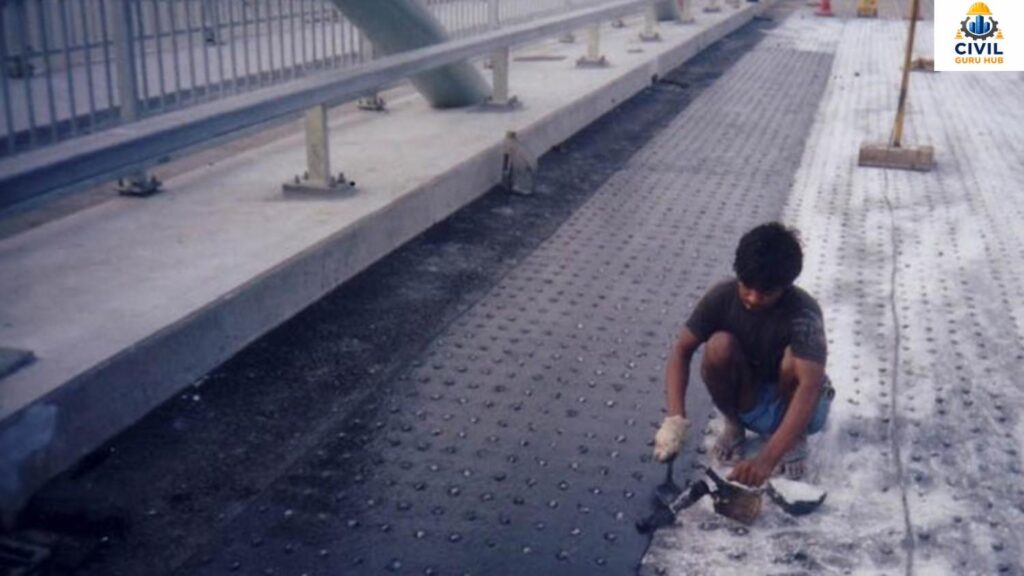
During construction, the material is heated to a high temperature to achieve the required fluid consistency. Following heating, the material is spread over the bridge deck, either manually or with the aid of specialized machinery.
Maintaining proper temperature control is a crucial aspect of the construction process, as incorrect temperatures can adversely affect both the workability of the material and its final performance. Once spread, the material gradually cools to form a dense, continuous, and protective layer.
Benefits
The most significant advantage of this system is its exceptional waterproofing capability. Additionally, high durability, a smooth riding surface, and reduced maintenance requirements are considered major benefits.
This surface demonstrates comparatively superior performance even under conditions of temperature fluctuation and repetitive loading, thereby contributing to reduced long-term maintenance costs.
Disadvantages
Although the performance is quite good, its initial cost is comparatively high. Construction also necessitates heating arrangements, specialized equipment, and skilled workmanship.
If proper construction practices are not followed, achieving the desired performance can be difficult.
Real Life Example
In actual projects, a Mastic Asphalt Wearing Coat is commonly used particularly on steel bridges and orthotropic deck bridges because both waterproofing and flexibility are critical requirements for these structures. For this reason, it is considered a reliable and widely accepted solution in modern bridge construction.
To get more articles regarding Structure, click on given link
How Do Engineers Predict Box Culvert Failure? 7 proven Factors That Civil Engineer Must Know
What Is a Box culvert? 15 Important Facts for Civil Engineers
What Are Toe Wall and Breast Wall? Complete Comparison in 12 Points
5. Cement Concrete Wearing Coat
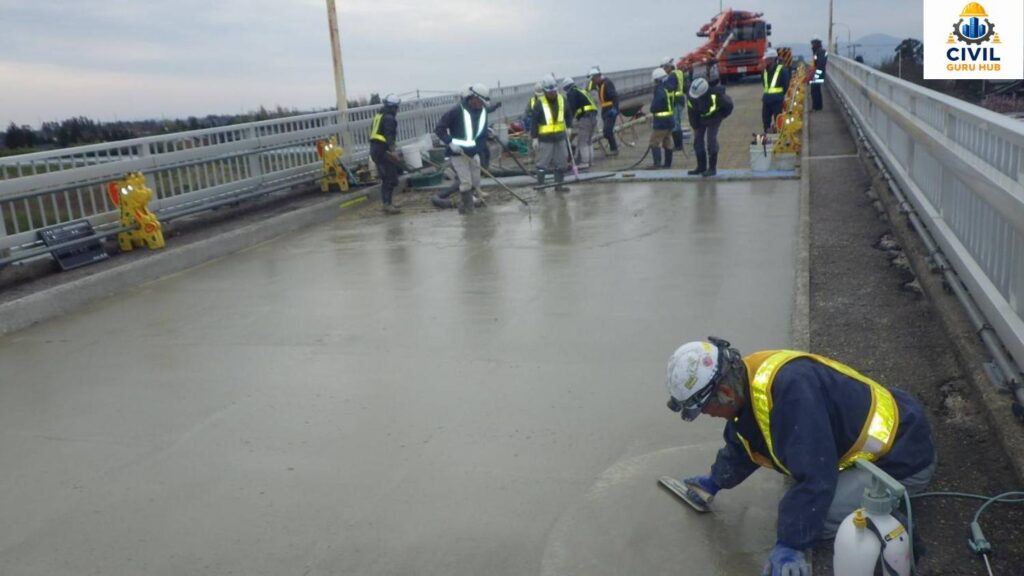
A Cement Concrete Wearing Coat is a rigid type, used in bridge engineering, particularly in locations where long-term durability and structural stability are accorded high priority. When bridges are subjected to heavy traffic loads, repeated wheel impacts, and environmental exposure, a Cement Concrete Wearing Coat is employed to ensure surface protection and maintain riding quality. This type of wearing coat is more rigid than asphalt-based layers; consequently, it significantly reduces deformation.
In bridge construction, the primary objective is not merely to provide a smooth riding surface, but also to protect the bridge deck from moisture, abrasion, impact loads, and environmental deterioration. The Cement Concrete Wearing Coat effectively fulfills this purpose, which is why its use is often preferred in certain specialized bridge applications.
MoRTH Specifications
According to MoRTH specifications, the thickness of a Cement Concrete Wearing Coat is generally specified as 75 mm. This thickness is maintained to ensure adequate strength, durability, and load distribution. Maintaining the proper thickness is crucial, as insufficient thickness can lead to cracking and premature deterioration in the future.
Reinforcement Details
Providing reinforcement within a Cement Concrete Wearing Coat is essential, as concrete is inherently weak in resisting tensile stresses.
- Generally, reinforcement bars with an 8 mm diameter are utilized.
- These reinforcement bars are typically placed at a spacing of 150 mm.
- Additional reinforcement is provided near expansion joints to control stress concentration and minimize cracking.
Proper reinforcement detailing enhances the service life of the wearing coat and improves its structural performance.
Advantages
The Cement Concrete Wearing Coat offers multiple advantages that make it suitable for specific bridge projects:
- It is highly durable and provides a long service life.
- Deformation under heavy traffic loads is comparatively lower.
- Its rigid nature ensures superior long-term dimensional stability.
- Surface deterioration occurs relatively more slowly compared to flexible systems.
Disadvantages
Like any engineering solution, this system also has certain limitations.
- Crack development in concrete can be a common issue.
- Repair and maintenance can be comparatively difficult.
- The construction process can be more time-consuming compared to flexible Wearing Coat systems.
Practical Example
In terms of practical applications, a Cement Concrete Wearing Coat is commonly used on old RCC bridges, specialized structural bridges, and in projects where low maintenance is a key requirement. For projects demanding long term performance and durability, engineers often prefer this type as it provides both structural protection and serviceability.
Recommended Site Tools
| Product | Why Useful |
|---|---|
| Infrared Thermometer | Bitumen temperature checking |
| Auto Level Machine | Camber and slope checking |
| Safety Helmet | Worker protection |
| Measuring Wheel | Highway measurement |
👉 Check Latest Prices on Amazon
Affiliate Disclosure
“As an Amazon Associate, we earn from qualifying purchases.”
Cross Slope and Camber in the Wearing Coat
In bridge construction, the role of cross slope and camber is of paramount importance, as they directly influence the drainage performance and long-term durability of the bridge surface. When rainwater or surface water begins to accumulate on a bridge deck, it not only impacts riding quality but can also lead to structural issues. For this very reason, providing an adequate cross slope on the bridge deck is considered an essential design requirement.
The primary objective of the cross slope within the bridge’s wearing coat is to facilitate the rapid drainage of surface water, thereby preventing it from stagnating on the deck. If water is allowed to continuously pool on the surface, it can lead to slippery conditions, reduce skid resistance, and impose additional stress on the waterproofing system. Prolonged water stagnation can accelerate the deterioration process and significantly increase maintenance costs.
According to Clause 2702.3 of the Ministry of Road Transport and Highways (MoRTH) specifications, a cross slope of approximately 2.5% is generally maintained on bridge deck surfaces. This slope is sufficient to ensure that water flows naturally toward the side drains or deck edges without compromising vehicular comfort. The selection of an appropriate slope ensures both a smooth riding surface and efficient water disposal.
Achieving the specified slope during field execution is equally critical. During the construction phase, engineers typically utilize instruments such as auto levels, total stations, and other surveying equipment to verify the cross slope. Continuous monitoring ensures that the required levels are being maintained and that the finished surface complies with the design specifications.
A properly designed and accurately executed wearing coat slope system enhances the bridge’s service life, minimizes maintenance requirements, and provides safer riding conditions. Consequently, the cross slope is regarded not merely as a geometric parameter, but as a fundamental performance requirement.
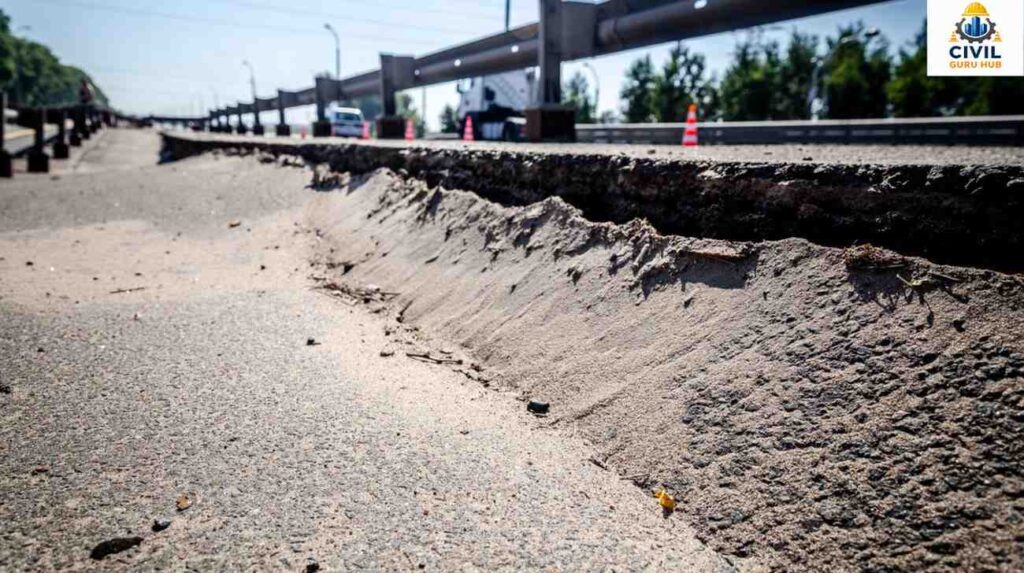
Common Reasons for Failure
| Failure | Main Cause |
|---|---|
| Cracking | Temperature stress |
| Rutting | Overloading |
| Potholes | Water seepage |
| Debonding | Poor tack coat |
| Surface bleeding | Excess bitumen |
It is very important for field engineers to conduct regular inspections.
Site Quality Control
| Test | Purpose |
|---|---|
| Temperature Check | Proper mix laying |
| Thickness Check | Specification compliance |
| Density Test | Compaction verification |
| Surface Level Check | Camber verification |
| Bitumen Content Test | Mix quality |
If quality control is weak, the lifespan of the wearing coat is significantly reduced.
Conclusion
In bridge engineering, the role of surface protection is paramount, as the bridge deck is directly exposed to traffic loads, weather effects, moisture, temperature variations, and continuous wear. For this reason, the Wearing Coat is considered an essential protective component of the bridge structure. It not only provides a smooth riding surface for vehicles but also safeguards the bridge deck against damage, water penetration, and premature deterioration.
Different materials are selected based on the specific requirements of various projects and prevailing traffic conditions. When considering flexible solutions, Bituminous Concrete offers an economical option that is easy to maintain. For heavy traffic corridors and high stress environments, Stone Matrix Asphalt delivers superior rut resistance and long-term performance. In instances where waterproofing requirements are critical, the use of Mastic Asphalt proves beneficial, as it significantly reduces moisture penetration. Conversely, Cement Concrete-based solutions provide rigid strength and a long service life, making them suitable for certain specific bridge applications.
Alongside material selection, factors such as proper thickness design, surface preparation, drainage arrangements, and construction quality are equally critical. If quality is compromised during the construction phase, even high-quality materials may fail to deliver the expected performance.
From a long-term perspective, a properly designed and constructed Wearing Coat can effectively reduce bridge maintenance costs, enhance riding comfort, and improve overall structural performance. Therefore, in bridge projects, the selection of the surface layer should not be viewed merely as a finishing activity, but rather as an integral part of the broader strategy for durability and asset protection.
FAQs About Wearing Coat in Bridges
1. What is Wearing Coat in bridges?
Wearing coat is a protective layer provided over the bridge deck. Its main purpose is to bear traffic loads, provide waterproofing, and protect the bridge deck from damage.
2. Which type of Wearing Coat is mostly used in India?
Bituminous Concrete Wearing Coat is most commonly used in India because it is easy to construct and has comparatively low maintenance costs.
3. What is the standard thickness of Wearing Coat in bridges?
According to MoRTH specifications, Bituminous Wearing Coat is generally 50 mm thick, while the standard thickness of Cement Concrete Wearing Coat is around 75 mm.
4. Why is cross-slope important in Wearing Coat?
Cross-slope improves rainwater drainage. Without proper slope, problems such as water stagnation, potholes, and Wearing Coat failure can develop.
5. What are the common causes of Wearing Coat failure?
The major causes of Wearing Coat failure are poor compaction, water seepage, overloading, improper tack coat, and temperature variation.