
Table of Contents
Introduction:
In civil engineering, Slope stability and soil retention are very critical aspects of safe and durable infrastructure.
One of the most important parts of the structure is the toe wall.
Although it may seem like a small component, it plays a significant role in enhancing the stability of retaining walls, embankments, and slopes.
This guide contains all the information required to learn about toe walls, including definition, purpose, types, design considerations, and calculations.
This guide will be a valuable tool to you, if you are a student, site engineer, or professionals.
What is Toe wall?
A Toe wall is a structural element constructed at the bottom or toe of the slope to prevent soil erosion, sliding at the base.
In simple terms, it acts as a support barrier that holds the soil in place and protects the foundation.
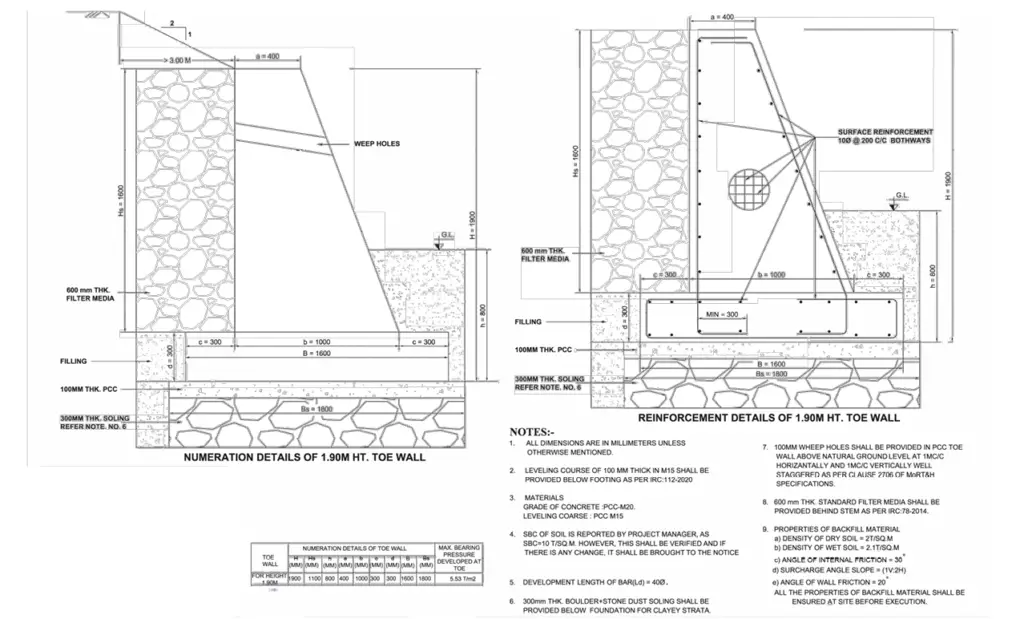
Purpose of Toe Wall
Toe walls serve multiple important functions:
- Prevents Soil Erosion: Stops soil from being washed away due to water flow.
- Provides Stability: Supports the lower portion of slopes and retaining walls.
- Controls Sliding: Reduces the chances of slope failures
- Protects Foundation: Prevents undermining of the structure.
- Improves Durability: Increases lifespan of retaining systems.
To get better knowledge all about retaining wall click given link below.
what is Retaining Wall and Its Type: Complete Guide
Types of Toe Wall
Toe walls are classified in different types depending upon construction materials and application.
Masonry Toe wall:
- These types of toe wall engineers construct them in stone or brick masonry.
- These are common in Rural and highway projects.
- Cost-effective and easy to build
RCC Toe Wall:
- In these type of toe walls, engineers use reinforced cement concrete.
- It is used in heavy load condition.
- It provides high strength as well as durability.
Gabion Toe Wall:
- Made using wire mesh filled with stones.
- These type of wall are flexible and suitable for erosion control.
- Commonly used near rivers, hilly areas and slopes.
Applications of Toe Wall
Toe walls are widely used in:
- Highway (Slope protection)
- Railway Embankments.
- Retaining wall structure.
- Canal and river protection work.
- Hill roads and mountain areas.
To get better knowledge about highway click given link below.
what is Superelevation in road: complete guide
potholes in road: causes, damages and methods of repairing
What is camber : Complete Guide for Beginners
Road to Excellence-1: A Comprehensive Guide for Highway Engineers
For better reference, can follow MoRTH 5th revision section 2500 and also IRC SP:48-2023
Design Considerations:
Proper design of a toe wall is essential for safety and performance. Key factors include:
Soil property:
- Soil type (Clay, sandy or gravel)
- Angle of internal friction and chohesion.
- Bearing Capacity.
Load Conditions:
- Earth Pressure.
- Water Pressure.
- Surcharge Load.
Drainage System:
- Proper drainage must provide To reduce hydrostatic pressure,
Material Selection:
- Based on site condition and Load requirements.
Safety Factors:
- Factors against sliding
- Against Overturning.
- And against bearing failure.
Basic Design Calculations
Active Earth Pressure (Rankine Theory):
The lateral earth pressure acting on the toe wall is calculated as:
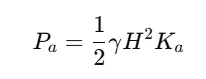
Where:
- Pa = Active earth pressure (kN/m)
- = Unit weight of soil (kN/m³)
- H = Height of wall (m)
- Ka = Active earth pressure coefficient
Coefficient of Active Earth Pressure:
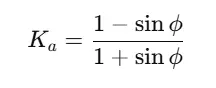
Where:
- = Angle of internal friction
causes of Failure:
- If the toe wall is improperly designed or constructed, it can itself cause failure.
- The most common failure is sliding failure, in which the entire toe wall can slide forward. This occurs when base friction is insufficient.
- Second is overturning failure, in which the wall overturns. This occurs when earth pressure is high and the resisting moment is low.
- Third is bearing failure, in which the soil’s bearing capacity is insufficient and the wall sinks.
- Therefore, it is very important to check these three conditions when designing.
Difference between Toe Wall and Retaining Wall
Many people mistake a toe wall and a retaining wall for the same thing, but there is a difference.
- The primary function of a retaining wall is to retain soil, while a toe wall primarily provides erosion control and base stability.
- A toe wall generally stands shorter and rests at the bottom of a slope, while a retaining wall holds soil throughout its entire height.
- Both structures support each other and often work together.
Importance of Drainage in Toe Wall
Drainage is the most important part of toe wall design.
- If water is not drained properly, hydrostatic pressure develops, which can damage the wall.
- Therefore, we place granular material and weep holes behind the toe wall.
- We use filter media to prevent soil particles from escaping while allowing water to pass through.
- A proper drainage system significantly increases the life of the toe wall.
Toe Wall Maintenance
After constructing a toe wall, its maintenance is equally important.
- Periodically inspect it to ensure no cracks develop.
- Keep the drainage system clean to prevent water from accumulating.
- If you notice erosion, repair it immediately.
- Control vegetation growth because roots can damage the structure.
Advanced Materials in Toe Wall Construction
Nowadays, in addition to traditional materials, we are also using new materials.
- Geosynthetics such as geotextile and geogrid increase the strength of the toe wall.
- Using precast concrete blocks can increase construction speed.
- Eco-friendly solutions such as vegetative toe walls are also being used, where soil stabilization is achieved through plants.
Example (Site Understanding)
- Suppose an embankment has been built in a hill road project. If a toe wall is not provided below, the soil will begin to flow downhill during rains.
- Gradually, the slope will become unstable, increasing the likelihood of a landslide.
- But if a proper toe wall is built, it will hold the soil in place and prevent erosion.
- This will keep the road safe and durable.
Conclusion:
Slope protection and soil stability are crucial for the long-term safety and durability of any civil engineering project. The toe wall serves as an effective structural element in achieving this objective. It provides support to the base of the slope and helps retain the soil in place. Through this, erosion can be controlled, the risk of slope failure minimized, and the stability of embankments, retaining structures, and road formations enhanced.
Its successful performance in any project depends on proper design, quality materials, and correct construction practices. During the design phase, it is essential to pay close attention to soil properties, earth pressure, water pressure, drainage arrangements, and safety factors. Neglecting the drainage system can lead to increased hydrostatic pressure, which may compromise the structure’s stability; therefore, the use of weep holes, filter media, and drainage layers is considered vital.
In modern times, alongside traditional masonry and RCC solutions, advanced materials and systems such as gabion structures, geosynthetics, and precast components are also being utilized. These techniques make construction more efficient, durable, and economical. Furthermore, the service life of the structure can be significantly extended through regular inspection and maintenance.
In conclusion, it is an extremely useful engineering solution for slope protection and foundation safety. Whether for highway projects, railway embankments, hill roads, or river protection works, it plays a significant role in maintaining the safety and stability of infrastructure.
About the Author
My name is Susanta Kumar Mohapatra. I am a civil engineering professional with over 11 years of practical experience in the construction and infrastructure sectors. I hold a B.Tech degree in Civil Engineering and an M.E. degree in Construction Management.
Throughout my career, I have worked in various areas such as road construction, bridge projects, quality control, material testing, quantity surveying, project planning, and site management. I am passionate about sharing practical knowledge related to highway engineering, laboratory testing, and construction management with engineers, students, and construction professionals.
I am the founder of CivilGuruHub.com, where I share technical articles, field experiences, laboratory test procedures, guidelines based on IRC and IS codes, and practical construction knowledge related to civil engineering. My aim is to explain civil engineering concepts in simple language and provide useful, reliable information to industry professionals.
You can connect with me through CivilGuruHub.com and my YouTube channel, “The Civil Site,” where I regularly share civil engineering tutorials and practical site knowledge.
See the video for detailed explanation
FAQs About Toe wall
1. What is a Toe Wall?
A Toe Wall is a structural wall constructed at the base (toe area) of a slope or embankment. Its primary function is to prevent soil erosion and provide stability to the slope.
2. Where are Toe Walls used?
Toe Walls are used in highways, railway embankments, retaining walls, hill roads, riverbanks, canals, and slope protection projects.
3. What is the difference between a Toe Wall and a Retaining Wall?
The primary function of a Retaining Wall is to retain soil, whereas the function of a Toe Wall is to prevent soil erosion at the base of a slope and provide base stability.
4. What materials are used to construct a Toe Wall?
Materials such as RCC (Reinforced Cement Concrete), stone masonry, brick masonry, and gabion structures are used in Toe Wall construction.
5. What are the advantages of an RCC Toe Wall?
An RCC Toe Wall offers high strength, long durability, high load-bearing capacity, and low maintenance requirements. Therefore, it is widely used in major infrastructure projects.
6. What is a Gabion Toe Wall?
A Gabion Toe Wall is constructed using stones filled into wire mesh boxes. It is flexible and commonly used for erosion control in rivers, streams, and hilly areas.
7. What factors are considered when designing a Toe Wall?
Factors such as soil type, bearing capacity, earth pressure, water pressure, drainage system, surcharge load, and safety factors are taken into account during Toe Wall design.
8. What are the main causes of Toe Wall failure?
The main causes of Toe Wall failure include sliding failure, overturning failure, bearing capacity failure, poor drainage, and improper construction practices.
9. Why is a drainage system necessary for a Toe Wall?
A drainage system reduces hydrostatic pressure. Without proper water drainage, excessive pressure is exerted on the wall, which can damage the structure.
10. How is a toe wall maintained?
To extend the structure’s lifespan, the toe wall should undergo regular inspections; cracks must be repaired, the drainage system kept clean, and vegetation growth controlled.
11. What should be the minimum height of a toe wall?
The height of a toe wall depends on project requirements, soil conditions, and slope geometry. Typically, the height ranges from 0.6 m to 2.0 m or more, determined based on design calculations.

Pingback: how to test slump for Concrete: Practical Site Guide -
Pingback: Types of Cement in Civil Engineering: A Complete Guide -
Pingback: How to Calculate HPC Concrete Quantity step by step
Pingback: One Way Slab vs Two Way Slab: complete guide