
Learn about retaining walls, their types, design principles, uses and failure in this post for students and professionals.
Table of Contents
introduction
In civil engineering, engineers use retaining walls as essential structures to maintain soil stability and prevent erosion in areas with varying ground elevations.
Retaining walls play a vital role in ensuring safety and structural integrity.
This post provides,
A simple and practical explanation of what a retaining wall is, its purpose, types, design concepts, applications, and common failures.
Click below link to get details about camber.
What is camber : Complete Guide for Beginners
what is retaining wall?
A retaining wall is a structure that resists lateral soil pressure. It holds the soil in place even when the ground elevation changes.
In simple terms, it prevents the soil from shifting or sinking.
Basic Principle of Retaining Wall
The basis of the design for a retaining wall is that the wall will be laterally loaded (e.g., pushed sideways) by a load (the backfill) which varies from location to location due to several different reasons.
Some of these reasons may include but are not limited to:
- The wall height.
- The properties of soil behind the wall.
- The moisture content in the backfill.
- Addition loads acting on the wall, such as wight of the other structure.
When designing a retaining wall, it is essential to provide for the following:
- Stability against sliding.
- Stability against overturning.
- Sufficient capacity for the wall to withstand the total weight of the soils behind it.
Types of Retaining Walls
Gravity Retaining Wall
There are different Types of Retaining wall
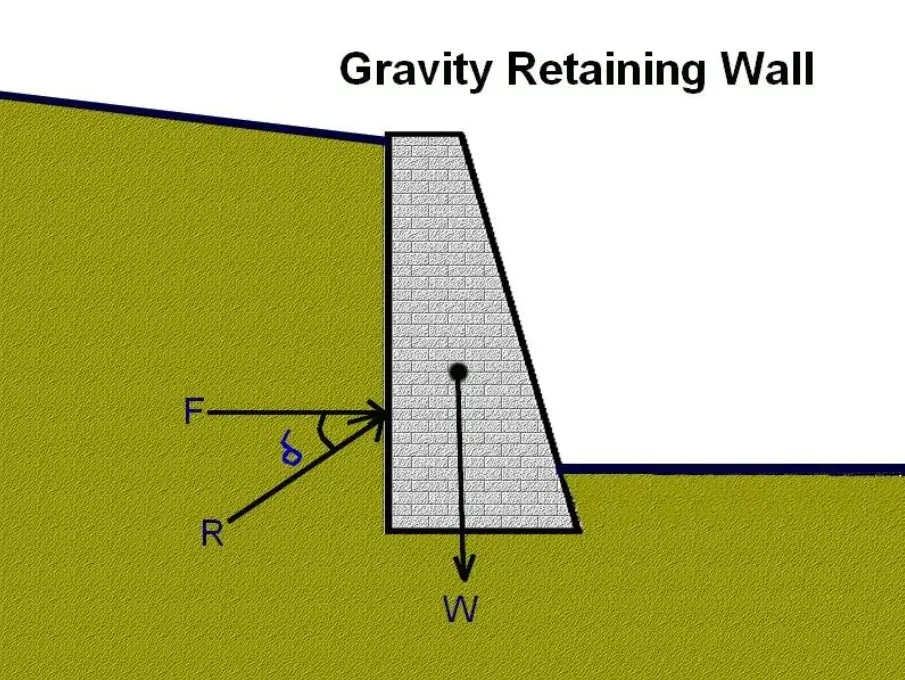
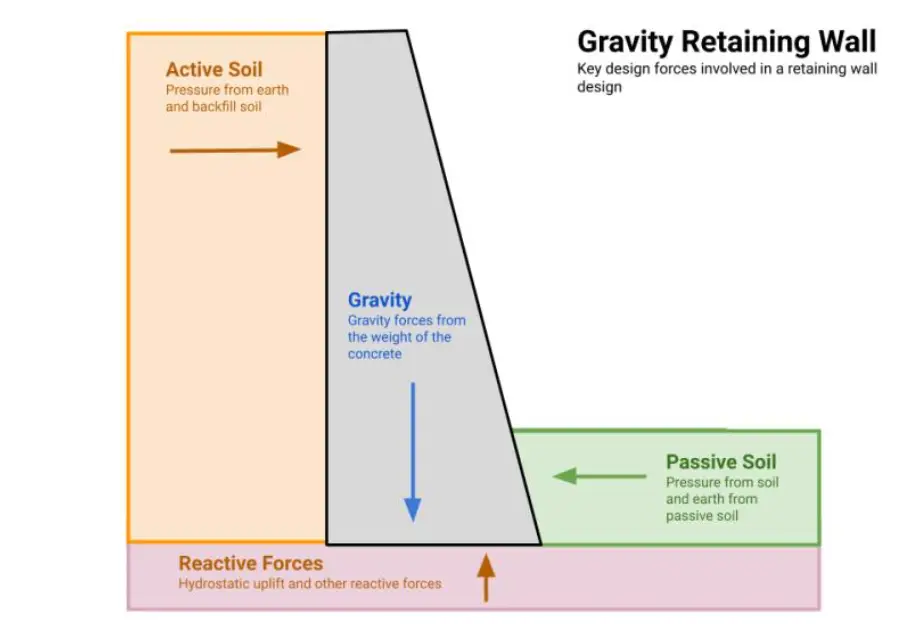
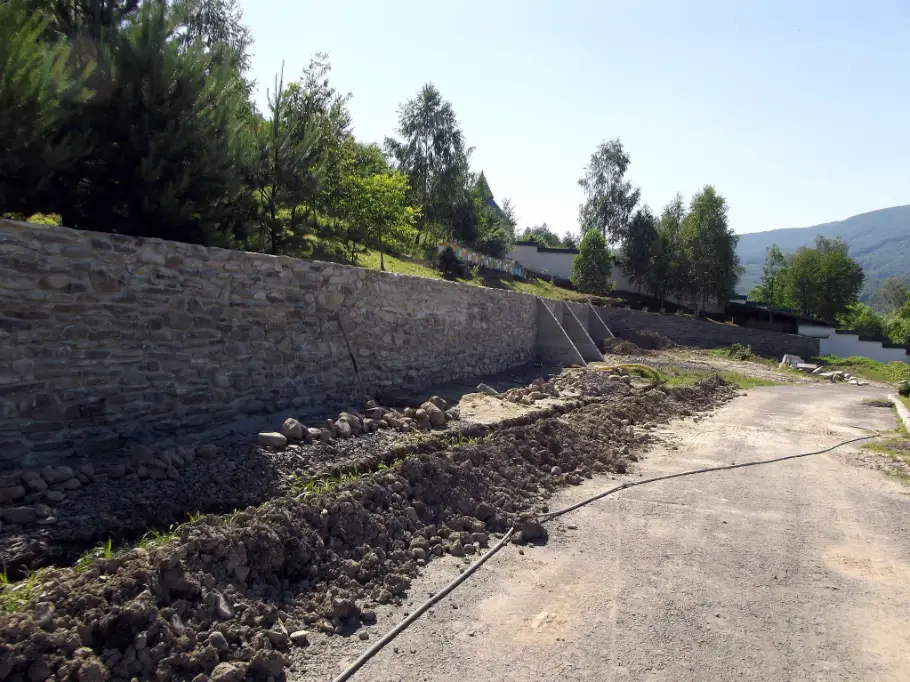
A gravity retaining wall is a structure that holds back the soil behind it. It resists earth pressure due to its own self-weight.
When a wall has soil accumulating behind it, the soil exerts lateral earth pressure on the wall.
Gravity walls resist this pressure by:
- Their own Weight.
- Base Friction
- Preventing Overturn.
- Made of Concrete, Stone or Masonry
- Suitable for small heights
Advantages:
- Simple design and Construction.
- Suitable for low heights wall.
- mostly important that it is durable and robust.
Cantilever Retaining Wall
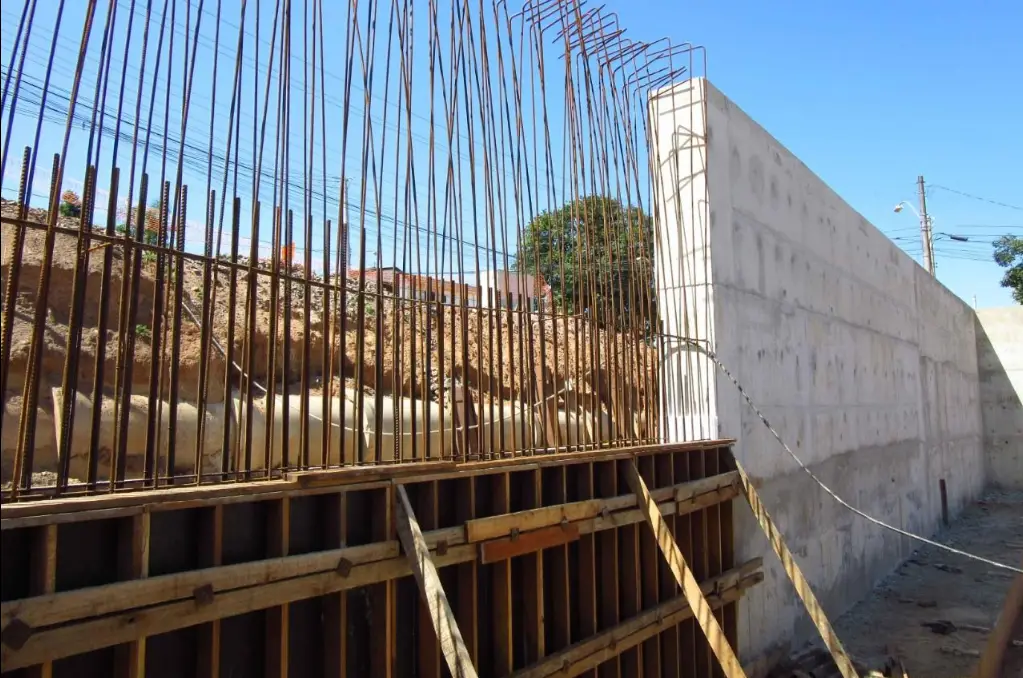
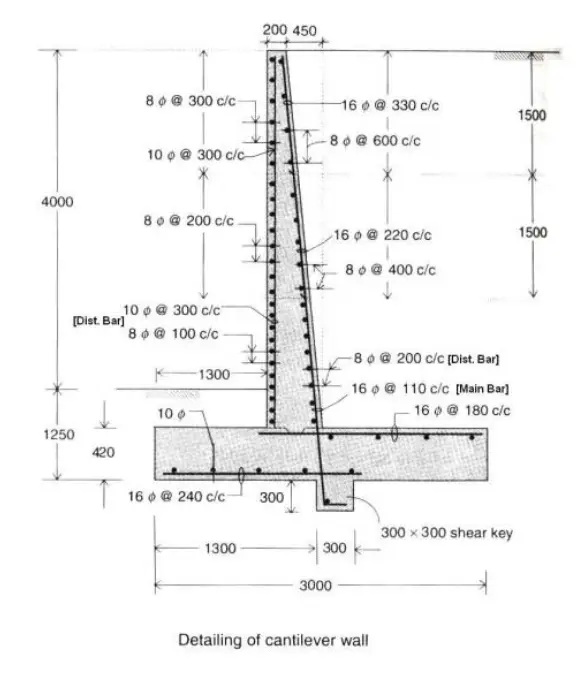
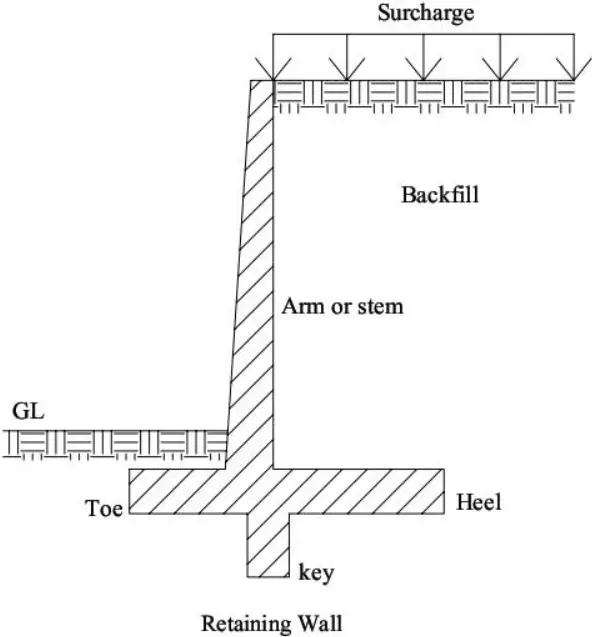
A cantilever retaining wall is made of reinforced cement concrete (RCC) and uses a cantilever action to resist soil pressure.
- It is made of Reinforced concrete.
- Uses a base slab and vertical stem.
Advantages:
- Economical for medium heights
- Uses less material compared to gravity walls
- Widely used in construction
Click below link to get details about Super elevation.
what is Superelevation in road: complete guide
Counterfort Retaining Wall
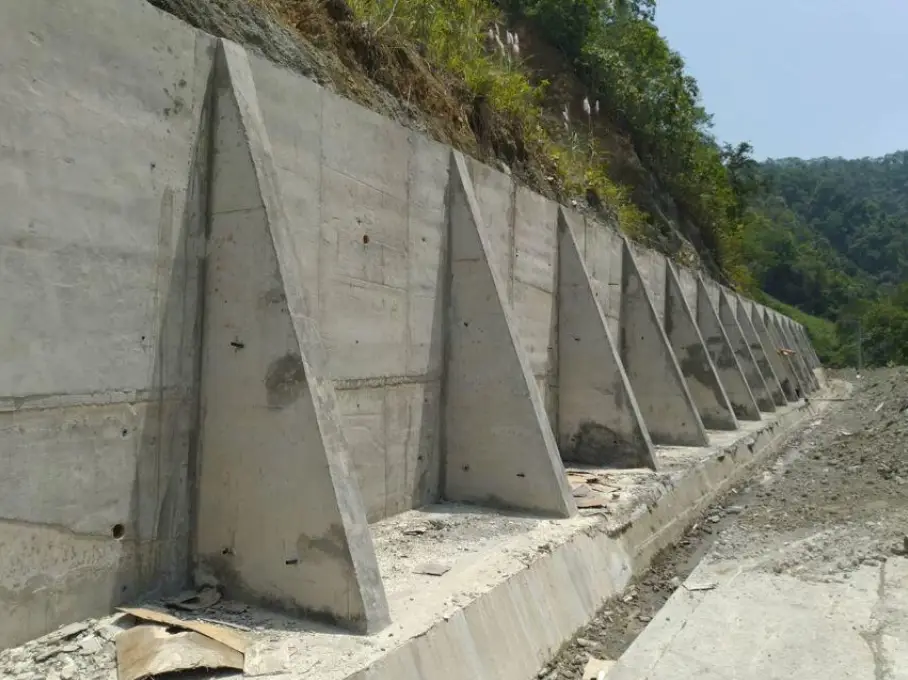
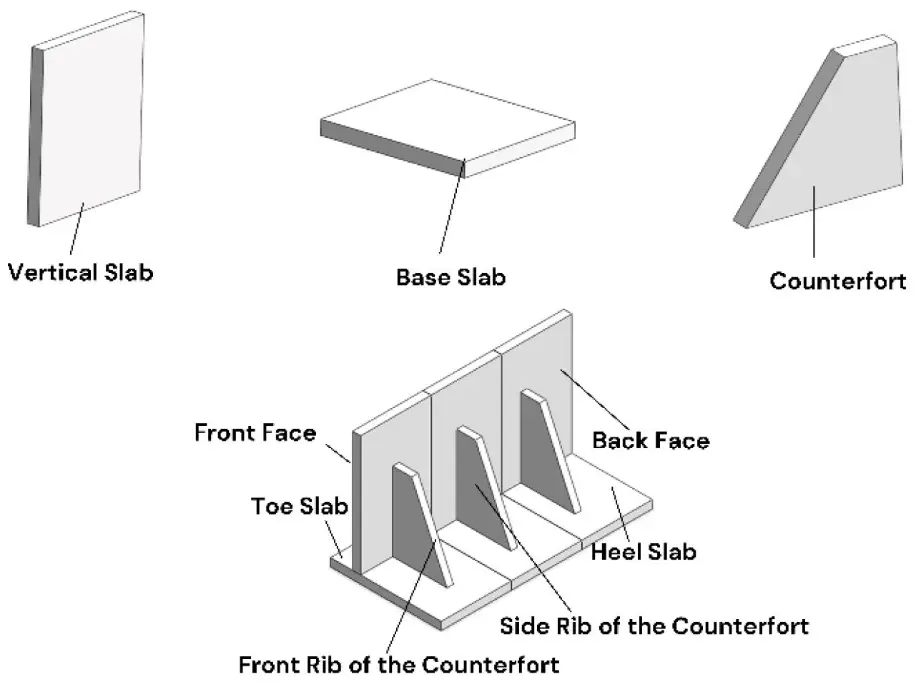
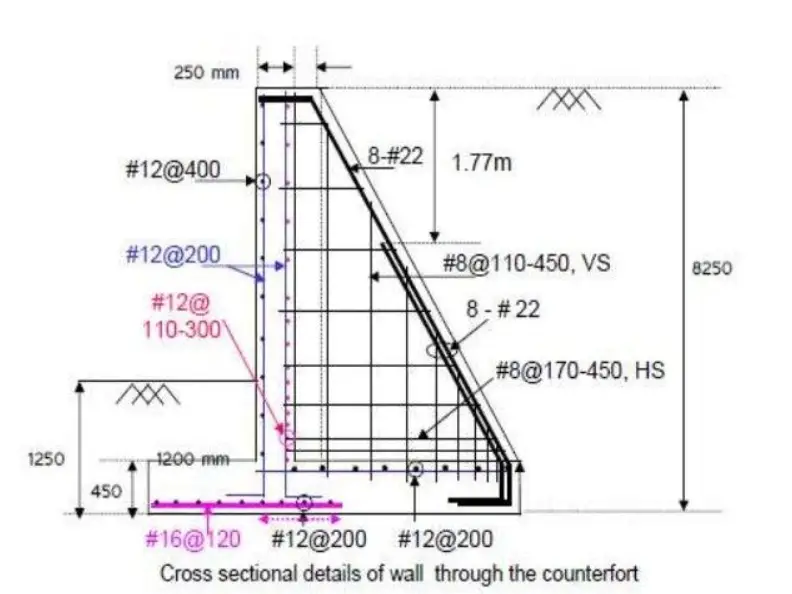
A counterfort retaining wall is similar to a cantilever wall but includes triangular supports (counterforts) at regular intervals on the back side.
- Similar to cantilever but with triangular supports
- Reduces bending stress
- Common in waterfront structures
Advantages:
- Suitable for high retaining walls
- Reduces bending moments
- More economical for large heights
Click below link to get details about Reason of potholes in Road
potholes in road: causes, damages and methods of repairing
Sheet Pile Retaining Wall
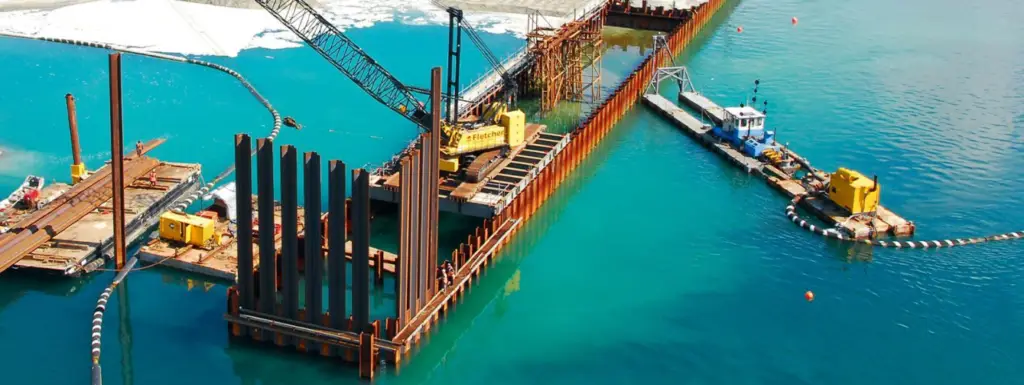
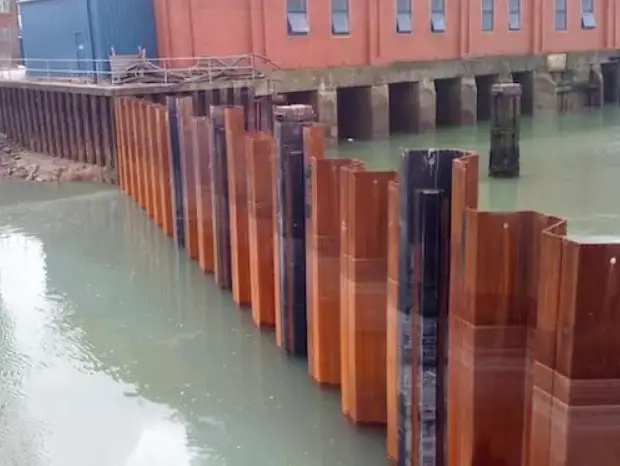
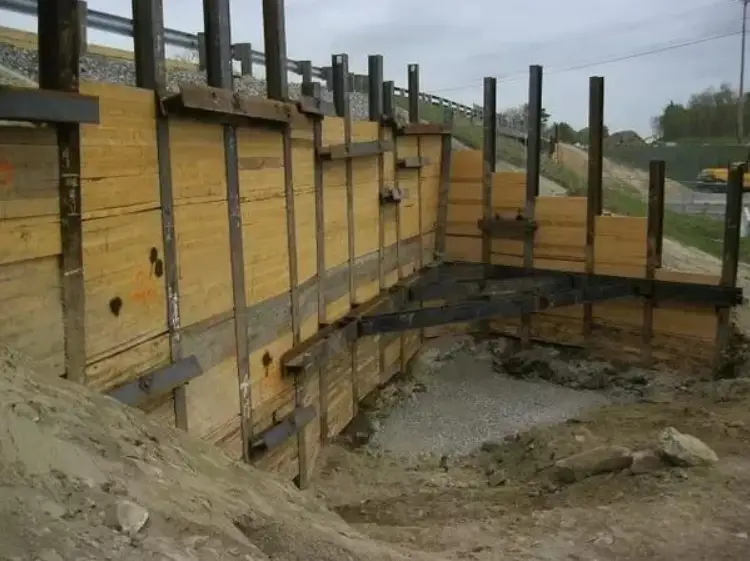
Sheet pile walls are constructed by driving steel, timber, or concrete sheets into the ground.
- Made of steel, vinyl, or wood sheets
- Uses a base slab and vertical stem
- Economical for medium heights
Advantages:
- Ideal for soft soil and waterlogged areas
- Quick installation
- Requires less space
For better understanding you can follow some codes i.e.
- IS 456:2000
- IS 875 : 1987
Anchored Retaining Wall
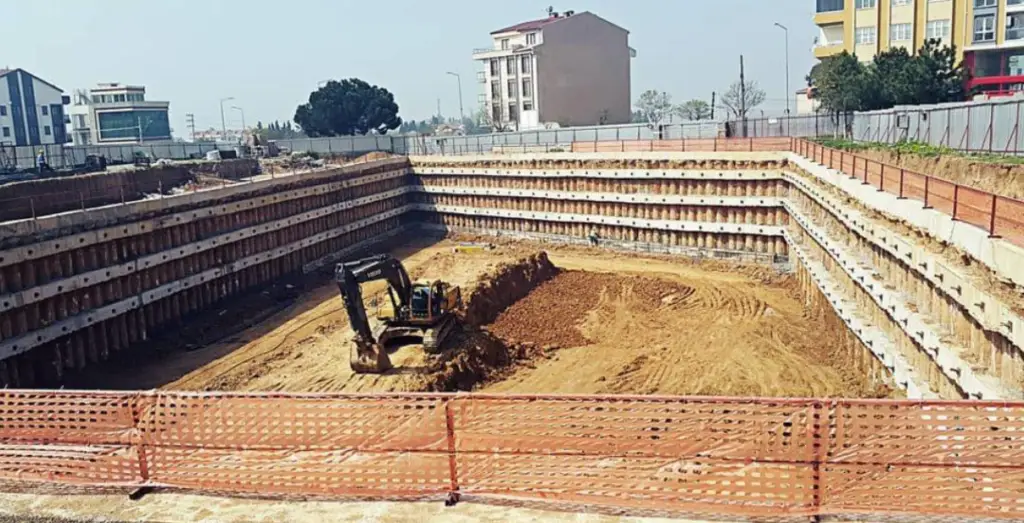
Anchored retaining walls use anchors or tiebacks embedded in the soil to provide additional stability.
- Supported by anchors or tiebacks
- Used where space is limited
- Provides extra strength
Advantages:
- Suitable for deep excavations
- High load-bearing capacity
- Can be used for tall structures
Applications of Retaining Walls
Civil engineers use retaining walls extensively on a variety of projects:
- Highway and hill side roads
- Bridge abutments/wing walls
- Basements
- Landscaping/gardening
- Rivers/canals
Design Principles of Retaining Walls
Designing a retaining wall requires careful analysis. The main principles include:
- Stability Against Sliding
- Stability Against Overturning
- Bearing Capacity
- Drainage System
- Factor of Safety
Earth Pressure Theory
The most important part of retaining wall design is earth pressure calculation. Soil exerts lateral pressure on the wall, which is classified into three categories:
- Active Earth Pressure develops when the wall moves slightly outward.
- Passive Earth Pressure occurs when the wall pushes inward on the soil.
- At-rest Pressure occurs when the wall is completely stationary.
Based on these three conditions, the design engineer decides how thick and strong the wall should be.
Importance of Drainage System
- In short, water is the biggest cause of retaining wall failure.
- When water accumulates behind the wall, hydrostatic pressure increases rapidly. This pressure can be even more dangerous than soil pressure.
- Therefore, on a practical site, engineers must ensure that:
- Engineers provide weep holes at the correct spacing.
- Engineers properly compact granular material.
- Engineers should not choke drain pipes.
Modern Materials and Innovation
- New technologies are increasingly being used in retaining walls.
- Geosynthetic reinforced soil walls (GRS walls) are lightweight and economical.
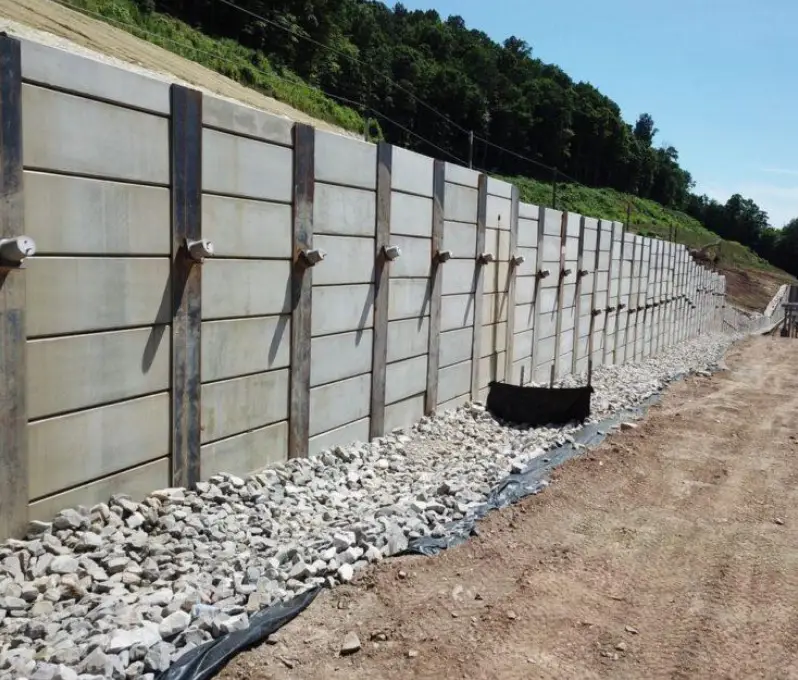
- Precast retaining wall panels allow for faster construction.
- Soil nailing techniques are also used where traditional wall construction is not possible.
Common Failures of Retaining Walls
If not designed properly then retaining walls may fail due to:
- Sliding Failure – is a lateral movement on the bottom of the wall
- Overturning Failure – is where the wall rotates around the bottom
- Bearing Failure – is where the soil under the wall cannot support the weight of the wall
- Water Pressure Failure – Poor drainage increases pressure behind the wall
- Structural Failure – Weak design or poor construction leads to cracks or collapse
In order to prevent these three types of failures, proper drainage and adequate wall design are critical.
Note: Water accumulation behind the wall increases pressure significantly. Therefore, drainage systems such as:
- Weep holes
- Drain pipes
- Granular backfill
Conclusion
Safely managing differences in ground levels is crucial in civil engineering projects. Retaining walls serve this purpose by stabilizing the soil and preventing it from shifting or collapsing. These structures not only enhance safety but also ensure the long-term stability of roads, bridges, basements, canals, and landscaping projects.
Since site conditions, soil properties, and load requirements vary from project to project, engineers must carefully select the appropriate type of wall. Gravity, Cantilever, Counterfort, Sheet Pile, and Anchored walls each have their own distinct characteristics and applications. Selecting the right type of wall helps optimize construction costs and improves the structure’s performance.
During the design phase, it is essential to analyze factors such as sliding, overturning, and bearing capacity. Equally important is the provision of a proper drainage system, as most failures result from water accumulation and the consequent rise in hydrostatic pressure. Measures such as weep holes, drain pipes, and granular backfill play a vital role in enhancing the wall’s durability and safety.
With advancements in modern construction technology, innovative solutions like geosynthetic reinforced walls, soil nailing, and precast systems are gaining popularity. These techniques offer greater speed, cost-effectiveness, and efficiency in construction. Ultimately, through proper design, quality construction, and regular maintenance, safe, durable, and long-lasting structures can be created for projects involving soil retention and slope stability.
Road to Excellence-1: A Comprehensive Guide for Highway Engineers
See the full video
About the Author
My name is Susanta Kumar Mohapatra. I am a civil engineering professional with over 11 years of practical experience in the construction and infrastructure sectors. I hold a B.Tech degree in Civil Engineering and an M.E. degree in Construction Management.
Throughout my career, I have worked in various areas such as road construction, bridge projects, quality control, material testing, quantity surveying, project planning, and site management. I am passionate about sharing practical knowledge related to highway engineering, laboratory testing, and construction management with engineers, students, and construction professionals.
I am the founder of CivilGuruHub.com, where I share technical articles, field experiences, laboratory test procedures, guidelines based on IRC and IS codes, and practical construction knowledge related to civil engineering. My aim is to explain civil engineering concepts in simple language and provide useful, reliable information to industry professionals.
You can connect with me through CivilGuruHub.com and my YouTube channel, “The Civil Site,” where I regularly share civil engineering tutorials and practical site knowledge.
FAQs About Retaining wall
1. What is a retaining wall?
A retaining wall is a structure that holds soil in place and prevents it from sliding or collapsing. It is used in areas where there is a difference in ground levels.
2. What is the primary purpose of a retaining wall?
The primary purpose of a retaining wall is to resist lateral earth pressure and prevent soil erosion, landslides, and soil movement.
3. What are the main types of retaining walls?
The main types of retaining walls include Gravity Retaining Walls, Cantilever Retaining Walls, Counterfort Retaining Walls, Sheet Pile Retaining Walls, and Anchored Retaining Walls.
4. Where are gravity retaining walls used?
Gravity retaining walls are generally used for walls of lower height. They resist soil pressure through their own weight.
5. What are the characteristics of a cantilever retaining wall?
A cantilever retaining wall is made of RCC (Reinforced Cement Concrete) and resists soil pressure through its stem and base slab. It is considered economical for medium-height retaining walls.
6. What factors are considered when designing a retaining wall?
Key factors considered during the design of a retaining wall include sliding stability, overturning stability, bearing capacity, the drainage system, the factor of safety, and earth pressure calculations.
7. Why is a drainage system necessary in a retaining wall?
A drainage system is crucial for reducing water pressure. If water accumulates behind the wall, hydrostatic pressure increases, which can lead to wall failure.
8. What are the most common types of retaining wall failures?
The most common types of retaining wall failures include sliding failure, overturning failure, bearing failure, water pressure failure, and structural failure.
9. In which projects are retaining walls used?
Retaining walls are used in highways, hill roads, bridge abutments, basements, landscaping, river and canal projects, and waterfront developments.
10. How can the lifespan of a retaining wall be extended?
The lifespan of a retaining wall can be significantly extended through proper design, quality construction materials, adequate compaction, an effective drainage system, and regular maintenance.

Pingback: Toe Wall in Civil engineering : A complete guide
Pingback: how to test slump for Concrete: Practical Site Guide -
Pingback: Types of Cement in Civil Engineering: A Complete Guide -
Pingback: How to Calculate HPC Concrete Quantity step by step
Pingback: One Way Slab vs Two Way Slab: complete guide