
Table of Contents
Why Should Every Civil Engineer Understand Potholes?
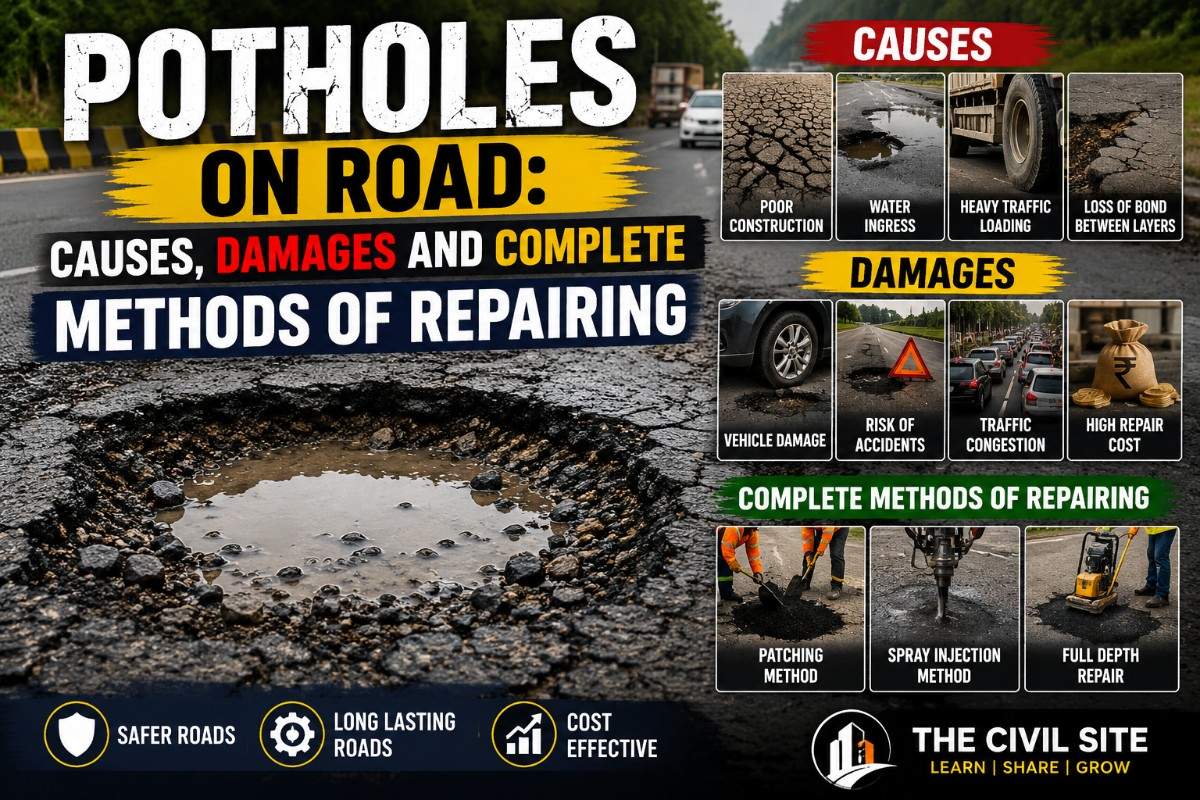
Roads form the backbone of any country’s economy and infrastructure. Millions of people rely on them for their daily commutes. This road network facilitates the smooth operation of goods transportation, emergency services, public transport, and industrial development. However, when potholes develop on the road surface, it not only makes travel uncomfortable but also significantly compromises road safety.
While potholes are found in almost every country, the problem is particularly prevalent in nations like India due to factors such as heavy traffic loads, vehicle overloading, poor drainage, and the monsoon season. It often begins with a small crack on the road surface; if left unrepaired, this crack gradually expands to become a pothole.
Many people view potholes merely as a common surface defect, but from an engineering perspective, they often signal a serious underlying issue within the pavement structure. Unless the root cause is identified, a pothole may reappear even after repeated patch repairs.
It is crucial for civil engineering students, highway engineers, site engineers, and quality engineers to understand the causes, repair methods, and prevention techniques associated with potholes. This article provides a detailed overview of pothole definitions, formation processes, primary causes, resulting damage, repair methods, quality control tests, practical site tips, engineering practices based on IRC and MoRTH standards, and long-term prevention strategies.
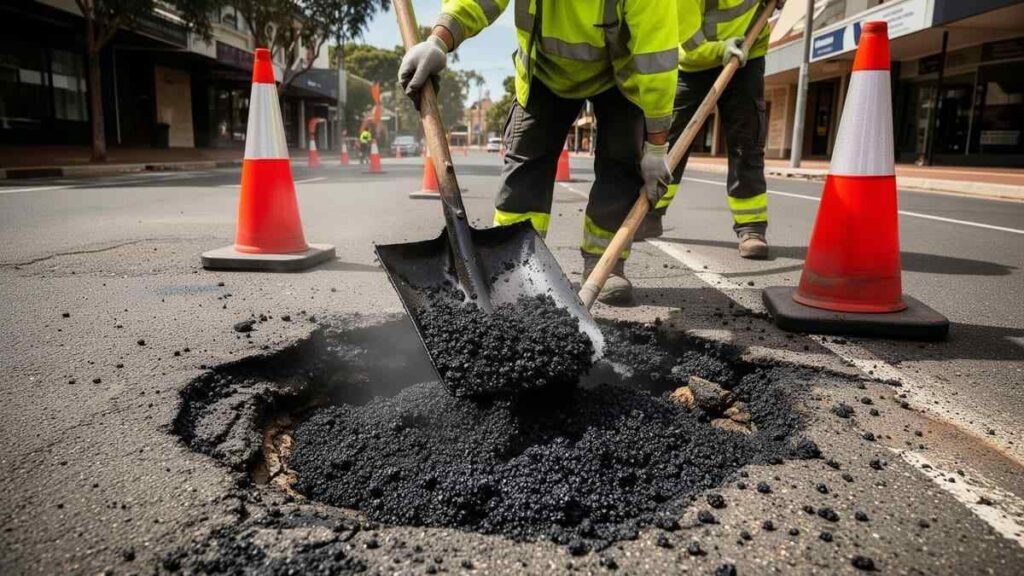
Potholes on road
What are Potholes?
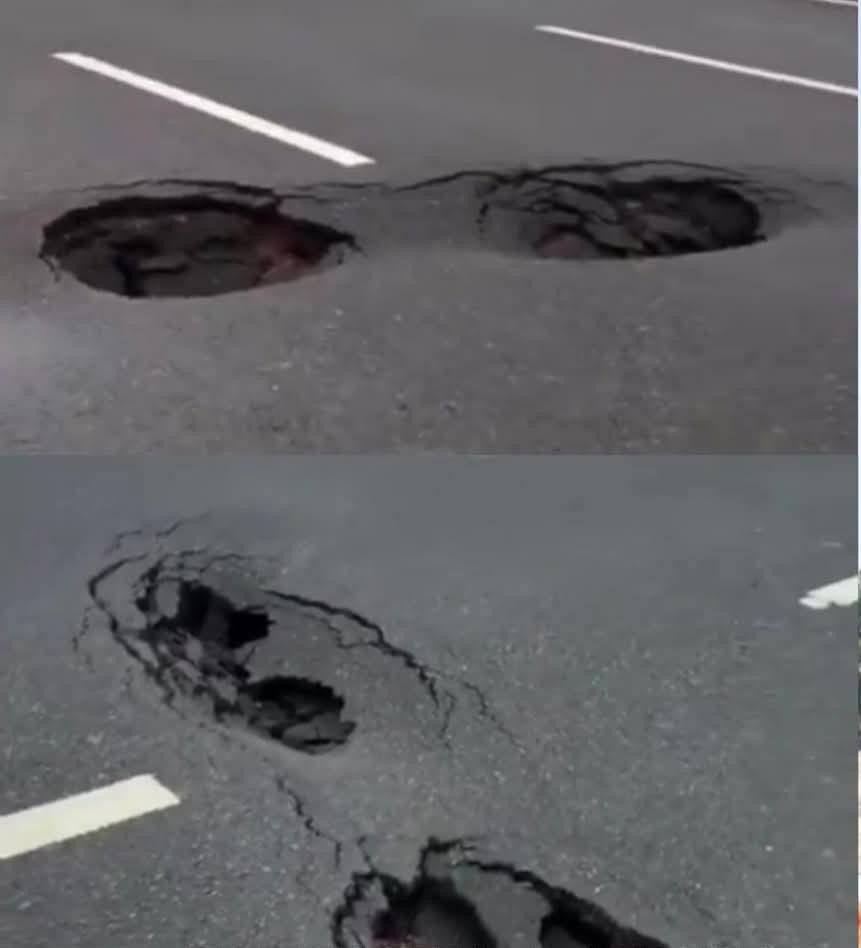
Potholes are small or large depressions on the road surface that form due to the gradual deterioration of asphalt or concrete pavement. They do not appear overnight; rather, they develop progressively as a result of various engineering failures.
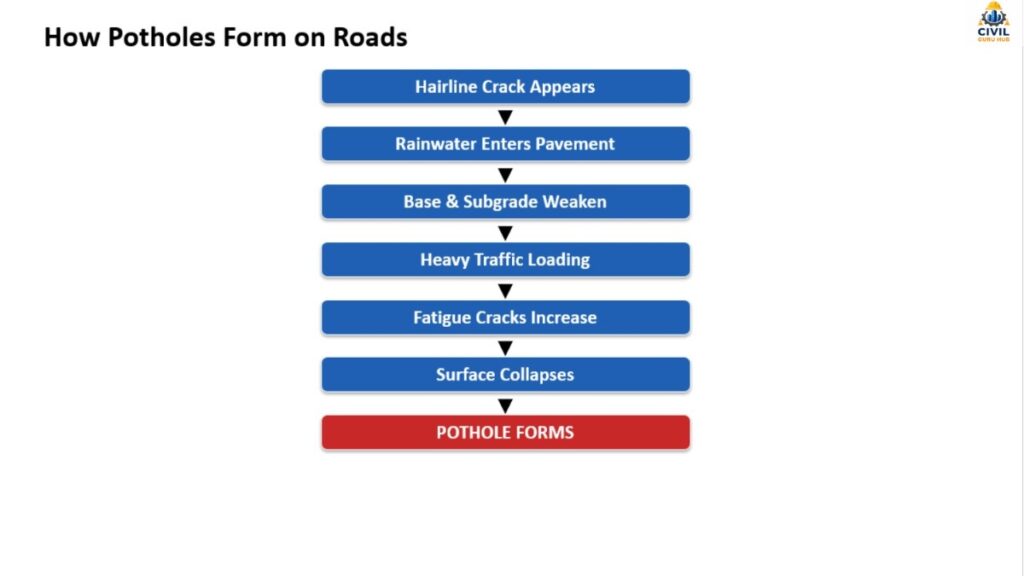
Initially, hairline cracks appear on the road surface. Rainwater seeps through these cracks into the underlying pavement layers. When heavy vehicles repeatedly pass over the same spot, stress within the pavement increases, causing the lower layers to weaken. Eventually, the road surface collapses, resulting in the formation of a pothole.
Potholes can range in size from a few centimeters to several meters. If not repaired promptly, they continue to expand, posing a serious safety hazard to road users.
Why Are Potholes Dangerous?
Many people view potholes merely as road defects, but in practical highway engineering, they are considered one of the most dangerous forms of pavement failure.
When a vehicle drives over a pothole at high speed, it places immense stress on the tires, suspension, steering system, and wheel alignment. They are particularly hazardous for two-wheelers, as the loss of balance significantly increases the risk of accidents.
Repeated traffic from heavy trucks and buses causes potholes to expand rapidly. During the rainy season, when potholes fill with water, drivers cannot gauge their actual depth, which can lead to serious accidents.
Furthermore, potholes reduce traffic speeds, increase fuel consumption and vehicle maintenance costs, and force the government to incur recurring expenses for repairs.
For this reason, in highway projects, the most critical engineering practice is not merely repairing potholes but identifying their root cause and eliminating them permanently.
Main Causes
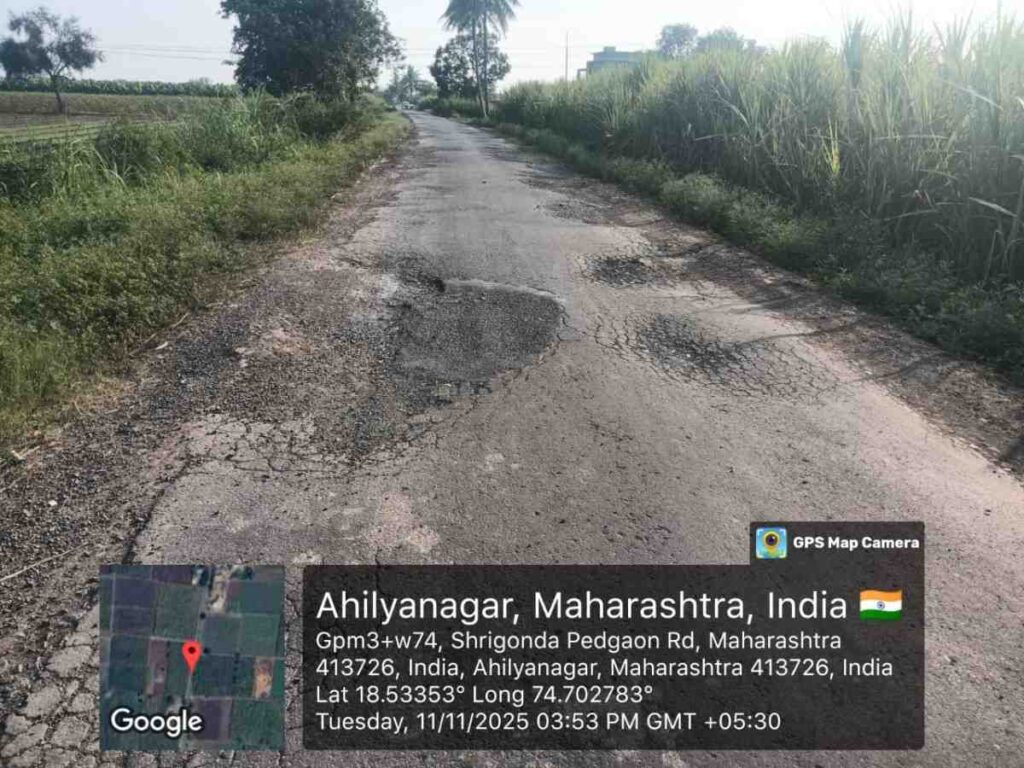
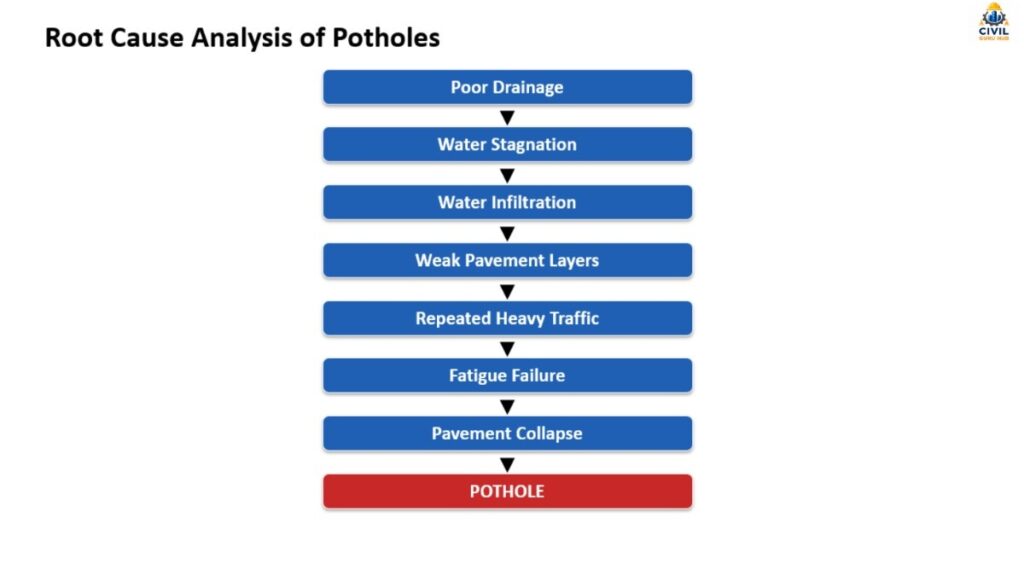
Potholes do not form due to a single reason; they develop from a combination of engineering errors, environmental conditions, and traffic loading. If quality standards are not adhered to during road construction or maintenance, the pavement gradually weakens, leading to the formation of potholes. Let us examine the primary causes in detail.
Water Infiltration (The Major Cause)
When small cracks appear on the road surface, rainwater seeps into the pavement through them. This water gradually weakens the subgrade, sub-base, and base course layers. When heavy vehicles repeatedly pass over these areas, the weakened layers fail to support the load, causing the road surface to collapse. Consequently, water infiltration is considered the leading cause of potholes.
Poor Drainage System
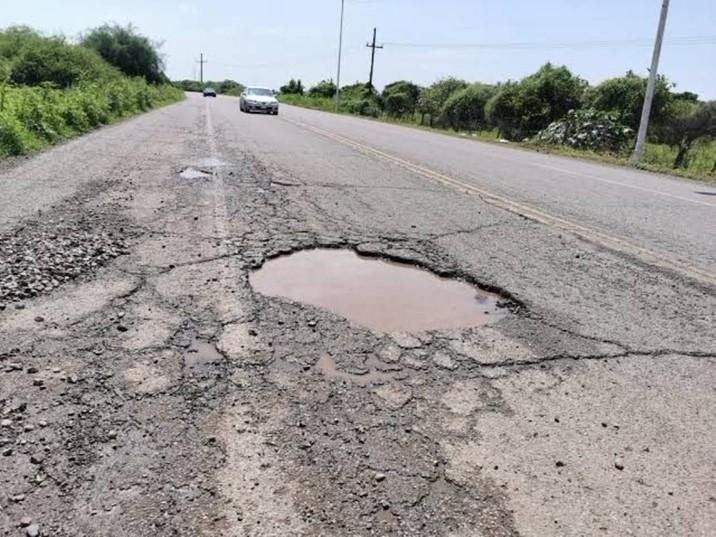
If roadside drains are blocked or water does not drain away effectively, water begins to accumulate on the road surface. Stagnant water damages the asphalt and penetrates the structure through cracks. For this reason, the drainage system is regarded as a crucial component of highway construction; an efficient drainage system can significantly extend the road’s lifespan.
Poor Construction Quality
Road quality is compromised if MoRTH specifications and IRC guidelines are not strictly followed during construction. Issues such as the use of oversized boulders in the embankment, inadequate subgrade preparation, incorrect layer thickness, or poor material selection can lead to future pothole formation. Therefore, verifying the quality of each layer during construction is essential.
Inadequate Compaction
Compaction is a critical stage in highway construction. If the required number of roller passes is not performed or if Field Density Test results are unsatisfactory, air voids remain within the pavement layers. Water subsequently enters these voids, weakening the pavement. Thus, proper compaction plays a vital role in preventing potholes.
Poor Quality Construction Materials
In road construction, the quality of aggregates, bitumen, filler material, and sand directly affects the pavement’s strength. If low-quality materials are used or mandatory laboratory tests are skipped, the pavement begins to deteriorate prematurely. Weak aggregates and poor bitumen bonding lead to the formation of cracks, which eventually turn into potholes.

Inadequate Compaction
Repeated Heavy Traffic Loading
Thousands of heavy trucks and trailers ply National Highways and industrial roads daily. Repeated axle loading causes fatigue failure in the pavement. Initially, micro-cracks form, and these gradually widen. When water enters these cracks, potholes develop rapidly.
Overloaded Vehicles
Overloaded trucks are frequently operated in many parts of India. When a vehicle’s actual load exceeds its design load, it places additional stress on the pavement. This extra stress reduces the road’s lifespan, causing cracks and potholes to appear sooner than expected.
Temperature Variations
During extreme summers, bitumen softens, and its binding capacity diminishes. Conversely, in winter, contraction and expansion cycles lead to crack formation. Frequent temperature fluctuations weaken the pavement layers, increasing the likelihood of pothole formation.
Loss of Bond Between Pavement Layers
Roads consist of multiple layers, such as the sub-base, base course, DBM (Dense Bituminous Macadam), and bituminous concrete. If proper bonding is not maintained between these layers, load transfer is compromised. Gradually, the upper layer begins to crack, eventually resulting in a pothole. Proper application of tack coats and prime coats helps improve this bonding.
Delayed Maintenance
When the first crack appears on the road surface, it can be repaired quite easily. However, if maintenance is delayed, that crack gradually widens into a pothole. This is why preventive maintenance is always considered superior to corrective maintenance.
Weak Subgrade Soil
The subgrade serves as the foundation for the entire pavement structure. If the subgrade has a low CBR value or the soil has not been properly compacted, the upper pavement layers will lack stability. A weak subgrade leads to settlement, causing cracks and potholes to develop on the road surface.
Utility Cutting After Road Construction
Practical experience with highway projects shows that potholes do not stem from a single cause. Often, a combination of poor drainage, inadequate compaction, and repeated heavy traffic loading damages the pavement. Consequently, merely patching the pothole is not a permanent solution. Identifying the root cause first and then adopting the appropriate repair method is considered the long-term engineering solution.
To read more articles on Highway, check the following guides:
what is Superelevation in road: complete guide
camber:what it is? Complete Guide for Beginners
TCS: How to Study Typical Cross Section – Complete Guide
Damages Caused by Potholes
Potholes are not merely depressions on the road surface; they create serious problems for road users, vehicles, and the government alike. If potholes are not repaired in time, they gradually grow larger, increasing both the risk of accidents and maintenance costs.
Let us examine the major damages caused by potholes in detail below:
Vehicle Damage
When a vehicle drives over a pothole at high speed, the impact is felt directly by the tyres and the suspension system. This increases the likelihood of tyre bursts, bent wheel rims, and suspension damage.
Wheel alignment in both cars and bikes gets disrupted, leading to steering vibrations and uneven tyre wear.
Consequently, vehicle owners are forced to incur additional expenses for frequent maintenance and repairs.
Road Accidents
Potholes are also a major cause of road accidents.
If a driver brakes suddenly or swerves to avoid a pothole while driving at high speed, the risk of a collision increases.
They are particularly dangerous for motorcyclists, as a loss of balance can lead to serious accidents.
During the rainy season, water accumulation hides the depth of the pothole, further increasing the risk of accidents.
Traffic Congestion
When there are numerous potholes on the road, drivers automatically reduce their speed.
In many places, vehicles move in a zig-zag pattern to avoid the potholes.
This slows down traffic and leads to traffic jams during peak hours.
Increased Fuel Consumption
Potholes necessitate frequent braking and acceleration.
This repeated fluctuation in speed leads to higher fuel consumption compared to normal driving conditions.
The economic impact of this is significant, especially on long routes.
Increased Road Maintenance Costs
If cracks are repaired at an early stage, maintenance costs remain quite low. However, when that crack turns into a pothole, measures such as patching, milling, or full-depth reconstruction become necessary.
This becomes a costly process for both the government and the contractors.
Reduction in Pavement Life
Potholes reduce the overall service life of the road pavement.
Once a pothole develops in a specific area, the surrounding pavement also begins to weaken.
If repairs are delayed, the damage continues to spread.
Consequently, the entire road may require rehabilitation earlier than expected.
Safety Risk for Pedestrians
On urban roads, pedestrians can also get injured due to potholes.
During the rainy season, it is difficult to spot water-filled potholes.
They create dangerous conditions for both walking and cycling.
Watch the detailed video regarding Potholes
Practical Site Observation
In actual highway projects, it is generally observed that potholes develop first in the wheel path area.
The reason for this is repeated axle loading.
If timely maintenance is not performed, a small pothole can escalate into a major failure within just a few months.
Therefore, regular road inspection is considered a crucial part of highway maintenance.
Effective Pothole Repair Methods
There is no single method used for repairing potholes.
Different repair techniques are adopted based on the severity of the damage, traffic volume, and weather conditions.
Patching Method
This is the most common and economical repair method.
In this method, the damaged area is cleaned, and the pothole is then filled with hot-mix or cold-mix asphalt.
After compaction, the road is opened to traffic.
This method is suitable for small potholes.
Spray Injection Method
In this method, the pothole is cleaned using compressed air.
Subsequently, bitumen and aggregate are injected at high pressure.
This method is fast and causes minimal traffic disruption.
Semi-Permanent Repair
In this technique, the damaged area is cut into a square or rectangular shape.
All loose material is removed.
Then, a new asphalt layer is placed and properly compacted.
This method is considered more durable than patching.
Full-Depth Repair
If the damage is not limited to the surface and the lower pavement layers have also weakened, a full-depth repair is carried out.
This involves removing the entire damaged pavement and reconstructing it from the subgrade up to the wearing course.
This is considered the most permanent and reliable repair method.
Infrared Asphalt Repair
In this modern technique, the existing asphalt is heated using an infrared heater.
New mix is then added and compacted.
This results in good joint quality and a durable repair.
Cold Mix Repair
Cold Mix Asphalt is used in remote areas and during the rainy season.
It does not require a hot-mix plant.
It is a highly useful method for emergency repairs.
Best Engineering Practice
A professional highway engineer never considers the job complete simply by filling a pothole.
First, the root cause is identified.
Subsequently, factors such as drainage conditions, pavement layers, compaction, and traffic loading are evaluated.
The appropriate repair method is selected only after the actual cause has been identified.
This approach improves long-term road performance and eliminates the need for repeated repairs.
Quality Control Checklist for Site Engineers
If the quality checks listed below are performed regularly during highway construction, the likelihood of pothole formation is significantly reduced.
| Inspection Item | Status |
|---|---|
| Subgrade CBR has been verified. | ✔ |
| Embankment compaction is satisfactory. | ✔ |
| Field Density Test has been passed. | ✔ |
| Aggregate quality has been tested in the laboratory. | ✔ |
| Bitumen grade is approved. | ✔ |
| Marshall Stability Test results are satisfactory. | ✔ |
| Prime Coat and Tack Coat have been applied in the proper quantities. | ✔ |
| Layer thickness has been maintained according to the drawings. | ✔ |
| Cross slope and camber have been checked. | ✔ |
| The drainage system is fully functional. | ✔ |
| Final inspection records have been maintained. | ✔ |
Common Mistakes That Cause Potholes
Often, the road design is sound, but certain common mistakes made during execution lead to potholes later on.
- Ignoring poor drainage.
- Failing to achieve the required compaction.
- Using low-quality aggregate.
- Failing to maintain the correct bitumen temperature.
- Skipping the Tack Coat or Prime Coat.
- Keeping the layer thickness too low.
- Ignoring overloaded traffic.
- Improper construction during the rainy season.
- Failing to properly restore the surface after utility cuts.
- Neglecting timely maintenance.
Avoiding these mistakes can significantly improve the service life of the pavement.
IRC and MoRTH References
| Standard | Purpose |
|---|---|
| IRC:37 | Flexible Pavement Design |
| IRC:SP:72 | Pavement Evaluation |
| MoRTH Section 300 | Earthwork |
| MoRTH Section 400 | Granular Layers |
| MoRTH Section 500 | Bituminous Construction |
Practical Tips for Highway Engineers
- Conduct a complete road inspection after every monsoon.
- Repair cracks before they turn into potholes.
- Keep the drainage system clean regularly.
- Do not use materials without verifying laboratory test reports.
- Conduct regular pavement condition surveys on heavy-traffic routes.
- Properly maintain quality control records.
- Avoid shortcut methods during construction.
- Maintain coordination with utility agencies.
- Prioritize preventive maintenance.
- Always adhere to safety standards.
Interview Questions
- What is the primary cause of pothole formation?
- How does water infiltration damage the pavement?
- What is the role of the Field Density Test?
- Why is the Marshall Stability Test important?
- What is the relationship between the CBR Test and potholes?
- What is the difference between Cold Mix and Hot Mix?
- Why is PMB used?
- How does poor drainage affect the lifespan of a road?
- When is Full-Depth Repair used?
- What is the difference between preventive maintenance and corrective maintenance?
Final Advice for Readers
If you are a civil engineering student, site engineer, QA/QC engineer, or highway professional, simply repairing potholes is not enough. A good engineer’s objective should always be to identify the root cause and eliminate it permanently. The lifespan of a road can be significantly extended through proper design, quality construction, regular inspection, timely maintenance, and adherence to the latest IRC/MoRTH standards.
About the Author
My name is Susanta Kumar Mohapatra. I am a Civil Engineering professional with over 11 years of practical experience in the construction and infrastructure sectors. I hold a B.Tech degree in Civil Engineering and an M.E. degree in Construction Management.
I have worked in various areas such as road construction, highway engineering, bridge projects, quality control, material testing, estimation, project planning, and site management. Through practical field experience, I have gained a deep understanding of key aspects like highway design, pavement engineering, soil testing, and construction management.
Through CivilGuruHub.com, my aim is to provide practical and technical knowledge to civil engineering students, site engineers, and construction professionals in simple, accessible language. My articles are based on industry standards, IRC codes, IS codes, and real-world project experience, ensuring that readers receive accurate and useful information.
You can visit CivilGuruHub.com for more information related to civil engineering, highway engineering, material testing, quantity surveying, and construction management.
Conclusion
Roads are a crucial component of any country’s infrastructure and economic development. Therefore, maintaining road quality and durability is the responsibility not only of construction agencies but also of every civil engineer. While potholes may appear to be minor issues, they are actually clear indicators of pavement failure. If not identified and repaired at an early stage, they can gradually lead to major road failures, traffic congestion, vehicle damage, and serious accidents.
In this article, we have explored in detail how potholes form, their primary causes, their impact on road users and the economy, and effective engineering methods for their repair and prevention. We have also covered quality control tests, practical site observations, modern repair technologies, and preventive maintenance practices—all of which are highly valuable for highway and site engineers.
In practical projects, simply patching a pothole is not a permanent solution; identifying the root cause is essential. Whether the issue stems from poor drainage, inadequate compaction, a weak subgrade, or low-quality construction materials, the pothole is likely to recur unless the underlying problem is resolved. Thus, quality construction, regular inspections, and timely maintenance are vital for ensuring a long service life for any road.
Adhering to IRC guidelines, MoRTH specifications, and proper quality control procedures during highway construction can significantly reduce the likelihood of pothole formation. Furthermore, laboratory and field tests—such as the Field Density Test (FDD), CBR Test, Marshall Stability Test, and aggregate quality tests—should not be overlooked, as they directly influence the road’s long-term performance.
Whether you are a civil engineering student, a site engineer, a QA/QC engineer, a highway engineer, or a construction professional, understanding the scientific reasons behind potholes and the methods for preventing them strengthens your professional expertise. Always remember that a good engineer does not merely construct roads; they build durable and safe roads that provide excellent service to the public for years with minimal maintenance.
If you found this article useful, be sure to read our other articles on CivilGuruHub covering Highway Engineering, Road Construction, Quality Control, Material Testing, and Civil Engineering Calculators. Our aim is to provide practical, field-oriented knowledge aligned with industry standards to assist both students and professionals with real-world projects.
Frequently Asked Questions (FAQs)
Q1. What are potholes in roads?
Potholes are small or large depressions on the road surface that develop due to pavement damage. They generally form due to water infiltration, heavy traffic loads, poor drainage, and inadequate compaction. If not repaired in time, they gradually grow larger.
Q2. What is the main cause of potholes?
Water infiltration is considered the primary cause of potholes. When rainwater seeps through cracks in the road surface into the pavement layers, the subgrade and base course weaken. Combined with heavy traffic loads, this weakness leads to the formation of potholes.
Q3. How do heavy vehicles cause potholes?
Heavy trucks and overloaded vehicles exert repeated axle loads. This loading causes fatigue cracks to develop in the pavement. If water enters these cracks, the pavement’s strength is further compromised, leading to the formation of potholes.
Q4. Why is proper drainage important to prevent potholes?
Proper drainage prevents water from accumulating on the road surface. If the drainage system functions correctly, water does not penetrate the pavement. This keeps the road layers strong and significantly reduces the likelihood of potholes forming.
Q5. Which repair method is best for potholes?
It depends on the severity of the damage. Patching is effective for small potholes, whereas “Full Depth Repair” is considered the most durable and long-term solution for severe damage.
Q6. Which quality control tests help prevent potholes?
Quality control tests such as the Field Density Test (FDD), CBR Test, Marshall Stability Test, Aggregate Impact Value Test, and Flakiness & Elongation Index Test ensure the road’s strength and durability. Performing these tests correctly significantly reduces the risk of pothole formation.
Q7. Can climate change increase potholes?
Yes. Heavy rainfall, extreme heat, and temperature fluctuations affect road materials. High temperatures soften the bitumen, while the rainy season increases water infiltration; both factors can accelerate the formation of potholes.
Q8. How can Site Engineers reduce potholes?
Site Engineers should ensure proper compaction, use quality materials, maintain the drainage system, and adhere to all laboratory and field quality control tests. Regular inspections and timely maintenance are also crucial.
Q9. Why is Full-Depth Repair considered a permanent solution?
Full-Depth Repair involves more than just surface repair; the damaged pavement is removed—extending from the subgrade up to the wearing course—and reconstructed. For this reason, it is considered the most reliable and long-term repair method for potholes.
Q10. How can potholes be prevented permanently?
To permanently minimize potholes, proper pavement design, high-quality construction materials, adequate compaction, an effective drainage system, regular road inspections, timely crack sealing, and preventive maintenance are essential. Additionally, adhering to IRC guidelines and MoRTH specifications is vital for long-term road performance.
Call to Action:
If you wish to learn more about Highway Engineering, Road Construction, Quality Control, or Material Testing, be sure to read our other Civil Engineering articles available on CivilGuruHub. Here, you will find practical site knowledge, guidance based on IRC and MoRTH standards, Civil Engineering calculators, and field-based tutorials—all in one place.

Pingback: What is Superelevation in road design? - civilguruhub.com
Pingback: what is Retaining Wall and Its Type: Complete Guide
Pingback: Toe Wall in Civil engineering : A complete guide
Pingback: TCS: How to Study Typical Cross Section - civilguruhub.com
Pingback: What is Gradient in Civil Engineering- civilguruhub.com