

Last Updates: July 2026
Table of Contents
Introduction
Whenever the design for a highway, expressway, airport runway, industrial road, or any heavy-duty pavement project is prepared, the primary question is: how much load can the subgrade soil safely support? If the foundation soil is weak, the road’s service life will be reduced, regardless of the quality of the pavement materials used. For this reason, the California Bearing Ratio (CBR) test is considered one of the most important laboratory tests in civil engineering.
Testing a single sample during the CBR procedure is insufficient. The same soil exhibits varying strengths depending on the compaction energy applied. To understand this practical scenario, the “10-30-65 Method” is employed in the laboratory. This approach allows engineers to evaluate how the soil’s bearing capacity improves with increased compaction levels and to assess the resulting impact on pavement design.
Today, highway laboratories worldwide utilize the 10-30-65 Method during specimen preparation because it provides a practical understanding of the actual differences between low, medium, and heavy compaction. The 10-30-65 Method has become a highly valuable laboratory practice for highway design, pavement thickness calculations, and quality control.
However, there is a crucial point to understand here.
The concept of the 10-30-65 Method was developed based on the guidelines of AASHTO Designation: T 193-13 (2017), which involves preparing CBR specimens at various compaction levels. Conversely, if we look at IS 2720 (Part 16), the specific application of 10, 30, and 65 blows per layer is not explicitly stated as a mandatory requirement. Always keep this in mind:
“The ’10-30-65 blows method’ is a laboratory specimen preparation approach derived from the guidance notes of AASHTO T 193. IS 2720 (Part 16) does not explicitly mandate the use of 10, 30, and 65 blows per layer. In India, many laboratories follow this as a departmental SOP or standard laboratory practice, rather than as a mandatory BIS requirement.”
Every civil engineer should be aware of this clarification, as the question frequently arises during interviews, site inspections, and laboratory audits.
If you wish to study the complete theory, apparatus, IS 2720 Part 16 procedure, and calculation details of the CBR test, a separate, detailed guide is available for that purpose. We will not repeat that content here; this article focuses solely on the practical concepts of the 10-30-65 method and AASHTO-based specimen preparation.
In this guide, we will explore—step-by-step—what the 10-30-65 method is, why it is used, how the specimen is prepared, the engineering significance of each compaction level, and how the method is actually applied in a practical laboratory setting.
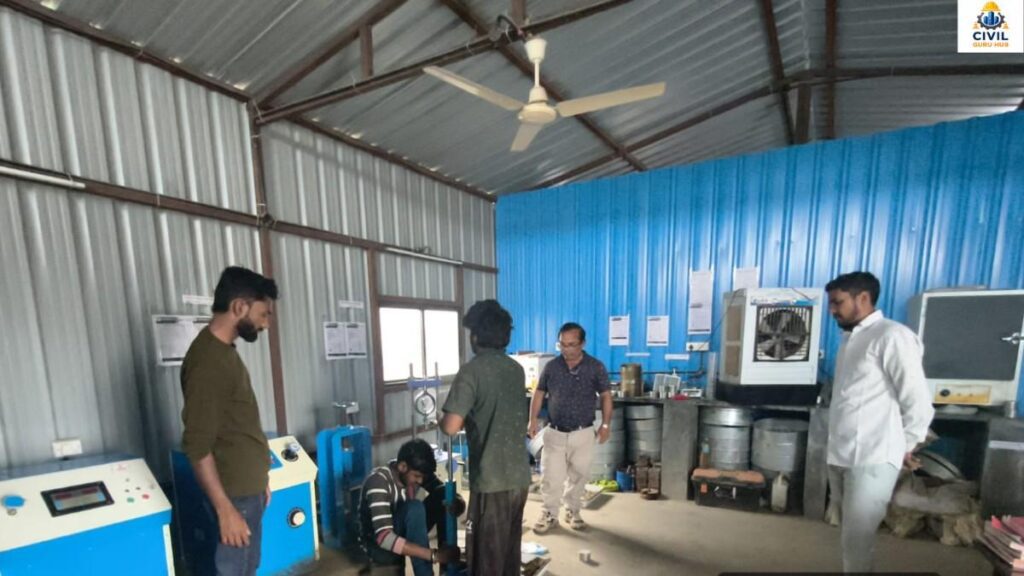
10-30-65 method for CBR testing
What is the 10-30-65 Method?
Many new site engineers and civil engineering students often think that the CBR test is merely a penetration test where a plunger is pushed into a soil sample. However, in reality, the most crucial part of the CBR test is not the penetration itself, but the preparation of the specimen.
This is precisely why the 10-30-65 method is given such importance in laboratory practice.
Simply put, the 10-30-65 method is a laboratory specimen preparation approach in which the same soil is compacted using three different levels of compaction energy.
The first specimen undergoes relatively low compaction.
The second specimen undergoes medium compaction.
The third specimen undergoes the highest level of laboratory compaction.
Separate CBR tests are conducted on all three specimens, and the results are then compared.
This comparison allows engineers to determine how much the soil’s strength improves as the compaction effort increases.
This information is highly valuable for practical highway projects because field compaction conditions never quite match the ideal conditions found in a laboratory.
Therefore, the 10-30-65 method is used in the laboratory to simulate these varying levels of compaction.
This method is particularly useful for soils where even a minor change in moisture content or density can significantly alter the CBR value.
The primary objective of this process goes beyond merely determining the CBR value.
The actual goal is to evaluate how strong the pavement foundation becomes under different compaction energies.
For this reason, highway agencies and research laboratories incorporate the 10-30-65 method into pavement performance analysis.
Engineering Concept of the 10-30-65 Method
If an engineer obtains only a single CBR value, they cannot determine the extent of the benefit gained by improving soil compaction.
However, when the same soil is tested at three different compaction energy levels, a clear trend emerges.
It is generally observed that:
| Compaction Level | Laboratory Practice | Expected CBR Trend |
|---|---|---|
| 10 Blows | Light Compaction | Lowest CBR |
| 30 Blows | Medium Compaction | Moderate CBR |
| 65 Blows | Heavy Compaction | Highest CBR |
This table illustrates a general engineering trend. Actual values may vary depending on soil type, moisture content, density, and gradation.
When soil particles undergo lower compaction, the void ratio between them remains comparatively high.
As compaction energy increases, the particles move closer to one another.
The void ratio decreases.
Dry density improves.
Particle interlocking becomes stronger.
Consequently, the CBR value also improves.
The 10-30-65 method is used to practically evaluate this engineering principle.
It is not merely a laboratory exercise; rather, it provides a scientific basis for pavement design.
Significance of the 10-30-65 Method under AASHTO Designation: T 193-13 (2017)
AASHTO Designation: T 193-13 (2017) is considered one of the internationally accepted standards for the California Bearing Ratio (CBR) test.
The primary objective of this standard is to ensure that the laboratory specimen represents field conditions with the greatest possible accuracy.
To achieve this, varying levels of compaction effort are employed.
In practical laboratory settings, the 10-30-65 Method supports this very philosophy.
Engineers prepare specimens using different compaction energies and observe how the pavement support value changes.
This process helps the pavement designer decide whether it is more economical to improve actual field compaction or to increase the pavement thickness.
Often, the thickness of expensive pavement layers can be reduced simply by improving the quality of compaction.
Consequently, the 10-30-65 Method also has an indirect impact on project costs.
For large highway projects, this comparison becomes a vital tool for design optimization.
This is why experienced pavement engineers, when reviewing laboratory reports, do not look solely at the final CBR value; they attach equal importance to the compaction level at which the specimen was prepared.
To read more articles on Laboratory Test, check the following guides:
How to Do Concrete Mix design as per IS 10262:2019? A Complete Guide with Example
IS 2720 Part 16 CBR Test: Everything You Need to Know in 2026
The Ultimate Concrete Nominal mix: 8 Proven Grades with Calculations
Laboratory Preparation Before Applying the 10-30-65 Method
Till now, we understood that the primary objective of the 10-30-65 Method is to evaluate soil bearing capacity at varying compaction energy levels. However, in a practical laboratory setting, simply filling the mould with soil is insufficient. If specimen preparation is not executed correctly, the resulting CBR value will be inaccurate. Consequently, specimen preparation is considered the most critical stage of the 10-30-65 Method.
For an engineer in a professional laboratory, the primary focus is not the equipment or machinery, but the quality of the sample. If the soil is not representative, the moisture content is uneven, or compaction is improper, the entire CBR test may need to be repeated.
First, a representative disturbed soil sample is collected from the field. If the test is being conducted for pavement design, the sample must be collected from the specific depth where the actual subgrade is to be constructed. A common error made by many laboratories at this stage is collecting only the loose surface soil, whereas soil at the actual design depth may possess different properties.
Once brought to the laboratory, the sample is allowed to air-dry naturally. Direct sunlight or excessive heating in an oven is avoided, as this can alter the natural properties of the clay minerals. After air-drying, large soil lumps are gently broken down using a wooden mallet. Care must be taken not to crush the individual soil particles; only the natural aggregations should be broken apart.
Subsequently, the soil is passed through a specified sieve. Oversized particles are either removed in accordance with standards, or a correction factor is applied. Every observation is meticulously recorded in the laboratory logs.
Moisture conditioning begins after this stage. Water is gradually added in the required quantity, and the soil is thoroughly mixed. Water should not be poured into a single spot; if there is an excess of water on one side, the density across different sections of the specimen will vary, thereby undermining the very objective of the 10-30-65 Method. Once mixing is complete, the soil is kept covered for some time to allow the moisture to distribute uniformly. This process is particularly important for clayey soils, as it takes time for the water to be absorbed into the particles.
An experienced laboratory engineer never rushes the preparation of a specimen. Achieving moisture equilibrium is just as crucial to the accuracy of the 10-30-65 method as the actual compaction process itself.
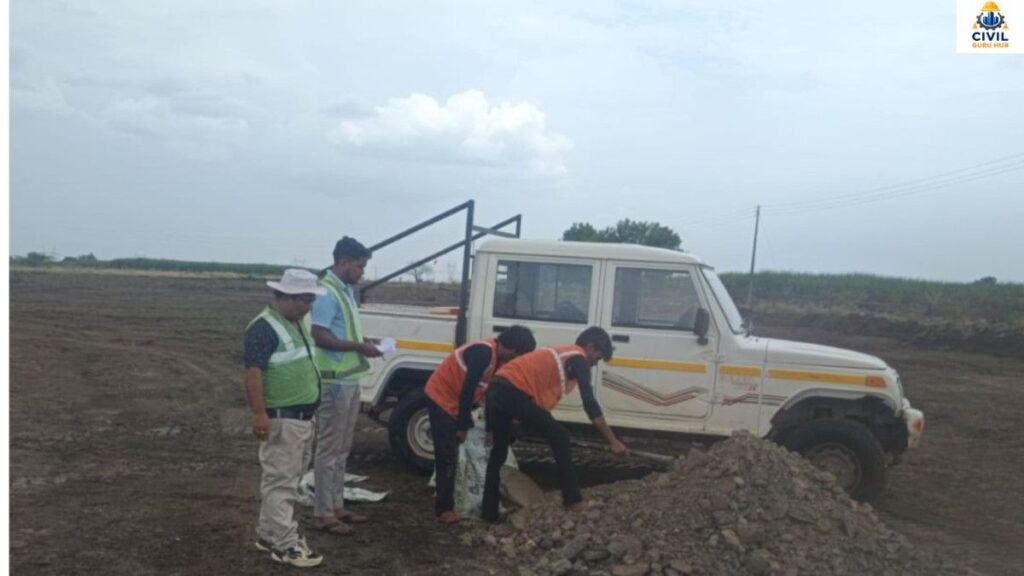
Soil Sampling from Borrow area
Apparatus Required for the 10-30-65 Method
Once specimen preparation is complete, the laboratory apparatus is prepared. In accordance with the practical approach of AASHTO Designation: T 193-13 (2017), all equipment must be clean, calibrated, and free from damage. If the internal diameter of the mould changes or the surcharge weight is incorrect, the final CBR value can be affected.
The commonly used apparatus are listed below:
| Apparatus | Purpose |
|---|---|
| CBR Mould | To prepare the soil specimen |
| Base Plate | To support the mould |
| Spacer Disc | To maintain specimen height |
| Compaction Rammer | To apply the required blows |
| Filter Paper | For drainage and separation |
| Surcharge Weights | To simulate pavement load |
| Penetration Machine | For CBR measurement |
| Dial Gauge | To record penetration |
| Loading Frame | To maintain a constant penetration speed |
In a practical laboratory setting, every piece of equipment is visually inspected before testing begins. If there is rust or deformation inside the mould, that mould is not used.
If the actual weight of the surcharge weight differs from the standard, the calculated CBR value may be inaccurate. For this reason, NABL-accredited laboratories ensure periodic calibration.
The reliability of the 10-30-65 method depends not only on the blow count but equally on the accuracy of the equipment.
Specimen Preparation Using the 10-Blows Stage
Let us now understand the first compaction level of the 10-30-65 method in detail.
The objective of this stage is to represent a condition of relatively low compaction. In the field, such conditions are often encountered in rural roads, temporary haul roads, or poorly compacted embankments.
The prepared soil is placed into the mould in 5 layers. Each layer is spread evenly to ensure there is no uneven thickness on any side.
Compaction then begins.
10 blows are applied to each layer.
These blows must be distributed uniformly; if all the blows are concentrated in one spot, the specimen’s density will become non-uniform.
During compaction, the rammer is allowed to fall freely; no artificial pressure or extra force is applied. The objective of each blow is simply to gradually compact the soil particles.
Once compaction of a layer is complete, the next layer is placed, and the process is repeated.
After the final layer is compacted, any excess soil at the top of the mould is trimmed off using a straight edge to ensure a smooth surface.
Subsequently, the filter paper and surcharge arrangement are prepared for future testing.
It is crucial to understand a key engineering observation here.
In this first stage of the 10-30-65 method, the specimen’s dry density is comparatively low. The void ratio between soil particles is high, and particle interlocking is weak; consequently, penetration resistance is generally observed to be low.
For this reason, laboratory reports often show the lowest CBR value for the 10-blow specimen.
However, this does not mean the specimen was prepared incorrectly.
It is intentionally designed to represent a low-compaction condition.
This specimen is later compared with the 30-blow and 65-blow specimens. When an engineer plots all three values on a graph, it clearly illustrates the rate at which soil strength improves as compaction energy increases. It is because of this comparison that the 10-30-65 method is considered so valuable in pavement engineering.
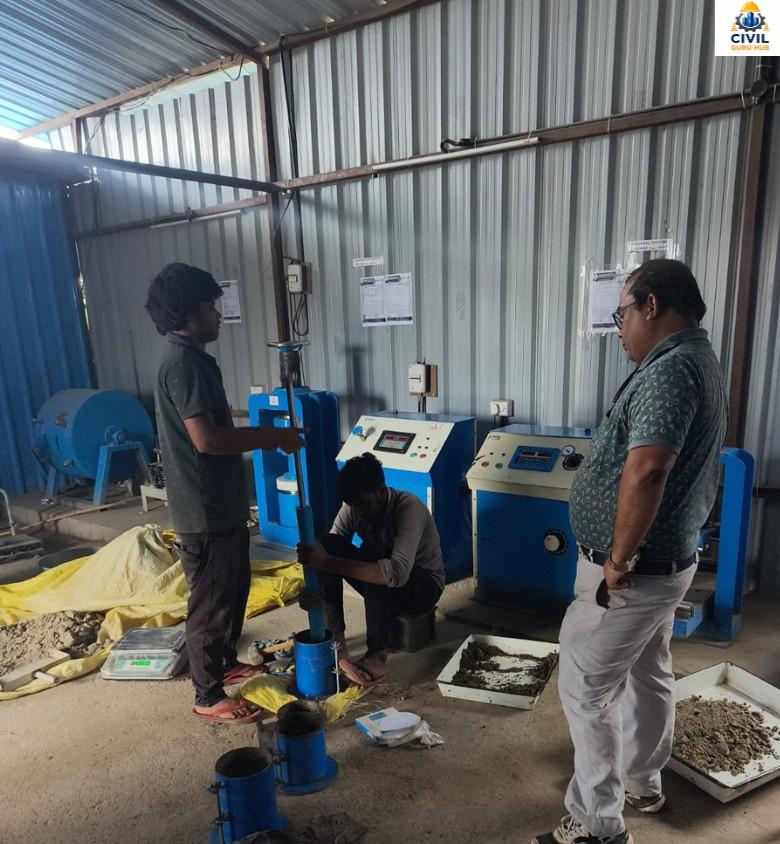
CBR Mould casting
Practical Engineering Analysis of the 30-Blows Stage (Medium Compaction)
The next step is the preparation of the 30-blows specimen. This stage is considered crucial in the laboratory as it represents the transition between low and heavy compaction levels. Highway laboratories closely monitor the results of this stage, as it allows engineers to understand the actual impact of increased compaction energy on soil strength.
First, the mould is cleaned and assembled with the spacer disc. The moisture-conditioned soil is weighed to ensure that approximately the same quantity of soil is used for each specimen, thereby ensuring a scientific and fair comparison.
Next, the soil is placed into the mould in 5 equal layers. Compaction begins after lightly leveling each layer. In this instance, 30 uniform blows are applied to each layer. The objective is not merely to increase the number of blows; the distribution of each blow is equally important.
If the blows are concentrated only in the center, the specimen’s density will be higher at the center and lower at the edges. Therefore, professional laboratory technicians operate the rammer in a circular pattern to ensure uniform compaction across the entire cross-section.
Once the first layer is compacted, the second layer is placed, and the process is repeated. The surface is not scratched between layers; instead, the next layer is placed directly to maintain proper bonding.
After compaction is complete, the specimen is trimmed, and the top of the mould is made perfectly flush. The filter paper and surcharge assembly are prepared for the subsequent penetration test.
From an engineering perspective, the dry density of the 30-blows specimen shows noticeable improvement. Soil particles move closer together, air voids are reduced, and particle interlocking becomes significantly stronger.
Consequently, when the penetration plunger enters the soil, it encounters significantly higher resistance compared to the previous specimen. It is precisely because of this practical observation that the 10-30-65 Method helps the engineer understand not just a single CBR value, but the complete relationship between compaction and strength.
Often, by examining this comparison, the pavement designer decides whether it would be more economical to improve field compaction or to increase the pavement thickness.
65-Blow Stage – A Comprehensive Practical Concept of Heavy Compaction
Now, let us understand the most important and final compaction level of the 10-30-65 method.
This stage represents the highest compaction effort in the laboratory. The objective for this specimen is to create conditions approximating the maximum achievable laboratory density. In highway engineering, the results from this stage serve as a design reference.
The procedure begins just like the previous two stages.
The prepared soil is placed into the mould in 5 equal layers.
Compaction begins after leveling each layer.
Now, 65 blows are applied to each layer.
A crucial point to note here is this:
Increasing the number of blows does not mean random hammering.
Each blow must be controlled.
The rammer should be allowed to free-fall from the standard height.
The operator should not apply any additional force.
If the blows are unevenly distributed across a layer, the specimen’s density will also be uneven, and the final CBR value will not accurately reflect actual field behavior.
Once the 65 blows are completed, the next layer is placed, and the same procedure is repeated.
After final compaction, the specimen is trimmed.
The surface must be perfectly level.
At this stage, the specimen feels visibly hard.
In engineering terms, particle rearrangement reaches a level close to the maximum.
The void ratio is at its minimum.
Dry density is at its highest.
Internal friction improves.
Particle interlocking is strongest.
Consequently, the highest penetration resistance is observed.
If the moisture content is maintained within the optimum range, the 65-blow specimen generally yields the highest CBR value.
It is for this reason that the 10-30-65 method is considered so valuable in pavement engineering laboratories.
It informs the engineer about the extent to which the pavement’s load-carrying capacity can increase if field compaction is improved.
To read more articles on Quantity Survey, check the following guides:
How to Conduct GSA Test? Proven IS 2720-4 Procedure
What are Sand Silt Content Test? 7 Easy Steps & Limits
What Are Deming’s 14 Principles of Quality Management? A complete Guide
Step-by-Step Practical Calculation Example
Let us now look at a numerical example that will further clarify the practical significance of the 10-30-65 method.
Suppose three specimens of the same soil were prepared in the laboratory.
The following penetration loads were observed after testing:
| Specimen | Load at 2.5 mm (kg) | Load at 5.0 mm (kg) |
|---|---|---|
| 10 Blows | 760 | 1050 |
| 30 Blows | 1040 | 1460 |
| 65 Blows | 1420 | 1950 |
Standard Load Values
| Penetration | Standard Load |
|---|---|
| 2.5 mm | 1370 kg |
| 5.0 mm | 2055 kg |
Now, let us calculate the CBR
Sample-1 (10 Blows)
CBR at 2.5 mm = (760 ÷ 1370) × 100 = 55.47%
CBR at 5 mm = (1050 ÷ 2055) × 100 = 51.09%
The governing CBR for this specimen will be considered approximately 55%.
Sample-2 (30 Blows)
CBR at 2.5 mm = (1040 ÷ 1370) × 100 = 75.91%
CBR at 5 mm = (1460 ÷ 2055) × 100 = 71.04%
Final CBR ≈ 76%
Sample-3 (65 Blows)
CBR at 2.5 mm = (1420 ÷ 1370) × 100 = 103.65%
CBR at 5 mm = (1950 ÷ 2055) × 100 = 94.89%
Final CBR ≈ 104%
These values are for educational purposes only.
Actual laboratory results may vary depending on the soil type and testing conditions.
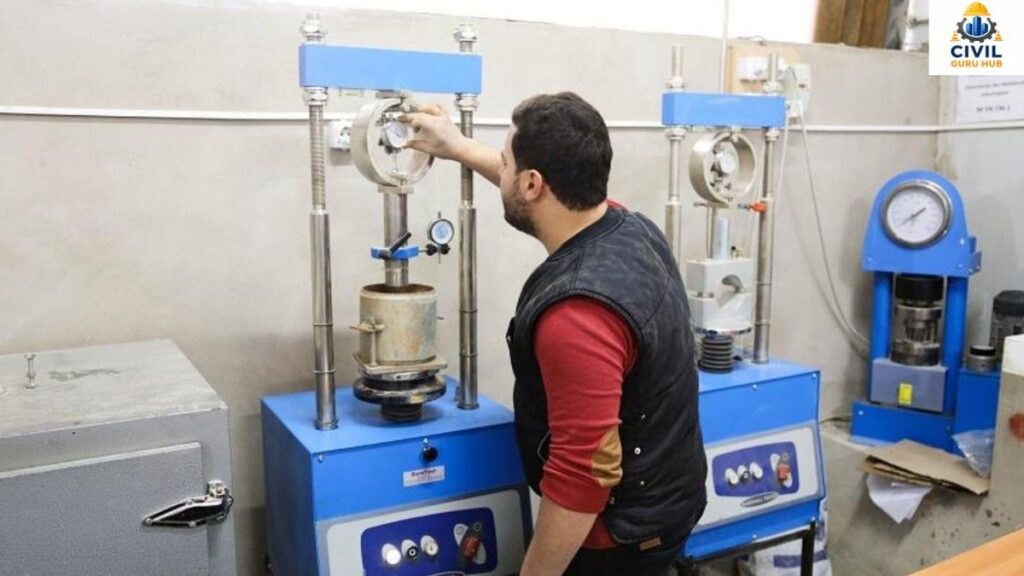
CBR Testing in 10-30-65 method
How Does the Soaking Process Affect the 10-30-65 Method?
Once the three specimens for the 10-30-65 method are successfully prepared, the next crucial stage is the soaking process. Many novice laboratory technicians focus solely on compaction, dismissing the soaking period as a mere formality. However, in practical pavement engineering, the soaked CBR value is the primary metric used for design, as the road’s subgrade inevitably comes into contact with moisture during the rainy season.
According to the practical procedure outlined in AASHTO Designation: T 193-13 (2017), the specimen is immersed in a water tank along with surcharge weights. The objective of this soaking period is not simply to wet the soil, but to simulate the worst-case moisture conditions likely to be encountered in the field.
As the soil absorbs water, the bonding between its particles changes. Clayey soils may undergo swelling, whereas the impact of moisture on granular soils is comparatively less significant. This makes the comparison within the 10-30-65 method particularly meaningful, as it allows engineers to assess how much strength is retained in the soaked condition following the application of different compaction energies.
In practical highway projects, if an embankment is not properly compacted, the likelihood of rutting, settlement, and cracking in the pavement increases after the rainy season. For this reason, laboratory-derived soaked CBR results are prioritized during the design process.
An experienced Quality Engineer would never recommend a pavement design based solely on dry CBR values; they always evaluate the behavior of the soaked specimen as well.
Practical Procedure for the Penetration Test
After the soaking process is complete, the specimen is carefully removed from the water tank. Surface water is wiped off, and the mould—along with the surcharge weights are placed on the penetration machine.
During the test, the loading plunger is brought into contact with the specimen’s surface. The machine is then operated at the specified rate of penetration.
As the plunger penetrates the soil, the proving ring or load cell records the load, while the dial gauge notes the depth of penetration.
Typically, readings are recorded in the laboratory observation sheet at penetration intervals of 0.5 mm, 1.0 mm, 1.5 mm, 2.0 mm, 2.5 mm, 3 mm, 4 mm, 5 mm, 7.5 mm, and 10 mm.
The CBR calculation is subsequently performed based on this raw data.
It is important to understand a practical aspect here.
If the specimen has not been prepared correctly according to the 10-30-65 method, the resulting penetration curve may appear irregular. For instance, the initial load might be very low, or there could be a sudden spike in the load. In such cases, an experienced laboratory engineer may reject the specimen.
Therefore, the accuracy of the CBR test depends equally on the quality of the specimen and the calculation itself.
Analysis of the Load-Penetration Curve
Simply calculating the percentage value is not the sole objective upon completion of the CBR test.
In a professional laboratory, the engineer also analyzes the load-penetration graph.
The purpose of plotting this graph is to understand whether the soil’s response during loading was uniform.
If the graph follows a smooth curve, the specimen is generally considered acceptable.
Sometimes, the initial portion of the curve appears concave.
In such cases, a correction is applied, and the CBR value is determined based on the corrected origin.
This correction is necessary because some initial settlement may occur as contact is established between the plunger and the specimen.
Comparing the graphs for specimens subjected to 10, 30, and 65 blows allows the engineer to clearly see how penetration resistance improves with increased compaction energy.
It is due to this comparison that the 10-30-65 method is considered useful for both pavement research and quality control.
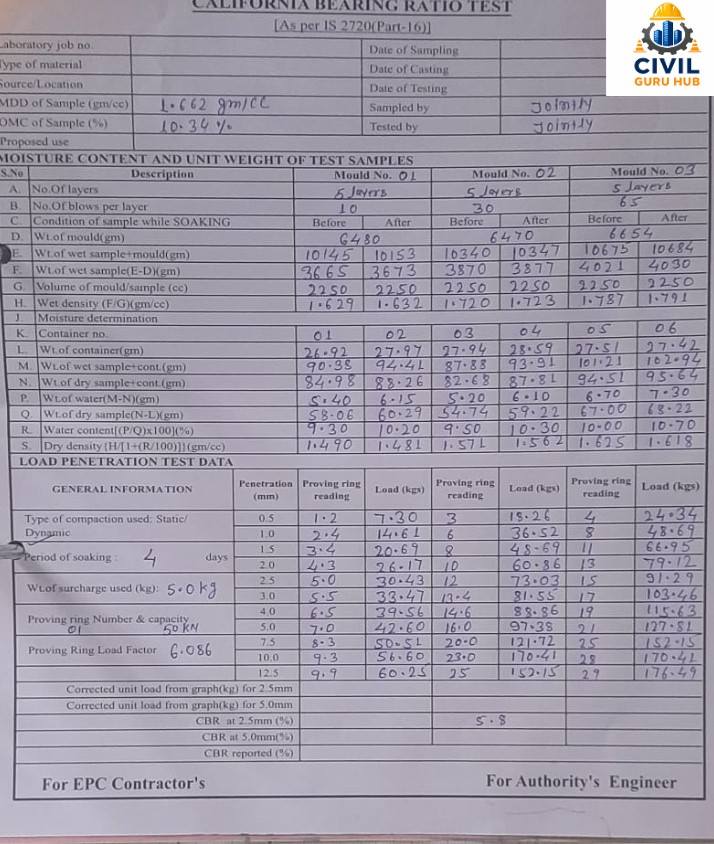
CBR Calculation
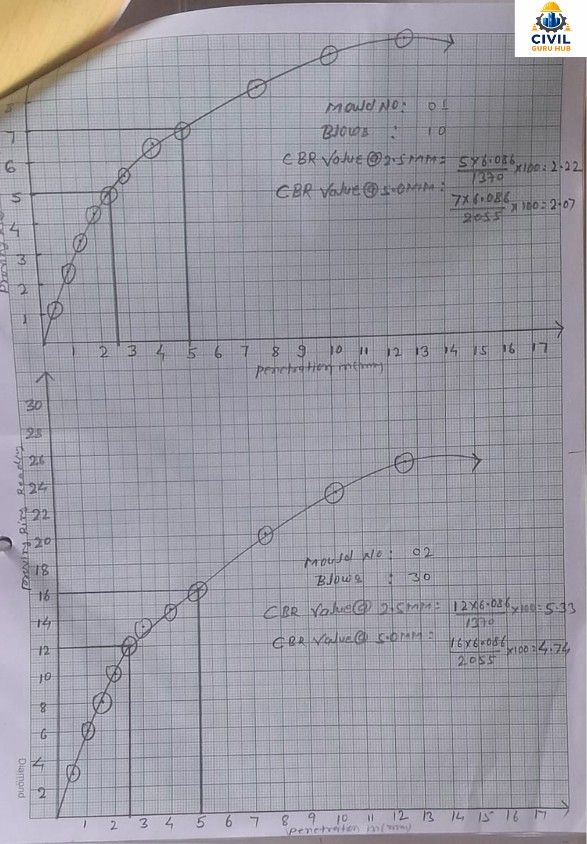
10 blows and 30 blows graph
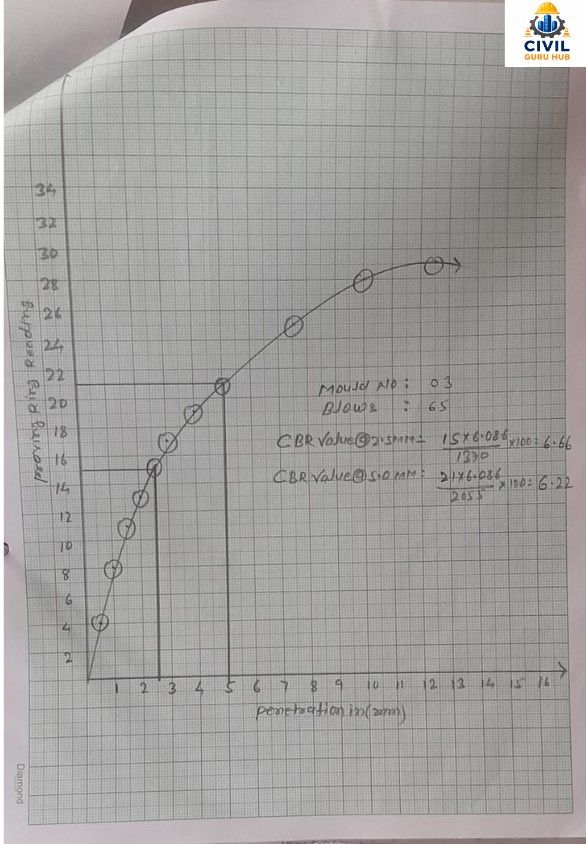
65 Blows graph
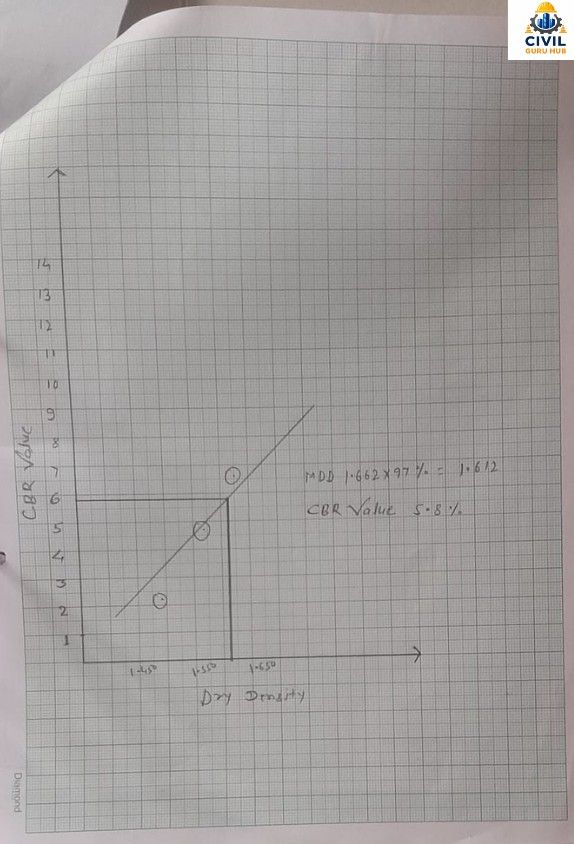
Final CBR Graph
Practical Applications of the 10-30-65 Method
In civil engineering, the use of the 10-30-65 method is not limited to the laboratory alone.
Highway engineers utilize this comparison to optimize pavement thickness.
Different compaction levels are also compared for subgrade evaluation in airport pavement projects.
Soil strength analysis is conducted for railway formation improvement as well.
Verifying compaction quality is crucial in industrial yards where heavy container movement occurs.
Research organizations also make practical use of the 10-30-65 method to compare the performance of new stabilizers, such as lime, cement, or fly ash-treated soil.
Recommended Civil Engineering Books
Soil Mechanics and Foundation Engineering – K.R. Arora
- Best for CBR Test, Compaction, Atterberg Limits
- Ideal for students and site engineers
Recommended Lab Accessories
- Digital Stopwatch
- Steel Straight Edge
- Mixing Spatula
- Laboratory Scoop
- Digital Weighing Balance (30 kg / 0.1 g Accuracy)
- Laboratory Drying Oven
- Digital Vernier Caliper
Conclusion
The 10-30-65 Method is a practical laboratory approach that helps compare soil bearing capacity at different compaction levels. This approach enables engineers to understand how the CBR value and pavement support capacity improve as compaction energy increases. Consequently, the 10-30-65 Method is considered highly valuable in pavement engineering, highway quality control, and research laboratories.
However, it is equally important for a professional engineer to understand that the 10-30-65 Method and IS 2720 (Part 16) are not the same thing. The concept of varying compaction levels was developed based on guidelines from AASHTO Designation: T 193-13 (2017), whereas the objective of the Indian Standard is to provide a standardized CBR testing procedure. Understanding this distinction is crucial for technical accuracy.
If specimen preparation is carried out scientifically—ensuring proper moisture control, uniform compaction, and accurate recording of penetration readings—the 10-30-65 Method provides engineers with a robust scientific basis for understanding not just the CBR percentage, but also the soil’s actual field behavior. It is this practical insight that allows the method to retain its distinct significance in highway engineering laboratories and pavement design studies today.
Affiliate Disclaimer
Disclosure: This article contains affiliate links. If you purchase a product through these links, we may earn a small commission at no additional cost to you. This helps us maintain CivilGuruHub.com and continue providing free, high-quality Civil Engineering content.
About the Author
My name is Susanta Kumar Mohapatra. I am a Civil Engineering professional with over 11 years of practical experience in the construction and infrastructure sectors. I hold a B.Tech degree in Civil Engineering and an M.E. degree in Construction Management. Throughout my professional career, I have worked in key areas such as road construction, bridge projects, quality control, material testing, concrete mix design, highway engineering, quantity estimation, project planning, site execution, and construction management.
I launched CivilGuruHub.com with the aim of sharing my passion for Civil Engineering and my practical knowledge with a wider audience. The primary objective of this website is to provide practical, industry-oriented information in simple language to Civil Engineering students, site engineers, quality engineers, quantity surveyors, contractors, and construction professionals. Here, I publish detailed, original, and research-based articles on topics such as construction technology, concrete technology, highway engineering, structural engineering, material testing, IS codes, IRC codes, quantity surveying, estimation and costing, project management, tendering, and Civil Engineering calculators.
Alongside the website, I also run a YouTube channel named “The Civil Site,” where I explain practical site experiences, laboratory tests, construction techniques, engineering calculations, software tutorials, and technical concepts through easy-to-understand videos. My goal is to ensure that every student and engineer understands not just the theory, but also its practical application.
Additionally, I share educational content related to general knowledge, quizzes, and competitive exam preparation through my YouTube channel, “Daily IQ Hub.” The aim of this channel is to enhance viewers’ knowledge and strengthen their exam preparation.
I believe that a successful engineer is one who is always ready to learn and continuously updates their practical knowledge. With this mindset, I always strive to provide high-quality, reliable, practical, and industry-standard content through CivilGuruHub.com and my YouTube channels, enabling every reader and viewer to excel in their careers.
Thank you sincerely for your trust and support. I am confident that CivilGuruHub.com and my educational platforms will prove to be reliable companions in your learning journey and professional growth. If you wish to take your knowledge in the field of Civil Engineering to the next level, please continue to follow our articles and videos regularly. We will keep bringing you fresh, practical, and industry-focused content.
Frequently Asked Questions (FAQs)
Q1. Is the 10-30-65 Method explicitly mandated in AASHTO T 193-13 (2017)?
Answer: No. The 10-30-65 Method is a laboratory practice developed based on the guidance provided in AASHTO Designation: T 193-13 (2017), involving the preparation of CBR specimens at varying compaction efforts. While the standard defines the specimen preparation and testing procedures, actual laboratory implementation may vary depending on project specifications or agency SOPs. Therefore, the engineer should always verify the contract specifications and laboratory procedures.
Q2. Can the 10-30-65 Method be used as an alternative to IS 2720 (Part 16)?
Answer: Absolutely not. The 10-30-65 Method and IS 2720 (Part 16) serve different purposes. IS 2720 (Part 16) defines the standard CBR testing procedure for India, whereas the 10-30-65 Method is a laboratory practice used to compare soil behavior at different compaction levels. The two should not be confused.
Q3. Why is it necessary to prepare three separate specimens in the 10-30-65 Method?
Answer: The same soil yields different dry densities and CBR values when subjected to different compaction energies. By preparing specimens using 10, 30, and 65 blows, the engineer can analyze how the bearing capacity improves with increased compaction. This comparison facilitates decisions regarding pavement design and field compaction targets.
Q4. What happens if the moisture content is not uniform in the 10-30-65 Method?
Answer: If the moisture content is not uniform, the density of the specimen will not be consistent throughout. Due to this, penetration resistance can become irregular, and the CBR value will not accurately represent the actual soil strength. That is why moisture conditioning is considered the most critical stage of the 10-30-65 Method.
Q5. Is the 10-30-65 Method suitable for all soil types?
Answer: Yes, but the results will depend on the soil type. Granular, silty, and clayey soils all respond differently. Clay soils are significantly affected by compaction and moisture, whereas variations in granular soils are comparatively lower. Consequently, the 10-30-65 Method is useful for comparing the engineering behavior of different soil types.
Q6. What is the practical benefit of the 10-30-65 Method in pavement design?
Answer: This method allows engineers to determine how much the CBR value can increase by improving field compaction. If the required CBR is achieved through better compaction quality, pavement thickness can often be optimized. This has a positive impact on both construction costs and maintenance requirements.
Q7. Do the results of the 10-30-65 Method directly correspond to field CBR values?
Answer: No. Laboratory conditions are controlled, whereas field conditions—such as moisture, drainage, compaction equipment, and the environment—differ. While the 10-30-65 Method is highly useful for laboratory comparisons, evaluating field performance requires considering engineering judgment and specific site conditions.
Q8. What are the most common laboratory errors associated with the 10-30-65 Method?
Answer: The most common errors include non-uniform moisture mixing, incorrect distribution of blows, improper cleaning of the mold, neglecting calibration, errors during specimen trimming, and failure to follow the soaking procedure correctly. These mistakes can lead to inaccurate CBR results and may necessitate repeating the entire test.
Q9. How is the final CBR value selected between the 2.5 mm and 5.0 mm penetration readings in the 10-30-65 Method?
Answer: Typically, the CBR value calculated at 2.5 mm penetration is adopted. However, if the CBR value at 5.0 mm penetration is consistently higher and supported by test observations, that value may be considered based on engineering judgment and applicable standards. The final decision should be made in accordance with laboratory procedures and project specifications.
Q10. Will the 10-30-65 Method remain relevant in highway engineering in the future?
Answer: Absolutely. While advanced technologies such as drone surveys, intelligent compaction, and digital pavement modeling are available today, the importance of laboratory testing for evaluating the fundamental bearing capacity of soil has not diminished. The 10-30-65 Method helps engineers understand the relationship between compaction energy and CBR in a scientific manner. For this reason, this approach remains practical and valuable for research laboratories, highway authorities, and pavement design professionals.