
Table of Contents
Introduction
In the construction industry, reinforcement steel forms the primary basis for the strength and durability of any RCC structure. Whether you are constructing a residential building, a commercial complex, or working on a bridge project, determining the correct quantity and cutting length of reinforcement bars is crucial. The Bar Bending Schedule (BBS) is used to carry out this task systematically and accurately.
Today, almost every professional civil engineer, site engineer, quantity surveyor, and contractor utilizes the BBS. It helps determine the exact steel requirements, minimizes wastage, and facilitates better control over project costs. Failure to prepare a BBS can lead to problems on-site, such as steel shortages or over-procurement.
Standard guidelines for the cutting, bending, and scheduling of reinforcement bars are provided in IS 2502:1963. Adhering to these guidelines ensures uniformity in reinforcement detailing and reduces calculation errors.
In this article, we will explore everything related to the BBS in detail from basic concepts and calculation formulas to cutting lengths, bend deductions, hook lengths, and practical examples.
What is Bar Bending Schedule
What is a BBS (Bar Bending Schedule)? – Its Importance in Civil Engineering
Reinforcement steel plays a crucial role in civil engineering and construction projects. The strength and durability of any RCC (Reinforced Cement Concrete) structure depend largely on the steel reinforcement used within it. However, tasks such as ordering the correct quantity of steel, managing its cutting and bending, and controlling wastage can be challenging. The BBS (Bar Bending Schedule) offers a solution to these issues.
A Bar Bending Schedule is a detailed tabular document that systematically provides comprehensive information regarding the reinforcement steel required for a structure. This document acts as a bridge between structural drawings and actual execution at the site. It allows engineers and contractors to access all essential details related to steel reinforcement in a single place.
A standard BBS typically includes the following details:
- Bar Mark Number
- Shape or Bending Shape
- Bar Diameter
- Number of Bars
- Cutting Length
- Bending Details
- Total Length of Steel
- Unit Weight
- Total Weight of Reinforcement
When a structural engineer prepares reinforcement drawings for a building, bridge, or other RCC structure, the Bar Bending Schedule is created based on those drawings. The BBS converts the reinforcement bars shown in the drawings into actual, measurable quantities, making site operations significantly easier.
The primary advantage of a BBS is that it provides an accurate estimate of steel quantities. It enables engineers to determine beforehand exactly how much steel is required for the project and which bar diameters will be used. This makes the material planning and procurement process much more efficient. Through a Bar Bending Schedule (BBS), we can easily determine:
- Total amount of steel required
- Diameters of the bars to be used
- Cutting length for each bar
- Total weight of the steel
- Quantity to be purchased
- How to minimize steel wastage
Nowadays, the use of a BBS is considered almost essential in medium- and large-scale construction projects. It enhances the accuracy of estimates, improves site management, and aids in controlling project costs. For this reason, the Bar Bending Schedule is regarded as the most critical link between estimation and actual construction execution. A well-prepared BBS not only saves time and money but also improves the project’s overall efficiency and quality.
Importance of Bar Bending Schedule in Construction
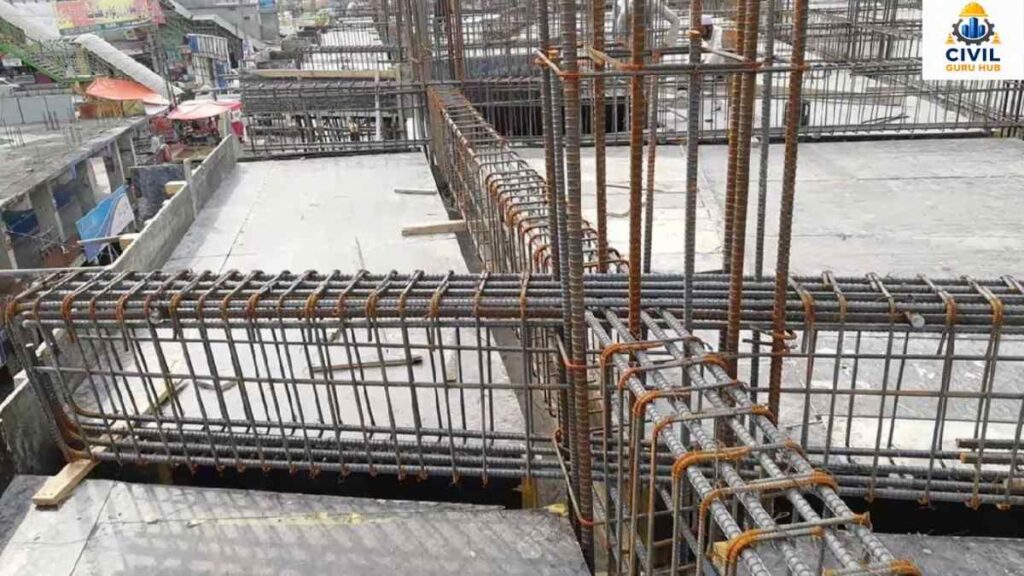
In the construction industry, the Bar Bending Schedule (BBS) is considered a crucial document. It is used to systematically plan the reinforcement work for RCC (Reinforced Cement Concrete) structures such as footings, columns, beams, slabs, and staircases. It is a detailed schedule providing comprehensive information regarding the diameter, shape, cutting length, quantity, and total weight of reinforcement bars. Since steel is an expensive material in any construction project, accurate estimation and utilization are vital for the project’s success; the BBS plays a significant role in making this process easier and more accurate.
Accurate Steel Quantity Calculation
The primary advantage of a BBS is that it enables the calculation of the exact quantity of reinforcement steel required. By calculating the length and number of each bar based on structural drawings, one obtains an accurate estimate of the total steel requirement. This eliminates issues related to material shortages or excessive procurement.
Minimizing Material Wastage
Steel wastage is a common issue at construction sites. If cutting lengths and bending details are available in advance, bars can be cut systematically. This reduces scrap generation and ensures maximum utilization of the steel. Minimizing wastage also enhances the overall efficiency of the project.
Project Cost Control
Steel is a major cost component in RCC work. A BBS facilitates accurate quantity determination, leading to better planning for steel procurement. By minimizing unnecessary procurement and wastage, project costs can be effectively controlled, which is beneficial for both the contractor and the client.
Easy Procurement Planning
A BBS informs site engineers and the procurement team in advance about the required quantities and diameters of steel bars. This simplifies material ordering and delivery planning. Timely availability of steel prevents delays in construction activities.
Increasing Construction Speed
Cutting and bending details are clearly specified in the BBS. This makes the work easier for the bar-cutting yard and the steel-fixing team. Workers do not need to repeatedly check the drawings, which speeds up reinforcement fixing and improves overall project progress.
Assistance with Billing and Measurement
In construction projects, verifying quantities between the contractor and the client is crucial. The BBS serves as a reliable reference document for verifying steel quantities. This ensures transparency in the billing process and minimizes the likelihood of disputes.
Quality Control and Verification
Placing reinforcement bars in accordance with the drawings is essential for quality assurance. Using the BBS, engineers and supervisors can easily verify whether the reinforcement installed on-site meets the design requirements. This helps maintain both structural safety and quality.
Key Benefits of BBS (Summary)
- Accurate steel quantity estimation
- Reduction in material wastage
- Better cost control
- Easy procurement planning
- Faster construction execution
- Transparent billing process
- Effective quality control
- Improved project management
To get more about Structure, Click the below link and read the articles
What Is a Box culvert? 15 Important Facts for Civil Engineers
What Are the 12 Types of Drain? A Complete Guide
What Are the Types of Wearing Coat in Bridges? 10 Easy Explanations
Important Details Included in a BBS
A standard BBS includes the following details:
| Sr No | Description |
|---|---|
| 1 | Bar Mark |
| 2 | Member Name |
| 3 | Diameter |
| 4 | Shape Code |
| 5 | Number of Bars |
| 6 | Cutting Length |
| 7 | Total Length |
| 8 | Unit Weight |
| 9 | Total Weight |
These details are useful for the site engineer, quantity surveyor, and contractor alike.
What is IS 2502:1963?
IS 2502:1963 is an Indian Standard Code that provides guidelines for the bending and fixing of reinforcement bars.
This code covers:
- Hook length
- Bend allowance
- Bend deduction
- Cutting length calculation
- Standard bar shapes
It is essential to follow IS 2502:1963 when preparing a Bar Bending Schedule (BBS).
If calculations are not performed in accordance with the code, errors may occur in the steel quantity.
Important Formulas for Bar Bending Schedule
Knowledge of certain basic formulas is essential for calculating steel quantity.
Formula 1
Unit Weight of Steel
Weight per meter = D² / 162
Here,
D = Diameter of Bar (mm)
Example:
Weight of 12 mm diameter steel
12² / 162
= 144 / 162
= 0.888 kg/m
Formula 1
Unit Weight of Steel
Weight per meter = D² / 162
Here,
D = Diameter of Bar (mm)
Example:
Weight of 12 mm diameter steel
12² / 162= 144 / 162
= 0.888 kg/m
Similarly,
| Diameter (Dia) | Weight |
|---|---|
| 10 mm | 0.62 kg |
| 12 mm | 0.89 kg |
| 16 mm | 1.58 kg |
| 20 mm | 2.47 kg |
| 25 mm | 3.85 kg |
| 32 mm | 6.31 kg |
Formula 2
Total Weight
Total Weight = Total Length × Unit Weight
Formula 3
Total Length = Number of Bars × Cutting Length
What is Cutting Length?
Cutting length refers to the actual required length of a reinforcement bar before it is bent.
When calculating the cutting length, we must consider the following factors:
- Clear cover
- Bend length
- Hook length
- Bend deduction
If the cutting length is calculated incorrectly, the steel quantity will also be incorrect.
That is why calculating the cutting length is considered the most important step in preparing a BBS (Bar Bending Schedule).
Hook Length Calculation
Standard hook length as per IS 2502:1963:
Hook Length = 9D
Jahan D = Bar Diameter
Example:
12 mm dia bar
Hook Length
9 × 12= 108 mm
= 0.108 m
If both sides of the bar are hooked to:
Total Hook Length
= 2 × 108
= 216 mm
Bend Length Calculation
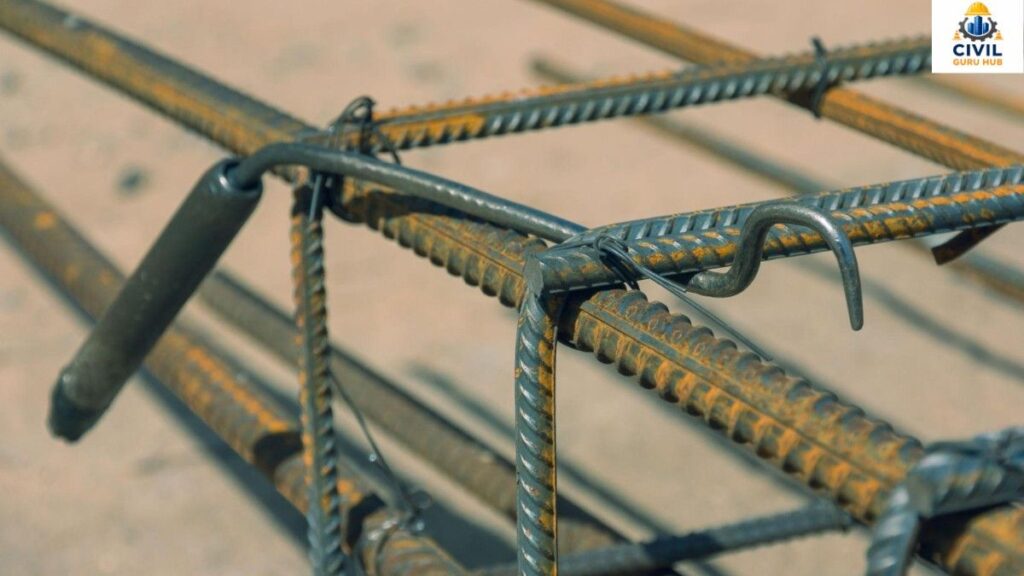
As per IS 2502:1963:
45° Bend
Bend Allowance = 1D
90° Bend
Bend Allowance = 2D
135° Bend
Bend Allowance = 3D
180° Bend
Bend Allowance = 4D
These values are very commonly used in BBS.
Cutting Length of Straight Bar
There was no bend in the straight bar.
Formula:
Cutting Length = Overall Length – Cover
Example:
Beam Length = 5000 mm
Cover = 75 mm each side
Cutting Length
5000 – 75 – 75
= 4850 mm
= 4.85 m
This is the simplest BBS calculation.
Cutting Length of a Crank Bar
Crank bars are widely used in slab reinforcement.
Formula for crank length:
Extra Crank Length
= 0.42 × Depth
Example:
Slab Thickness = 150 mm
Extra Length
= 0.42 × 150
= 63 mm
If there are two cranks:
Total Extra
= 126 mm
This value is added to the cutting length.
Stirrup Cutting Length
Stirrups are used in beams and columns.
Formula:
Cutting Length
= 2(A + B) + Hook Length – Bend Deduction
Where,
A = Width
B = Depth
Hook Length = 2 × 10D
This formula is widely used in BBS (Bar Bending Schedule).
Step-by-Step Process for Creating a BBS
Creating a BBS (Bar Bending Schedule) is a systematic and technical process followed to determine the accurate quantity of reinforcement steel. In construction projects, the BBS is used to streamline estimation, procurement, and site execution while minimizing errors. A properly prepared BBS reduces steel wastage, aids in cost control, and enhances project productivity. The complete step-by-step process for creating a BBS is outlined below:
- Detailed Study of Structural Drawings
The first step involves carefully reading and understanding the structural reinforcement drawings. At this stage, the reinforcement details specified for beams, slabs, columns, footings, or any other structural member are analyzed. It is crucial to clearly identify the bar size, spacing, shape, and placement specified in the drawing.
- Identification of Reinforcement Bars
After studying the drawings, each reinforcement bar is marked individually. A unique bar mark number is assigned to each bar to prevent confusion during future calculations and site execution.
- Noting Bar Diameters
Next, the diameter of each identified bar is recorded. Drawings typically specify bars with diameters of 8 mm, 10 mm, 12 mm, 16 mm, 20 mm, or larger. Noting the accurate diameter is essential for calculating the weight.
- Calculating Cutting Length
The cutting length for each reinforcement bar is determined. This calculation accounts for bend allowances, hook lengths, and crank lengths. The provisions of IS 2502:1963 are followed during this calculation to ensure accuracy.
- Determining the Number of Bars
The total quantity of bars is calculated based on the spacing and dimensions provided in the drawings. This step helps in accurately determining the reinforcement requirements.
- Calculating Total Length
A formula is used to calculate the total length of each bar:
Total Length = Number of Bars × Cutting Length
This yields the overall length of steel required for that specific bar mark.
7. Steel Weight Calculation
Once the total length is determined, the weight of the steel is calculated. The standard unit weight formula used for this is:
Weight (kg/m) = D² / 162
Where D is the diameter of the bar (in mm).
- Preparing the BBS Table
Finally, all the calculated details are compiled into an organized table. This table typically includes the following details:
- Bar Mark
- Bar Diameter
- Shape Code
- Cutting Length
- Number of Bars
- Total Length
- Unit Weight
- Total Weight
A BBS prepared in this manner serves as a crucial link between estimation and execution in a construction project. It provides engineers with precise information regarding steel requirements, minimizes material wastage, and helps in effectively managing project costs. For this reason, the BBS is considered the most important document for reinforcement management.
Box Culvert BBS Calculation Example
Box Culvert BBS Calculation Example (As per IS 2502:1963)
So far, we have understood the basic concepts, formulas, and importance of BBS. Now, we will look at a practical example of BBS calculation for a box culvert. This section is highly useful for any civil engineer, site engineer, quantity surveyor, or estimator, as we will perform the BBS calculation step-by-step here.
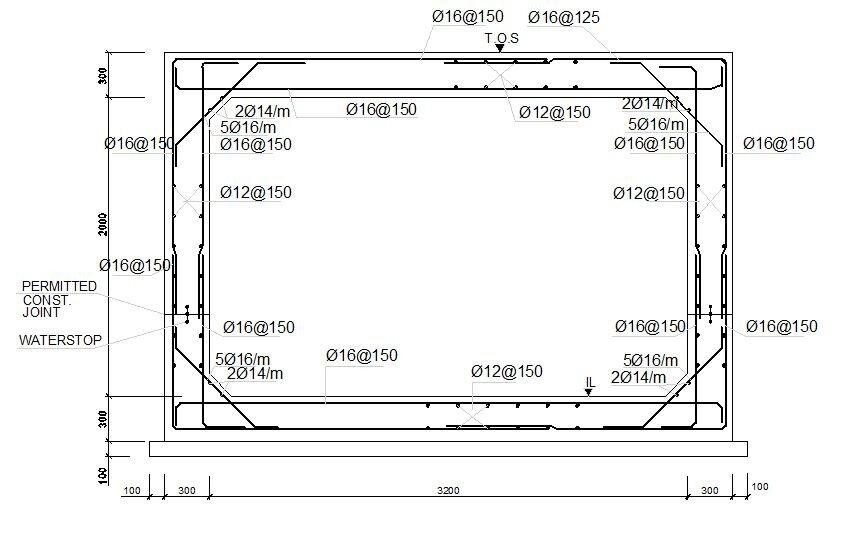
A box culvert is an RCC structure used for drainage, stormwater, and underpass applications. It consists of a bottom slab, a top slab, and side walls. Separate reinforcement is provided for each of these components, and a BBS is prepared for them.
Let us assume the dimensions of a single-cell box culvert are as follows:
- Internal Width = 3.0 m
- Internal Height = 3.0 m
- Slab Thickness = 300 mm
- Wall Thickness = 300 mm
- Clear Cover = 40 mm
- Main Reinforcement = 16 mm Diameter
- Distribution Reinforcement = 12 mm Diameter
Now, let us prepare the BBS for the bottom slab.

BBS for the bottom slab.
Step 1: Main Bar Length Calculation
Overall Width
= 3000 + 300 + 300
= 3600 mm
Clear Cover
= 40 mm each side
Cutting Length
3600 – 40 – 40
= 3520 mm
= 3.52 m
Number of Bars
Spacing = 150 mm c/c
Number of Bars
= 3000 ÷ 150 + 1
= 21 Bars
Total Length
= 21 × 3.52
= 73.92 m
Unit Weight of 16 mm Bar
D² ÷ 162
= 16² ÷ 162
= 1.58 kg/m
Total Weight
= 73.92 × 1.58
= 116.79 kg
This is the BBS Calculation of Main Reinforcement of Bottom Slab.
Step 2: Distribution Bar Calculation
Distribution Bars 12 mm dia have been provided.
Overall Length
= 3600 mm
cover
= 40 mm each side
Cutting Length
3600 – 80
= 3520 mm
= 3.52 m
Number of Bars
= 3000 ÷ 200 + 1
= 16 Bars
Total Length
= 16 × 3.52
= 56.32 m
Unit Weight
= 12² ÷ 162
= 0.888 kg/m
Total Weight
= 56.32 × 0.888
= 50.01 kg
This is the quantity of Distribution Steel which will be included in BBS.
Top Slab BBS Calculation
Top Slab of Box Culvert is also designed like Bottom Slab.
Main Reinforcement
Diameter = 16 mm
Spacing = 150 mm c/c
Cutting Length
= 3520 mm
Number of Bars
= 21
Total Length
= 73.92 m
weight
= 73.92 × 1.58
= 116.79 kg
Distribution Reinforcement
Diameter = 12 mm
Spacing = 200 mm c/c
Number of Bars
= 16
length
= 56.32 m
weight
= 50.01 kg
In this way BBS is prepared for Top Slab also.
Side Wall BBS Calculation
Now we do BBS calculation of Side Wall reinforcement.
Wall Height
= 3000mm
wall thickness
= 300 mm
Clear Cover
= 40mm
Vertical Main Reinforcement
Cutting Length
3000 – 40 – 40
= 2920 mm
= 2.92 m
Spacing
= 150 mm c/c
Number of Bars
= 3000 ÷ 150 + 1
= 21 Bars
Total Length
= 21 × 2.92
= 61.32 m
weight
= 61.32 × 1.58
= 96.88 kg
What are the reasons for having walls?
Total Weight
= 96.88 × 2
= 193.76 kg
This is the BBS of Side Wall Main Reinforcement.
Horizontal Reinforcement Calculation
horizontal bars
Diameter = 12 mm
Spacing = 200 mm c/c
Wall Height
= 3000mm
Number of Bars
= 3000 ÷ 200 + 1
= 16
Bar Length
= 2920 mm
= 2.92 m
Total Length
= 16 × 2.92
= 46.72 m
weight
= 46.72 × 0.888
= 41.50 kg
For Walls
= 41.50 × 2
= 83.00 kg
This is the BBS quantity of Horizontal Reinforcement.
Box Culvert BBS Summary Table
| Member | Dia | Nos | Length (m) | Weight (kg) |
|---|---|---|---|---|
| Bottom Main Bar | 16 mm | 21 | 73.92 | 116.79 |
| Bottom Distribution | 12 mm | 16 | 56.32 | 50.01 |
| Top Main Bar | 16 mm | 21 | 73.92 | 116.79 |
| Top Distribution | 12 mm | 16 | 56.32 | 50.01 |
| Side Wall Vertical | 16 mm | 42 | 122.64 | 193.76 |
| Side Wall Horizontal | 12 mm | 32 | 93.44 | 83.00 |
Points to Consider When Preparing a BBS
Preparing a Bar Bending Schedule (BBS) is not merely about calculating reinforcement quantities; it is also integral to the accuracy and cost control of the entire construction project. Overlooking minor details during BBS preparation can lead to significant discrepancies in steel quantities, cutting lengths, and project costs. Therefore, certain key points must always be kept in mind.
The first and most common error is overlooking the “clear cover.” Reinforcement bars are placed within concrete with a specified cover to protect the steel from corrosion and environmental factors. If this cover is not deducted during calculations, the calculated bar length may exceed actual requirements, thereby increasing both steel quantity and costs.
Additionally, the accurate calculation of hook lengths and bend allowances is crucial. Reinforcement bars often feature bends and hooks that require extra steel. Failure to properly account for these allowances can result in a discrepancy between the BBS quantities and the steel actually used on-site.
Lap length should also not be ignored. When the required length of a reinforcement bar exceeds the standard bar length, two bars are overlapped to form a lap. This additional length directly impacts steel quantity and must be included in the estimate.
Calculations regarding bar spacing and the number of bars must also be carefully verified. Even a minor calculation or rounding error can affect the steel quantity for the entire structural element. Finally, cross-checking the reinforcement drawings against the BBS is essential to prevent errors or confusion during on-site execution. For this reason, the BBS is considered the most crucial link between estimation and actual construction execution, playing a vital role in enhancing the project’s quality, cost-effectiveness, and efficiency.
Benefits of BBS
The benefits of a BBS (Bar Bending Schedule) extend beyond merely calculating steel quantities; it plays a crucial role in the planning, cost control, and quality management of the entire construction project. Reinforcement steel is one of the most expensive materials in any RCC structure, making it essential to determine the exact quantity required. With the help of a BBS, engineers and contractors can ascertain steel requirements in advance, allowing for a more accurate project budget.
A major advantage of the BBS is that it simplifies material procurement. Having detailed steel specifications available beforehand helps avoid issues such as material shortages or over-purchasing at the site. This ensures uninterrupted construction work and positively impacts the project schedule.
The BBS also proves highly useful during steel cutting and bending. It clearly outlines the length, shape, and quantity of every reinforcement bar, making the task easier for the fabrication team. Accurate cutting and bending minimize steel wastage and ensure optimal material utilization, which helps reduce the overall project cost.
Furthermore, the BBS is considered a vital document for billing and material reconciliation. It allows for a comparison between actual and estimated steel consumption, maintaining transparency throughout the project. It is also crucial for quality control, as the placement of reinforcement can be verified against drawings and design specifications. For these reasons, the BBS is regarded as a strong and essential link between estimation and site execution, contributing significantly to the success of any construction project.
Recommended tools for calculations
| Product | Upyog | Khaas Features | Buy Link |
|---|---|---|---|
| Scientific Calculator (Casio FX-991CW / FX-991ES Plus) | BBS Formula, Steel Weight and Haunch Calculation | Trigonometry, Engineering Functions, Fast Calculation | Check on Amazon |
| Laser Distance Meter | Box Culvert, Beam and Slab Measurement | Accurate Measurement, Time Saving | Check on Amazon |
| Measuring Tape (30m) | Reinforcement Length Verification | Durable Steel Blade, Site Friendly | Check on Amazon |
| Engineering Drawing Scale Set | BBS and Structural Drawing Reading | Multiple Scale Ratios, Easy Measurement | Check on Amazon |
Conclusion
The Bar Bending Schedule (BBS) is a crucial component of RCC construction that makes the planning and quantity estimation of reinforcement steel more precise and organized. It is used to determine the exact steel requirements for any RCC structure. Through BBS, the length, shape, bends, hooks, and weight of each reinforcement bar are calculated in advance, making site operations more convenient and efficient. Preparing a BBS in accordance with IS 2502:1963 guidelines ensures that steel calculations are standardized and reliable.
Using BBS allows for the accurate determination of reinforcement quantities for RCC components such as box culverts, slabs, beams, columns, and footings. This minimizes the likelihood of estimation errors and facilitates better steel procurement. Having cutting lengths and bar details available beforehand significantly reduces material wastage, which directly helps in controlling project costs.
BBS is not merely a tool for calculating steel quantities; it is also a vital document for project management. It facilitates key processes such as planning, procurement, execution, quality control, and contractor billing. A well-prepared BBS brings greater organization and transparency to every stage of the project.
Therefore, an understanding of BBS and its calculation methodology is essential for every Civil Engineer, Site Engineer, Quantity Surveyor, and Estimation Engineer. In essence, the BBS acts as a strong bridge between estimation and construction execution, playing a pivotal role in the successful and cost-effective completion of any RCC project.
Click Below link to download the Box culvert BBS Excel
About the Author
My name is Susanta Kumar Mohapatra, and I am a Civil Engineering professional with over 11 years of practical experience in the construction and infrastructure industry. I have done B.Tech in Civil Engineering and an M.E. in Construction Management. Throughout my professional career, I have worked in key areas such as road construction, bridge engineering, quality control, material testing, quantity estimation, project planning, and site management.
For me, Civil Engineering is not just a profession but a passion. I enjoy sharing practical and technical engineering knowledge in simple language with students, engineers, and construction professionals. With this objective, I launched CivilGuruHub.com, where I publish detailed and practical articles covering Civil Engineering, building construction, quantity surveying, highway engineering, RCC design, material testing, project management, and construction technology.
My goal is to provide Civil Engineering students and working professionals with information that is not only helpful for competitive exams and academic studies but also proves useful in real-world construction projects. All the information shared on this website is based on my academic knowledge, industry experience, and practical exposure gained on-site.
If you are interested in topics related to Civil Engineering, Construction Management, BBS (Bar Bending Schedule), Estimation & Costing, Material Testing, Highway Engineering, or Infrastructure Development, then Civil Guru Hub is a reliable learning platform for you. I am committed to providing accurate, practical, and industry-oriented content to help you take your knowledge and career to the next level.
Susanta Kumar Mohapatra
Civil Engineer | Construction Management Professional | Founder – Civilguruhub.com
Affiliate Disclaimer
Some articles, reviews, guides, and recommendation pages published on CivilGuruHub.com may contain affiliate links. This means that if you click on an affiliate link and purchase a product or service, we may receive a small commission at no extra cost to you.
We always strive to recommend products, tools, and services that are useful and relevant to users involved in Civil Engineering, Construction, Surveying, Laboratory Testing, Quantity Estimation, BBS Calculation, and site work. Our recommendations are based on personal experience, research, industry standards, and the utility of the product.
However, it is your responsibility to independently verify the specifications, features, warranty, quality, pricing, and suitability of any product before purchasing it. We do not provide an absolute guarantee regarding the performance or suitability of any product.
The primary objective of CivilGuruHub.com is to provide high-quality educational and practical information to Civil Engineering students, engineers, contractors, site supervisors, and construction professionals. Affiliate partnerships help support the maintenance of our website, content creation, and the provision of educational resources.
Affiliate relationships do not influence the accuracy, impartiality, or quality of our content. We are committed to providing our readers with honest, useful, and research-based information.
We may participate in the Amazon Associates Program and other affiliate programs. As an affiliate partner, we may earn a commission on qualifying purchases. This does not result in any additional cost to you for the product.
Civilguruhub.com – Reliable educational information for civil engineering students and construction professionals.
FAQs About BBS (Bar Bending Schedule)
1. What is the full form of BBS?
The full form of BBS is Bar Bending Schedule. It is a detailed schedule that provides information regarding the cutting length, bending details, quantity, and weight of reinforcement steel.
2. What is the use of BBS in construction?
BBS is used in RCC structures to determine the accurate quantity of steel reinforcement, minimize material wastage, and control project costs.
3. According to which code is the BBS prepared?
In India, BBS is generally prepared in accordance with IS 2502:1963. This code provides guidelines for the bending and fixing of reinforcement bars.
4. What is the formula for calculating the weight of steel?
The standard formula for calculating the weight of steel is:
Weight (kg/m) = D² ÷ 162
Here, D is the diameter of the bar in millimeters.
5. What is the formula for hook length?
According to IS 2502:1963, the standard hook length is generally considered to be 9D, where D is the diameter of the reinforcement bar.
6. What is the cutting length in BBS?
Cutting length refers to the actual length of the reinforcement bar that is cut prior to bending. It takes into account hook length, bend allowance, and cover deductions.
7. What are the benefits of preparing a BBS?
Preparing a BBS ensures accurate steel quantity estimation, reduces wastage, simplifies procurement planning, and helps control construction costs.
8. How is the length of a haunch bar calculated?
The sloping length of a haunch bar is calculated using the cosine formula or the Pythagorean theorem. Subsequently, the hook length is added to determine the final cutting length.
9. Why is learning BBS essential for civil engineers?
BBS is a crucial skill for civil engineers, quantity surveyors, and site engineers, as it is utilized in estimation, billing, steel reconciliation, and reinforcement planning.

Сторінка moireceptimultivarki.space – це простий українськомовний ресурс із більше ніж 120 перевіреними на практиці рецептурами для мультиварки. На платформі доступні доступні рецепти з покроковим описом для перших страв, яловичини, свинини, курки, хліба, пирогів, булочок, каш, овочів, рибних страв і тістечок, пудингів, кексів. Найбільший плюс – це орієнтація на зручність: додав усі компоненти, вибрав режим — і чекай на сигнал. Більшість страв отримуються майже без жиру, страва завжди вдалий для недосвідчених кулінарів. Кожні кілька днів з’являються нові свіжі ідеї (як-от коровай із рисового борошна та пиріг з полуницею на пісковому тісті), є можливість бути в курсі оновлень.