
Introduction
In the field of road construction, to properly understand any pavement structure, two crucial layers are invariably discussed: GSB and WMM. In highway engineering, a road’s strength, durability, drainage, and load-carrying capacity are directly influenced by these two layers. Frequently, GSB is mistaken for WMM or vice versa by students, site engineers, and supervisors because both are granular layers composed of aggregates. However, in terms of practical site execution, the respective purposes, material grading, compaction requirements, structural strength, and construction methodologies are entirely distinct.
In modern highway projects such as National Highways, Expressways, State Highways, Industrial Roads, and Airport Pavements, the correct application of GSB and WMM has become paramount. Should any errors occur during the construction of these layers, future issues such as pavement settlement, rutting, cracking, potholes, and drainage failures could be led to. Consequently, a clear understanding of the distinctions between these two layers must be possessed by site engineers.
GSB stands for Granular Sub-Base, whereas WMM stands for Wet Mix Macadam. GSB is typically placed in the lower section of the pavement structure, where drainage and load distribution are its primary functions. Conversely, WMM is served as the upper granular layer, imparting superior strength and stability to the pavement. These two layers are worked in tandem to support one another and are constituted as integral components of a flexible pavement system.
In this article, a detailed analysis of the differences between GSB and WMM will be discuss, examining their respective functions, construction processes, the materials utilized, compaction methodologies, and their practical significance within highway projects. Additionally, the key IRC and MoRTH specifications that must be strictly adhered to during site execution will be discussed.
1. The Basic Meaning and Purpose of GSB and WMM
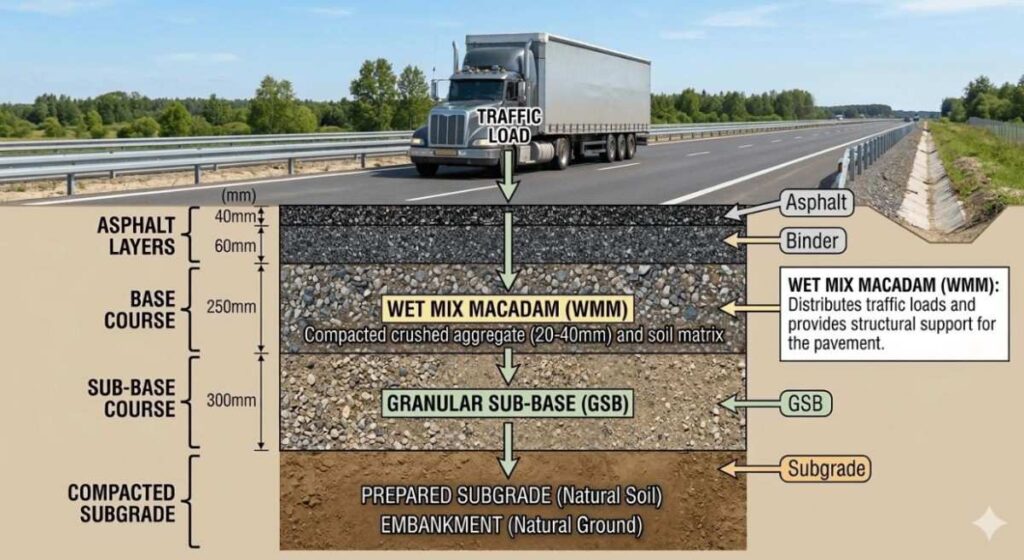
First and foremost, it is essential to understand the specific locations within a pavement structure where GSB and WMM are placed, as well as their exact roles. A flexible pavement typically consists of multiple layers, including the subgrade, GSB, WMM, DBM, and BC layers.
What is GSB?
GSB, or Granular Sub-Base, is the lower granular layer within a pavement structure, placed directly on top of the prepared subgrade. Its primary purpose is to uniformly distribute the load and facilitate drainage. Water accumulation within the road structure is helped to be reduced by GSB, and pavement failure is prevented by GSB.
A mixture of natural aggregates, crushed stone, gravel, and sand is generally used to prepare GSB. Both coarse and fine aggregates are contained in this layer in controlled proportions to ensure proper interlocking and effective drainage.
What is WMM?
WMM, or Wet Mix Macadam, is a stronger granular layer positioned directly above the GSB. It involves mixing well-graded aggregates with water in a mixing plant, after which the mixture is laid onto the road using a paver machine.
The primary function of the WMM layer is to provide structural strength to the pavement. It absorbs and distributes traffic loads, offering a robust base support for the upper bituminous layers.
Typical Flexible Pavement Structure
2. Material Difference Between GSB and WMM
Both GSB and WMM are composed of granular materials; however, their material properties and grading requirements differ.
GSB Material Characteristics
Generally, locally available aggregates may be utilized in GSB, provided the specified requirements are satisfied. The composition typically consists of a mixture of crushed stone aggregates, gravel, moorum, and sand.
The primary objectives of GSB material are drainage and load distribution; consequently, its grading is comparatively open. The proportion of fines within this layer is carefully controlled to facilitate the easy passage of water.
Typical GSB Properties:
| Property | Requirement |
|---|---|
| CBR Value | Minimum 30% |
| Plasticity Index | Low |
| Drainage | Good |
| Aggregate Type | Crushed/Gravel |
WMM Material Characteristics
High-quality crushed aggregates are used in WMM. The aggregate grading in this application is very strict, as the layer is required to provide superior strength.
WMM material is prepared in a mixing plant under wet conditions. Therefore, aggregate proportioning and moisture control are of paramount importance.
Typical WMM properties:
| Property | Requirement |
|---|---|
| Aggregate Impact Value | Low |
| Crushing Strength | High |
| Gradation | Well Graded |
| Compaction | Very Dense |
WMM material is generally stronger and more expensive than GSB.
3. Construction Method Difference Between GSB and WMM
There is also a significant difference between the construction methods of GSB and WMM
GSB Construction Process
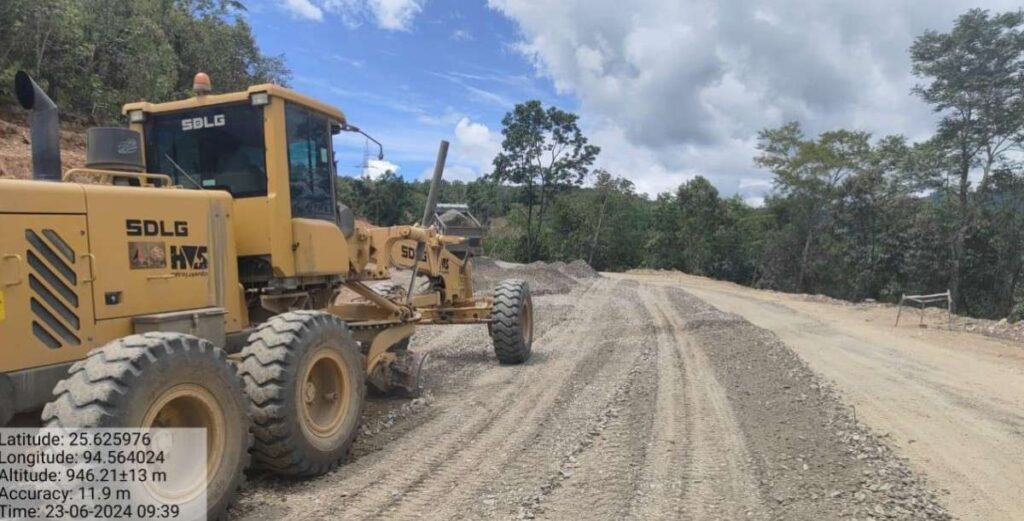
GSB is generally spread using a grader. The material is dumped on site, leveled with a grader, and then water sprinkled and roller compacted.
Construction steps:
- Subgrade preparation
- material spreading
- water sprinkling
- Grading and leveling
- roller compaction
GSB construction is comparatively simple and less machinery is required.
WMM Construction Process
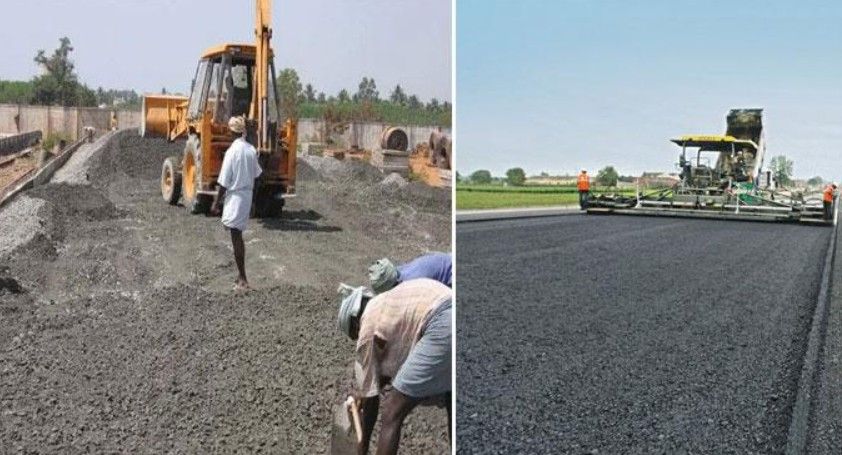
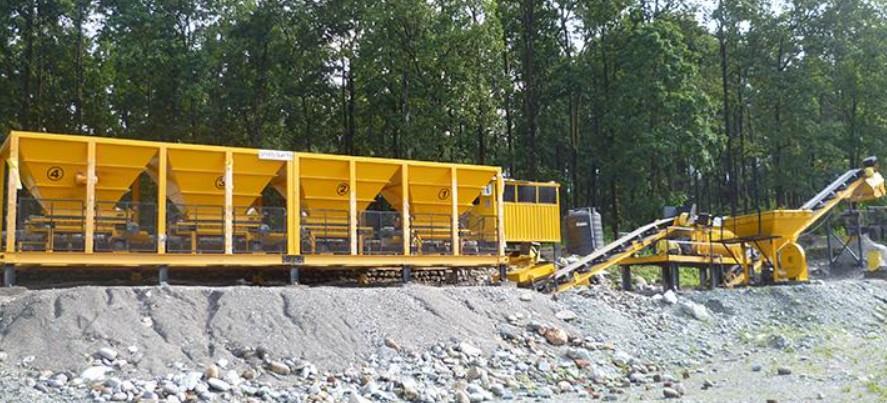
WMM construction is a more advanced process. In this method, aggregates are mixed at a wet mix plant in proper proportions and with the appropriate moisture content.
Subsequently, the material is transported to the site using dumpers and laid uniformly using a paver finisher machine. This is followed by compaction using a vibratory roller.
Construction Sequence:
Aggregate Feeding
↓
Wet Mix Plant
↓
Water Addition
↓
Dumpers Transportation
↓
Paver Laying
↓
Roller Compaction
Quality control at WMM Construction is very strict.
4. Strength and Load Carrying Capacity Difference Between GSB and WMM
The most significant difference between GSB and WMM lies in their strength and load-bearing capacity.
GSB Strength
The primary role of GSB is to provide support and drainage. Consequently, its strength level is moderate. It protects the subgrade and distributes wheel loads.
If GSB is not properly compacted, issues such as pavement settlement and uneven surfaces may arise.
WMM Strength
WMM serves as a major structural layer within the pavement system. It withstands heavy traffic loads and provides support to the upper bituminous layers.
The WMM layer is compacted to a high density, thereby imparting high stiffness and stability. For this very reason, WMM constitutes a critical layer in the construction of highways and expressways.
To get more idea about highway, click on given links.
Cold Mix vs Hot Mix Asphalt: Which is Better?
what is Fly Ash:A complete guide step-by-step.
FDD test: what is it? complete process and calculation.
5. Drainage Performance Difference Between GSB and WMM
Road drainage is an extremely important factor for the longevity of a pavement.
GSB Drainage Function
GSB is specifically designed for drainage purposes. Water passes easily through this layer, thereby minimizing moisture accumulation within the pavement structure.
If water becomes trapped within the pavement, the subgrade weakens, and road failure may ensue.
Benefits of GSB in Drainage:
- Water filtration
- Moisture reduction
- Subgrade protection
- Reduction of frost damage
WMM Drainage Function
WMM is a comparatively denser layer. Consequently, its drainage capacity is lower than that of GSB. The primary focus of WMM lies in providing strength and load-bearing capacity.
For this very reason, proper pavement design utilizes a combination of both the GSB and WMM layers.
6. Thickness Difference in Highway Projects Between GSB and WMM
The thickness of the GSB and WMM layers varies according to different traffic conditions and pavement designs.
| Layer | Typical Thickness |
|---|---|
| GSB | 150–300 mm |
| WMM | 100–250 mm |
Thinner layers are used on low-traffic rural roads, whereas greater thickness is required for highways and expressways.
Example:
| Road Type | GSB Thickness | WMM Thickness |
|---|---|---|
| Village Road | 150 mm | 100 mm |
| State Highway | 200 mm | 250 mm |
| Expressway | 300 mm | 250 mm |
Thickness selection depends on traffic loading and the CBR value.
7. Compaction Requirement Difference Between GSB and WMM
Compaction serves as the backbone of road strength.
GSB Compaction
Ordinary vibratory rollers are used for GSB. The moisture content must be optimal to ensure that the proper density is achieved.
Field density tests are conducted regularly.
WMM Compaction
Achieving high density is mandatory in WMM. Both vibratory rollers and tandem rollers can be used for this layer.
It is crucial to avoid surface segregation during compaction.
Important Field Tests:
| Test | Purpose |
|---|---|
| Field Density Test | Density Check |
| Gradation Test | Aggregate Distribution |
| Moisture Content Test | Water Control |
| Level Check | Surface Accuracy |
8. Cost Difference Between GSB and WMM
WMM is generally more expensive than GSB.
GSB Cost Factors
GSB is lower cost layer because:
- Local materials can be used
- Simple construction process is used
- Less machinery is required
WMM Cost Factors
WMM is expensive because:
- High quality aggregates required
- Wet mix plant needed
- power machine required
- Better quality control necessary
But the higher strength of WMM improves pavement life which reduces long term maintenance costs.
9. IRC and MoRTH Specifications
A few reference links of IS/IRC codes are given below for study purpose.
Important IRC Codes
| IRC Code | Description |
|---|---|
| IRC 37 | Flexible Pavement Design |
| IRC 19 | Maintenance of Roads |
| IRC SP 72 | Low Volume Roads |
Important MoRTH Clauses
| Clause | Description |
|---|---|
| MoRTH Clause 401 | Granular Sub Base |
| MoRTH Clause 406 | Wet Mix Macadam |
Relevant IS Codes
| IS Code | Purpose |
|---|---|
| IS 2386 | Aggregate Testing |
| IS 2720 | Soil Testing |
| IS 1498 | Soil Classification |
10. Practical Site Problems and Solutions
During practical site execution, defects frequently develop within the GSB and WMM layers.
Common GSB Problems:
- Poor Drainage: Excessive fines lead to reduced drainage.
- Uneven Compaction: Improper rolling can result in settlement.
- Segregation: Improper aggregate grading creates weak zones.
Common WMM Problems:
- Surface Cracks: Improper moisture control can cause cracking.
- Honeycombing: Poor aggregate distribution leads to the formation of voids.
- Rutting: Insufficient compaction results in wheel- path deformation.
Comparison Table Between WMM and GSB
| Parameter | GSB | WMM |
|---|---|---|
| Full Form | Granular Sub-Base | Wet Mix Macadam |
| Layer Position | Lower Pavement Layer | Upper Granular Layer |
| Primary Function | Provides Drainage | Provides Structural Strength |
| Material Quality | Medium Quality Aggregates | High Quality Aggregates |
| Compaction Level | Moderate Compaction | Dense Compaction |
| Cost | Economical | More Expensive |
| Drainage Capacity | Excellent Drainage | Moderate Drainage |
| Strength | Medium Strength | High Strength |
| Construction Method | Simple Construction Process | Advanced Construction Process |
| Machinery Required | Basic Equipment | Mixing Plant and Paver Machine |
Conclusion
Both GSB and WMM are extremely important components of a highway pavement structure; however, their functions and behaviors are completely distinct. GSB primarily facilitates drainage and load distribution, whereas WMM imparts high structural strength and stability to the pavement. These two layers complement each other and collectively enhance the overall performance of a flexible pavement.
If proper grading, moisture control, compaction, and quality testing protocols are strictly adhered to during site execution, the service life of the pavement can be significantly extended. For this reason, it is essential for highway engineers, supervisors, and students to clearly understand the differences between GSB and WMM.
In modern highway construction, strict adherence to IRC and MoRTH specifications is mandatory, as the application of proper standards is what ensures the creation of long-lasting and durable roads. In the future, given the anticipated increase in traffic volume and heavy axle loads, the importance of both WMM and GSB layers is set to rise even further.
FAQs on GSB and WMM
1. What is the main difference between GSB and WMM?
GSB is primarily used for drainage and load distribution, whereas WMM provides structural strength and stability to the pavement. GSB constitutes the lower layer, and WMM is constructed directly on top of it.
2. Which layer comes first in road construction: GSB or WMM?
In road construction, the GSB layer is laid first, followed by the construction of the WMM layer on top of it. This sequence is followed to ensure the pavement receives proper support and strength.
3. Why is water added to Wet Mix Macadam (WMM)?
Water is added to WMM to achieve the optimum moisture content. This ensures that the aggregates bind together properly and allows for better compaction, thereby increasing the strength of the pavement.
4. Which MoRTH clauses are applicable to GSB and WMM?
MoRTH Clause 401 is followed for GSB, and MoRTH Clause 406 is followed for WMM. These clauses define the material specifications, grading requirements, and construction methods for these layers.
5. Why is proper compaction important in GSB and WMM?
Proper compaction prevents pavement settlement, rutting, and cracking. If the required density is not achieved, both the strength and durability of the road can be compromised.
6. Can WMM be used without GSB in highway construction?
Typically, in highway construction, a GSB layer is provided beneath the WMM, as GSB plays a crucial role in drainage and subgrade protection. Using WMM directly without an underlying GSB layer can increase the risk of moisture-related damage and settlement of the pavement.