
Introduction
One of the most complex types of infrastructure construction in the world is highway construction, and the development of a nation’s road network can have a direct effect on that nation’s economic growth, movement of goods through its transportation system, development of a nation’s industrial base, and development of connectivity among its regions. Recent years have seen many more highway construction projects in India, including expressways, national highways, bypasses, ring roads, and greenfield corridors. Both the Ministry of Road Transport and Highways and the National Highways Authority of India have recently been focusing much more on improving infrastructure development in India. However, the larger the highway project, the more numerous the challenges during its construction phase.
In 2026, the landscape of highway engineering has become even more challenging, as the objective is no longer limited to merely building roads. Now, sustainable construction, climate resilience, smart transportation, traffic safety, rapid completion, and cost optimization have become equally important priorities. Consequently, contractors, consultants, project managers, and civil engineers frequently encounter a multitude of technical and management-related issues.
This article has examined and discussed the 15 most common highway construction challenges. Each category of challenge will be identified and discussed from an engineering perspective using real-world engineering solutions, applicable IRC/IS codes applicable, field conditions (real-world), and the overall objective being solidifying the practical knowledge of the challenges for (students) civil engineer, (engineers) site engineers, (engineers) highway engineers, and (contractors) all parties involved in highway construction.
Why is it essential to understand the lifecycle of a highway construction project?
To successfully complete a highway construction project, it is essential to understand its entire lifecycle. Many people perceive a highway project merely as the actual construction process, the physical building of the road—but in reality, a highway project progresses through several critical stages, ranging from initial planning to long-term maintenance. Each stage possesses its own distinct role, technical requirements, and management challenges. Consequently, a comprehensive understanding of the project lifecycle becomes equally vital for everyone involved—including engineers, contractors, site supervisors, and project managers.
The project commences with the planning stage, during which feasibility studies, traffic surveys, and the DPR (Detailed Project Report) are prepared. At this juncture, factors such as future traffic demand, route feasibility, land acquisition requirements, and the estimated budget are thoroughly analyzed. If the planning is inaccurate, the project may subsequently encounter significant financial and technical hurdles.
Following this comes the investigation stage, which involves soil testing, topographic surveys, and the finalization of the road’s alignment. This stage is absolutely critical for establishing a robust foundation for the road. If soil conditions are not analyzed with due diligence, issues such as pavement failure, structural settlement, and drainage problems may emerge in the future.
During the design stage, key parameters—including pavement thickness, drainage systems, geometric alignment, and safety standards—are finalized. The quality of work executed during this stage directly impacts the road’s long-term durability and performance. The construction stage involves the execution of various layers, such as earthwork, GSB (Granular Sub-Base), WMM (Wet Mix Macadam), DBM (Dense Bituminous Macadam), and Bituminous Concrete. Rigorous quality control and effective project management are of paramount importance at this juncture.
Finally, the maintenance stage ensures the long-term serviceability of the highway. Regular repairs, overlays, and rehabilitation measures serve to extend the road’s operational lifespan. If maintenance is neglected, the road will begin to deteriorate rapidly, and the risk of accidents will increase significantly. Therefore, a thorough understanding of the entire highway construction project lifecycle is indispensable for achieving successful, durable, and cost-effective infrastructure development.
| Stage | Major Activities |
|---|---|
| Planning Stage | Feasibility study, traffic survey, DPR preparation |
| Investigation Stage | Soil testing, topographic survey, alignment fixing |
| Design Stage | Pavement design, drainage design, geometric design |
| Construction Stage | Earthwork, GSB, WMM, DBM, BC layers |
| Maintenance Stage | Repair, overlay, rehabilitation |
1. Land Acquisition: The Biggest highway construction Challenge
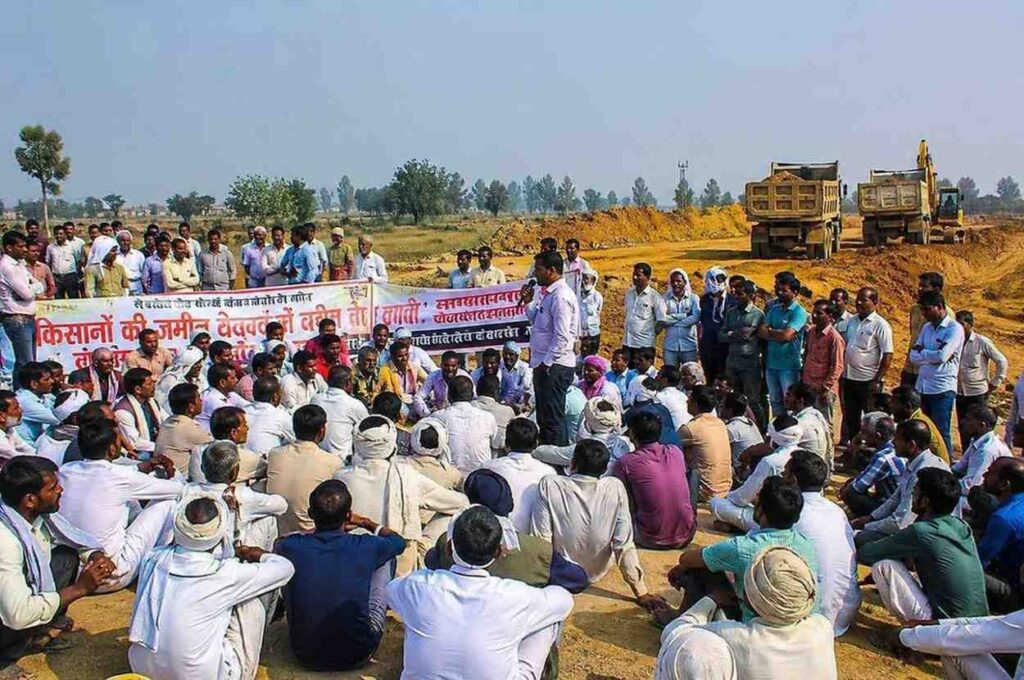
Even in 2026, land acquisition continues to be regarded as the biggest and most practical challenge facing highway construction projects. In the realm of highway engineering—whether the project involves an expressway, a bypass road, or the widening of an existing highway—commencing actual construction without obtaining physical possession of the land is virtually impossible. In a densely populated country like India, this process becomes even more complicated because a single project alignment often encompasses agricultural lands, residential areas, shops, industrial units, and, at times, even religious structures.
At the field level, it is frequently observed that even after the completion of the Detailed Project Report (DPR) and the awarding of the tender, the contractor fails to receive a clear site handover. The result is that heavy machinery sits idle at the site, manpower costs escalate, and the project timeline undergoes continuous extensions. Contractors are compelled to face financial losses, while government agencies simultaneously come under increasing public pressure.
The situation becomes even more sensitive in rural areas. Farmers are rarely willing to readily part with their fertile land, particularly when the compensation offered does not align with their expectations. The issue extends beyond just the cost of the land; matters concerning rehabilitation, relocation, and the loss of livelihood also emerge as major concerns. In the case of urban bypass projects, the removal of commercial properties and buildings proves even more challenging, as legal disputes tend to arise swiftly.
In the contemporary landscape, engineering planning alone is no longer sufficient to ensure the success of a highway project. Stakeholder consultation, fair compensation policies, social impact assessments, and transparent communication have become equally critical components. If public concerns are addressed effectively during the initial stages, project delays and disputes can be mitigated to a significant extent.
| Code/Act | Purpose |
|---|---|
| RFCTLARR Act 2013 | Land acquisition compensation rules |
| IRC SP 84 | Highway PPP project guidelines |
| IRC 73 | Geometric design standards |
Rural Protests and Construction Sites
2. Poor Soil Conditions and Geotechnical Problems in highway construction
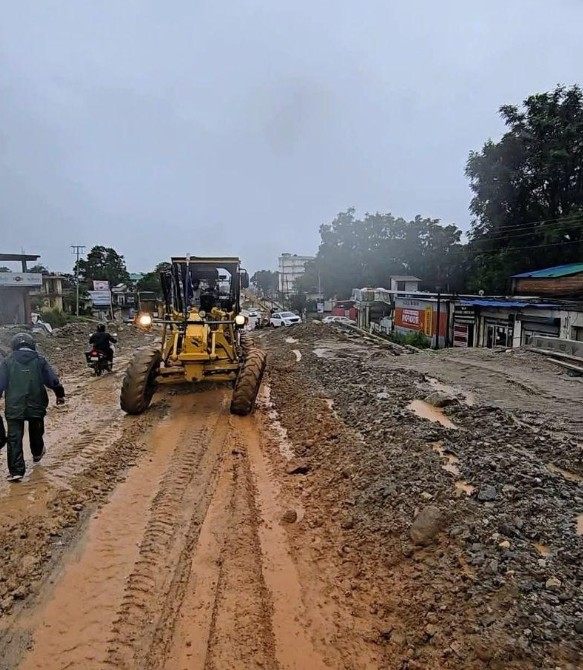
The foundation of highway construction consists not merely of concrete or asphalt, but rather the underlying soil. If the subgrade soil is neither strong nor stable, regardless of how well-designed the pavement structure may be, its long-term performance is liable to be compromised. For this very reason, geotechnical investigation is considered an extremely critical component of highway engineering. In numerous projects, proper soil testing is often overlooked during the initial stages; the consequences of this oversight subsequently manifest in the form of pavement settlement, rutting, longitudinal cracking, edge failures, and drainage issues.
In India, there are several regions where problematic soil types occur naturally. Black cotton soil, for instance, is prevalent in Maharashtra and Madhya Pradesh; this soil expands upon absorbing moisture and contracts when subjected to dry conditions. Coastal regions, conversely, feature marshy and soft clay soils characterized by significantly low bearing capacities. Such soil conditions directly impact the stability of the pavement structure. If engineers fail to implement appropriate soil stabilization techniques, drainage improvements, and compaction controls, the future maintenance costs for the highway can escalate substantially.
Important Soil Tests
| Test Name | Purpose |
|---|---|
| CBR Test | Pavement design suitability |
| SPT Test | Soil strength determination |
| Atterberg Limits | Plasticity evaluation |
| Plate Load Test | Bearing capacity assessment |
The CBR value is of particular importance in highway construction projects, as the thickness of flexible pavements depends on it. If the subgrade has a low CBR value, the pavement layers must be constructed with greater thickness, which significantly increases construction costs. Therefore, accurate soil sampling and laboratory testing are essential during the site investigation phase.
Relevant IRC and IS Codes
| Code | Description |
|---|---|
| IRC 37 | Flexible pavement design guidelines |
| IS 2720 | Methods of soil testing |
| IRC SP 72 | Pavement evaluation techniques |
A practical example involves black cotton soil. If a highway embankment is constructed directly upon expansive soil without proper moisture control, the soil begins to swell during the rainy season. Conversely, the same soil shrinks during the dry season. Due to this continuous change in volume, cracks, uneven settlement, and riding discomfort begin to develop in the pavement. For this reason, the use of soil stabilization, lime treatment, and geosynthetics is rapidly increasing in modern highway engineering.
3. Environmental Clearance and Forest Approval Issues in highway construction
In 2026, highway engineering is no longer limited merely to the construction of high-speed roads; rather, environmental sustainability has become a major integral part of every project. In the current scenario, if a highway passes through a forest area, wildlife corridor, river zone, or eco-sensitive region, obtaining multiple environmental approvals is mandatory. Government agencies ensure that construction activities have a minimal negative impact on nature and the local ecosystem.
The Environmental Impact Assessment (EIA) report plays a crucial role in this process. Through this report, engineers and environmental experts analyze the potential effects of the project on air quality, water bodies, vegetation, wildlife, and nearby communities. Furthermore, permissions for tree felling, pollution control clearances, dust suppression systems, noise barriers, and proper waste disposal plans are also mandatory requirements.
Delays are frequently observed in many highway projects due to environmental issues. If guidelines are not strictly adhered to, public objections and legal challenges can even lead to the temporary suspension of a project. Consequently, the adoption of green construction methods, plantation drives, rainwater harvesting, wildlife crossings, and sustainable materials is rapidly increasing in modern highway projects.
| Guideline / Regulation | Purpose |
|---|---|
| EIA Notification | Environmental clearance for projects |
| IRC SP 21 | Landscaping and plantation guidelines |
| MoRTH Environmental Norms | Sustainable highway construction practices |
| Pollution Control Board Approval | Air and water pollution management |
| Forest Clearance Rules | Permission for construction in forest areas |
4. Cost Overruns and Budget Management Problems in highway construction
Cost overruns have emerged as a very common and serious challenge in highway construction projects, particularly within the infrastructure sector in 2026. The estimated budget prepared at the inception of a project is frequently exceeded significantly during the actual execution phase. This has a direct impact on contractor profitability, project timelines, and government funding. The primary reason for this is the continuously fluctuating market rates of construction materials. Sudden spikes in the costs of steel, cement, bitumen, diesel, aggregate transportation, and machinery maintenance render a project financially unstable.
In the current climate, material rates are undergoing regular changes due to global supply chain disruptions, rising fuel prices, inflation, and a heavy reliance on imports. The rates considered while preparing the Detailed Project Report (DPR) or Bill of Quantities (BOQ) often differ vastly from the actual rates prevailing by the time construction commences. Furthermore, factors such as design modifications, delays in land acquisition, weather-related interruptions, and machinery breakdowns also contribute to an increase in indirect costs. When a project faces delays, expenses related to labor wages, site overheads, machinery rentals, and administrative costs continue to escalate.
For instance, if the rate of bitumen was estimated at ₹45,000 per ton during the project estimation phase but subsequently rose to ₹60,000 per ton during the actual construction phase, the overall cost of the pavement work alone could increase by hundreds of thousands or even millions. Consequently, in modern highway projects, robust financial planning, the establishment of contingency funds, and the implementation of dynamic cost monitoring systems have become absolutely essential.
| Major Reason | Impact on Project |
|---|---|
| Delay in Construction | Increased overhead expenses |
| Material Price Rise | Overall budget increase |
| Design Modifications | Additional work and cost |
| Equipment Breakdown | Productivity and time loss |
5. Traffic Management During Construction
In highway construction projects, the most challenging task is safely managing live traffic. When existing highways are being widened, repaired, or upgraded, construction activities proceed on one side while public vehicles continue to move continuously on the other. Consequently, traffic congestion, the risk of accidents, dust pollution, and public inconvenience increase significantly. In urban areas, this challenge becomes even more severe, as traffic volumes there are already extremely high.
If proper traffic diversion planning is not implemented, construction zones can turn into dangerous accident hotspots. Often, temporary diversions are not clearly visible to drivers—particularly at night—leading to an increase in collisions and vehicle damage. For this reason, proper barricading, reflective road signs, flashing lights, traffic cones, crash barriers, and night-time illumination are considered mandatory at highway construction sites.
According to IRC guidelines, maintaining work zone safety is the joint responsibility of both the contractor and the project authority. To ensure a safe flow of traffic, the proper deployment of trained traffic marshals, speed control measures, and warning signage is crucial. Effective traffic management not only helps reduce accidents but also enhances project productivity and public satisfaction.
| IRC Code | Description |
|---|---|
| IRC SP 55 | Work Zone Traffic Management |
| IRC 67 | Road Signs |
| IRC 35 | Road Markings |
| Common Construction Zone Problems | Impact |
|---|---|
| Traffic Congestion | Increased travel time |
| Accident Risk | Safety hazards for workers and drivers |
| Public Complaints | Negative public response |
| Material Transportation Delay | Slower project progress |
6. Drainage Failure and Waterlogging in highway construction
The role of the drainage system in highway construction is critical, as the actual lifespan of a road depends not solely on pavement strength but also on effective water management. When proper drainage planning is lacking in a highway construction project, rainwater begins to accumulate on the pavement surface and in the shoulder areas. Gradually, this water weakens the subgrade soil, leading to the development of settlement, cracking, rutting, and potholes. Indeed, poor drainage is often the primary cause of premature pavement failure in numerous highway construction projects.
If a proper camber is not maintained on the road surface, or if side drains become blocked, water begins to stagnate. Continuous water infiltration damages the bituminous layers and diminishes the pavement’s load-carrying capacity. For this reason, during highway construction, engineers place special emphasis on ensuring proper longitudinal slopes, shoulder drainage, and cross-drainage structures. Drainage design becomes even more critical in hilly terrain and regions prone to heavy rainfall.
Regular maintenance is equally important. Periodic cleaning of side drains, inspection of culverts, and verification of water outlets are essential to ensure that the quality of the highway construction and the durability of the pavement are effectively maintained.
Highway Drainage Flow Chart
Road Surface
↓
Side Drain
↓
Cross Drainage Structure
↓
Natural Water Channel
| IRC Code | Description |
|---|---|
| IRC SP 42 | Road Drainage Guidelines |
| IRC 75 | Embankment Design |
| IRC 34 | Drainage Recommendations |
7. Material Quality Control Issues In highway construction
Material quality control is the most critical factor determining the long-term durability and performance of highway construction projects. If substandard aggregates, poor-quality bitumen, weak soil, or improper concrete are utilized during construction, problems such as premature cracking, rutting, potholes, and settlement begin to emerge. Consequently, regular testing and rigorous quality monitoring are absolutely essential in every highway construction project.
Frequently, due to improper compaction and incorrect aggregate gradation at the site, the pavement fails to attain its required structural strength. This significantly reduces the service life of the highway infrastructure and drives up maintenance costs. Quality control engineers are tasked with ensuring that every material complies with the standards prescribed by the IRC and IS codes. In modern highway construction, field density checks hold equal importance alongside laboratory testing.
| Material | Test |
|---|---|
| Aggregate | Impact Value Test |
| Bitumen | Penetration Test |
| Soil | CBR Test |
| Concrete | Cube Strength Test |
If field quality control during highway construction is weak, the contractor may face heavy repair and rehabilitation costs in the future. Therefore, proper testing, supervision, and compliance with standards play a crucial role in successful highway construction.
To get More idea about Highway engineering, read the article given below
How Do GSB and WMM Differ? 10 important Facts for Highway Construction
Cold Mix vs Hot Mix Asphalt: Which is Better?
What Are Rigid Pavement Failures? 10 Major Causes and Practical Solutions
8. Extreme Weather Conditions
In the current era, the impact of climate change is most evident in the infrastructure sector, particularly in highway construction projects. Rainfall intensity, temperature fluctuations, and unexpected weather events are increasing rapidly, directly affecting construction activities. In modern highway construction, merely building a road is no longer sufficient; designing roads with long-term weather resistance has become equally important.
During heavy rainfall, soil stability is compromised, and the risk of embankment erosion increases. Frequently, continuous rain prevents proper pavement laying and compaction, which can diminish the road’s durability. Similarly, during extreme summer temperatures, bitumen softens and leads to “bleeding”—a phenomenon that compromises driving safety. Fog and flooding also pose major challenges, especially on hill roads and in low-lying areas.
Consequently, modern highway construction projects are increasingly utilizing climate-resilient materials, robust drainage systems, and advanced pavement technologies. Engineers must incorporate weather analysis right from the planning stage to minimize future maintenance costs and ensure superior road performance. The primary objective of sustainable highway construction is no longer limited to merely providing connectivity, but extends to delivering infrastructure that is both long-lasting and safe.
| Weather Condition | Impact on Highway Construction |
|---|---|
| Heavy Rain | Soil erosion and delay in earthwork |
| Extreme Heat | Bitumen bleeding and pavement damage |
| Fog | Reduced visibility and safety risks |
| Flooding | Embankment failure and road damage |
9. Skilled Labor Shortage
In the current era, highway construction projects have become significantly more advanced compared to the past. The use of modern equipment, GPS-based survey systems, automatic pavers, batching plants, and digital quality control tools is increasing rapidly. However, efficiently operating these technologies requires trained manpower. It is precisely at this juncture that a shortage of skilled labor is emerging as a major challenge.
In many highway construction projects, the availability of experienced survey engineers, asphalt plant operators, paver operators, and QC engineers is extremely limited. This problem is even more pronounced in rural and remote project locations. When trained workers are unavailable, project execution slows down, quality issues escalate, and machinery utilization suffers.
Critical activities—particularly pavement laying and quality testing—rely heavily on skilled manpower. If an operator lacks experience, issues such as uneven compaction, improper leveling, and material wastage can arise. Consequently, both the cost of highway construction and the project completion time are adversely affected.
Gradually, however, the highway construction industry is working towards mitigating this issue with the aid of automation, AI-based monitoring, machine control systems, and digital inspection tools. Training programs and skill development initiatives are also poised to play a crucial role in bridging the manpower gap in the future.
| Activity Area | Skilled Workforce Required | Impact of Shortage |
|---|---|---|
| Pavement Laying | Paver Operator | Uneven Surface Quality |
| Survey Work | Survey Engineer | Alignment Errors |
| Quality Testing | QC Engineer | Poor Material Control |
| Machinery Operation | Equipment Operator | Low Productivity |
10. Utility Shifting Problems
Utility shifting poses a significant challenge in highway construction projects, particularly when the project traverses urban areas or developed zones. During road widening, flyover construction, and the establishment of new highway alignments, the relocation of existing underground and overhead utilities becomes imperative. These utilities include water pipelines, electric transmission lines, gas pipelines, and telecom fiber cables. In the absence of proper planning, the entire highway construction schedule can face delays due to utility shifting requirements.
The most substantial challenge lies in coordination. Obtaining necessary approvals, conducting inspections, and securing shutdown permissions from various utility departments and highway construction agencies often consume a considerable amount of time. Frequently, outdated utility maps lack accuracy, leading to accidental damage during excavation operations. This can trigger issues such as leaks, power outages, or communication failures. Furthermore, safety risks at highway construction sites are heightened, particularly when work is being conducted in close proximity to high-voltage electric lines.
In urban highway construction projects, this issue becomes even more critical due to the dense network of utilities present. Consequently, modern highway construction practices are increasingly incorporating the use of Ground Penetrating Radar (GPR), GIS mapping, and dedicated utility coordination meetings to effectively minimize delays and mitigate associated risks.
| Utility Type | Major Challenge |
|---|---|
| Water Pipeline | Leakage and service interruption |
| Electric Line | Safety hazard and shutdown delays |
| Gas Pipeline | Explosion and fire risk |
| Fiber Optic Cable | Communication disruption |
| Sewer Line | Excavation difficulty |
11. Pavement Cracking and Premature Failure
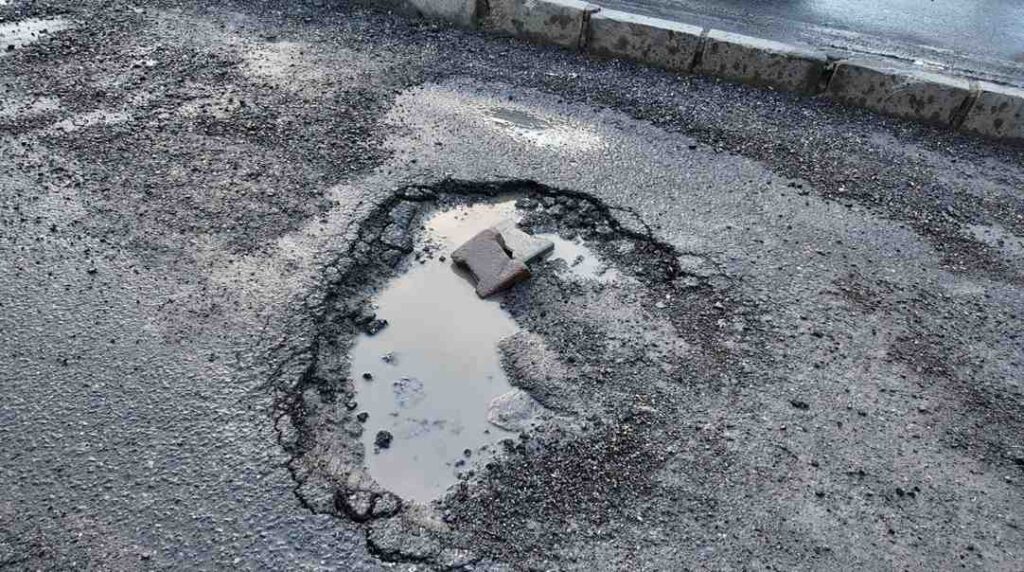
In highway construction projects, pavement cracking and premature failure are considered a very common yet serious problem. When the road surface begins to crack, potholes develop, or the surface becomes uneven before reaching its expected design life, maintenance costs increase significantly. This has a direct impact on road safety, riding comfort, and the overall durability of the project. In modern highway construction, heavy traffic loading, overloaded trucks, poor drainage, and the use of low-quality materials are the primary causes of pavement damage.
Frequently, during highway construction, proper compaction is not achieved, or asphalt temperature control is not adequately maintained, resulting in a weakened pavement structure. Water infiltration is another significant factor, as water seeps into the pavement layers and weakens the base course. Consequently, cracks gradually evolve into large potholes.
Nowadays, advanced highway construction techniques—such as the use of polymer-modified bitumen, geotextiles, and automated paving systems—are being employed to control premature failure to a significant extent. Regular quality control testing and timely maintenance also play a crucial role in extending the lifespan of the pavement. For sustainable highway construction, a durable pavement design and a proper drainage system are absolutely essential.
| Cause of Failure | Impact on Pavement | Prevention Method |
|---|---|---|
| Poor Compaction | Surface Cracks | Proper Roller Compaction |
| Water Infiltration | Base Weakening | Efficient Drainage System |
| Overloaded Traffic | Rutting and Fatigue | Strong Pavement Design |
| Low Quality Materials | Early Damage | Strict Quality Control |
| Temperature Variation | Thermal Cracking | Flexible Asphalt Mix |
12. Safety Management Failure
The role of safety management in highway construction projects is critical. If proper safety protocols are not adhered to at the site, the risk of worker injuries, machinery accidents, and public casualties increases significantly. In large-scale highway construction operations, heavy equipment, moving vehicles, night work, and continuous traffic flow occur simultaneously; consequently, even minor negligence can lead to a serious accident.
At many highway construction sites, workers are often observed working without reflective jackets, helmets, or proper barricading. This creates visibility issues—particularly during night shifts—and heightens the risk of equipment collisions. Furthermore, if public traffic diversions are not managed effectively, road users may also fall victim to accidents. For this reason, modern highway construction projects place mandatory emphasis on safety audits, toolbox meetings, emergency response planning, and strict supervision.
Daily toolbox meetings serve to raise workers’ awareness regarding site hazards and educate them on safe working procedures. Regular safety inspections enable the identification and immediate correction of unsafe practices. In today’s highway construction industry, safety is no longer viewed merely as a matter of compliance, but rather as a pivotal factor in ensuring both productivity and project success.
| Safety Item | Purpose |
|---|---|
| Reflective Jacket | Improves worker visibility during day and night work |
| Barricading | Separates construction zone from public traffic |
| Helmet | Protects workers from head injuries and falling objects |
| Safety Signage | Provides warning and directional guidance |
| Traffic Cones | Controls vehicle movement near work zones |
13. Equipment Breakdown and Maintenance Issues
Modern highway construction projects heavily depend on advanced machinery and high-capacity equipment. From earthwork excavation to asphalt paving, almost every activity on site requires continuous equipment support. If there is a sudden breakdown of a critical machine, the entire workflow can be disturbed and the project starts getting delayed. Therefore equipment reliability has a direct impact on project productivity and construction quality.
In highway projects commonly used machines like paver, vibratory roller, motor grader and excavator can handle daily long working hours. Wear and tear naturally increases due to continuous operation. If proper servicing and inspection is not timely, highway construction activities may come to a halt. For example, asphalt paver breakdown delays the complete bituminous laying operation, impacting both traffic management and project timeline.
| Equipment | Function |
|---|---|
| Motor Grader | Surface leveling |
| Vibratory Roller | Compaction |
| Asphalt Paver | Bituminous laying |
| Excavator | Earthwork |
Efficient preventive maintenance planning has become an integral part of modern highway construction. Machine failures can be significantly reduced through regular lubrication, hydraulic inspections, engine servicing, and spare parts monitoring. Large highway construction companies are now also utilizing digital monitoring systems and equipment tracking software to minimize downtime. Proper maintenance not only results in cost savings but also improves the overall speed, safety, and quality of highway construction.
14. Poor Project Planning and Coordination
Highway construction projects do not rely solely on machinery and materials; they depend equally on proper planning and robust coordination. It is frequently observed that, despite a project being technically feasible, it faces delays due to management-related issues. When communication among the contractor, consultant, and client lacks clarity, processes such as drawing approvals, site inspections, material clearances, and billing slow down. This has a direct impact on the progress of highway construction.
In modern highway construction projects, multiple agencies work in tandem. If scheduling is not properly maintained, manpower remains idle, and machinery utilization declines. Often, although the work site is ready for operations, activities come to a halt due to delays in receiving approved drawings or in processing payments. Consequently, highway construction costs escalate, and the project completion timeline is extended.
Efficient planning tools and digital monitoring systems have now become an integral part of the highway construction industry. Through proper coordination meetings, regular progress tracking, and realistic scheduling, delays can be controlled to a significant extent. For modern civil engineers, project management skills are no longer an optional asset but have become an essential requirement.
| Tool | Purpose |
|---|---|
| CPM | Critical path analysis |
| Primavera | Project scheduling |
| Bar Chart | Work monitoring |
15. Overloaded Vehicles and Traffic Growth
The greatest challenge facing modern highway construction projects is the rapidly increasing volume of traffic and the prevalence of overloaded commercial vehicles. Highway pavements are typically designed based on anticipated traffic volumes and standard axle loads. However, in reality, trucks on many highways carry loads significantly exceeding prescribed limits, thereby dramatically reducing the service life of the pavement.
When overloaded vehicles continuously traverse the road surface, excessive stress is generated within the pavement layers. Consequently, defects such as cracking, rutting, depressions, and surface deformation begin to manifest prematurely. Frequently, even newly completed highway projects begin to require maintenance within just a few years of completion. This issue is particularly pronounced in industrial corridors and freight routes.
Traffic growth constitutes another major factor. If future traffic volumes are not estimated with sufficient accuracy, the designed pavement thickness may prove inadequate. As a result, both the highway’s capacity and the pavement’s performance are compromised. For this reason, the roles of traffic surveys, axle load studies, and forecasting have become critically important in modern highway construction.
Government agencies are now deploying weigh-in-motion systems, enforcing strict penalties for overloading, and utilizing smart monitoring technologies to ensure the long-term preservation of highway infrastructure assets. Proper traffic planning and controlled axle loading are indispensable prerequisites for sustainable highway construction.
Higher Axle Load
↓
Excessive Pavement Stress
↓
Surface Cracking & Rutting
↓
Reduced Pavement Life
↓
Higher Maintenance Cost
| IRC Code | Description |
|---|---|
| IRC 6 | Load Standards and Bridge Loading Guidelines |
| IRC 37 | Flexible Pavement Design Based on Traffic |
| IRC 108 | Traffic Forecasting and Toll Studies |
| IRC SP 72 | Overloading Control Measures |
Conclusion
In 2026, highway construction projects have evolved far beyond traditional civil engineering. Today, merely constructing a road is no longer sufficient; rather, developing sustainable, durable, safe, and smart transportation corridors is equally important. Challenges such as land acquisition, poor soil conditions, drainage failures, environmental clearances, traffic management, and cost overruns directly impact the success of a project.
A successful highway engineer requires not only technical knowledge but also a deep understanding of project management, quality control, safety, and environmental sustainability. The proper implementation of IRC and IS codes is essential to ensure the creation of durable and safe highway infrastructure.
In the future, AI, BIM, automation, and smart monitoring technologies will further advance the field of highway engineering. Only those engineers who embrace modern technologies and updated standards will achieve success within the infrastructure industry.
FAQs About Highway Construction Challenges in 2026
1. What is the biggest challenge in highway construction projects?
Generally, the biggest challenges in highway construction projects are considered to be land acquisition and project delays. Often, project execution slows down due to issues regarding farmer compensation, legal disputes, and environmental clearances. Additionally, poor soil conditions, drainage problems, and traffic management also pose major challenges.
2. Why does highway pavement deteriorate quickly?
The main reasons for the premature failure of highway pavement include poor construction quality, overloaded vehicles, weak subgrade soil, and improper drainage. If compaction is inadequate, or if water infiltrates the pavement structure, defects such as cracking, rutting, and potholes begin to develop rapidly.
3. Why do highway construction projects get delayed?
The major reasons for delays in highway projects include land acquisition issues, delays in utility shifting, adverse weather conditions, contractor management problems, and funding shortages. Often, the approval of drawings and environmental clearances also consumes a significant amount of time, thereby impacting the overall project completion schedule.
4. How is quality control maintained in highway construction?
To maintain quality control, regular laboratory testing and field inspections are conducted. Methods such as the Soil CBR test, aggregate impact test, bitumen penetration test, and compaction test are employed. Proper supervision and strict adherence to IRC/IS codes enhance the durability of the highway.
5. Which modern technologies are being used in the highway construction industry in 2026?
In 2026, technologies such as Drone Surveys, BIM (Building Information Modeling), GPS Machine Control, AI-based monitoring, and smart traffic management systems are being rapidly adopted in highway projects. These technologies enhance project accuracy, speed, and safety, while simultaneously reducing construction errors.